

According to the findings of the sixth National Family Health Survey (NFHS-6), India’s Total Fertility Rate (TFR) has remained at 2.0 children per woman, below the replacement level of 2.1. The survey also points to improved access to family planning services, with the contraceptive prevalence rate increasing from 66.7% in NFHS-5 to 69.1%. The burden of contraception, however, continues to remain shouldered largely by women.
Sterilisation, accounts for a significant chunk of contraception methods used in India. While female sterilisation (tubectomy) stands at 36.5% as per NFHS-6, male sterilisation (vasectomy) remains at a dismal 0.5%, barely a change from 0.3% in NFHS-5.
Why the disparity
Experts say misconceptions surrounding vasectomy continue to discourage men from taking a more active role in family planning, placing a disproportionate share of the burden on women. A study published in the journal BMJ Sexual & Reproductive Health found that fears about loss of libido and physical weakness, social stigma, poor awareness and health system barriers continue to impede acceptance of vasectomy among married men in India, with uptake declining from 3.31% in the early 1990s.
Experts note that vasectomy is a simple, safe and highly effective long term contraceptive method that does not affect sexual performance or libido, contrary to these widespread myths.

Myths around fertility
One of the most persistent misconceptions surrounding vasectomy is that it diminishes sexual function. However, there is no evidence to support these claims.
N. Ragavan, senior consultant-urologist, Apollo Hospitals, Chennai, said the belief is cultural and has no clinical basis. “Fertility should not be tied to misconceptions that equate a man’s reproductive capacity with his masculinity as though fewer sperm somehow mean less manhood,” he said, adding that vasectomy does not affect testosterone levels or sexual drive.
The procedure merely involves blocking the sperm-carrying tube and does not interfere with blood supply to the testes or their normal function. The procedure has nothing to do with libido or erectile function, he said.
Muthu Veeramani, director and senior consultant, urology, SIMS Hospital, Chennai, added that studies have consistently shown that vasectomy does not affect testosterone production, sexual desire or sexual performance.

Minor procedure, quick recovery
Experts also sought to dispel the notion that vasectomy is a major surgery associated with serious health risks.
Vasantharaja Ramasamy, senior consultant, urology, MGM Malar Hospital, Chennai, said the procedure is usually carried out under local anaesthesia. After identifying the vas deferens (sperm duct) through palpation, a small incision is made and the tube is divided and sealed to prevent reconnection. Patients are discharged within a few hours and can resume routine activities after a couple of days although heavy physical activity should be avoided for about a week.
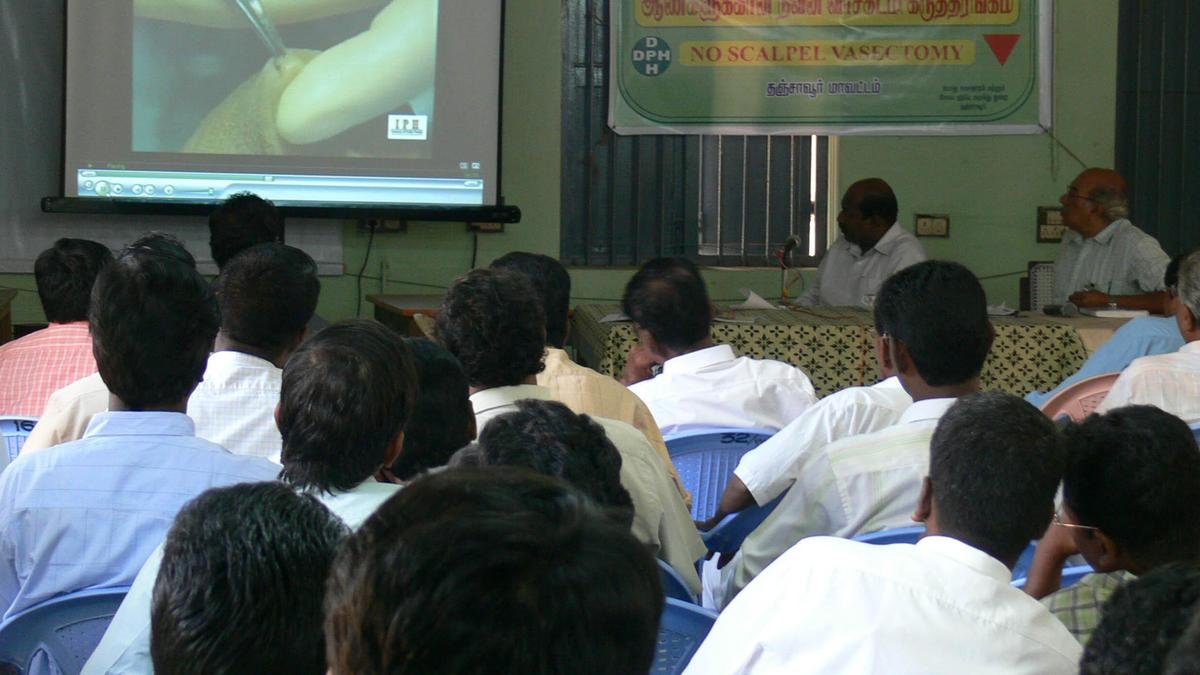
The procedure takes only 10 to 15 minutes and can be performed in an outpatient setting. Newer no-scalpel techniques have further reduced discomfort.
Doctors also rejected several myths circulating on social media, including claims that vasectomy causes obesity, cancer, infections or long-term health complications. Dr. Ragavan said there was no indication that the procedure increased the risk of obesity or cancer, and no scientific evidence to support such claims.

Need for counselling and awareness
Despite being simpler and less invasive than female sterilisation, vasectomy continues to have low acceptance, especially in India. Experts note that medical professionals have a responsibility to address these fears and allay misconceptions, as many men are hesitant to undergo the procedure while expecting their partners to undergo tubal ligation, which is considerably more complex.
One major concern among men is that vasectomy is irreversible and could lead to regrets later in life. Experts emphasise that recanalisation procedures performed within three years of vasectomy have success rates exceeding 90%. Additionally, advances in microscopic surgery have improved outcomes when reversals are undertaken after proper counselling.
Greater male participation in reproductive health, doctors noted, would make reproductive healthcare more equitable.
Published – June 12, 2026 06:00 am IST