

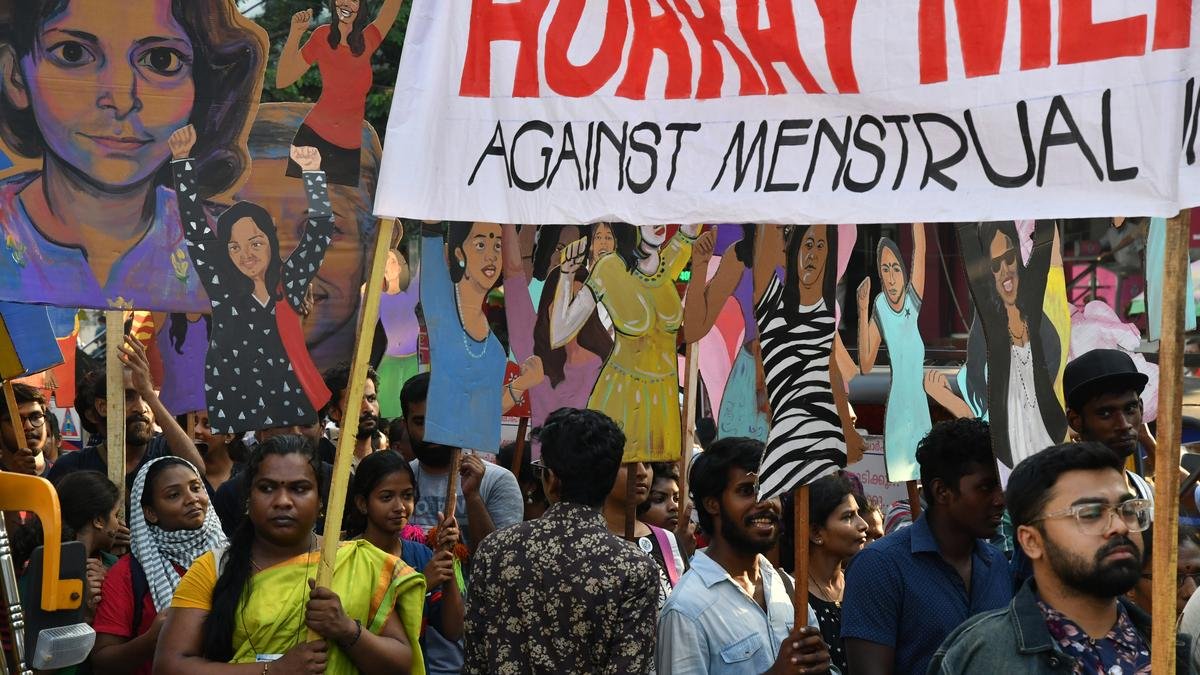

India has made significant progress in menstrual health and hygiene management over the last decade. Awareness campaigns, product innovations, and government initiatives have led to increased access and visibility. File photograph
“When we were young, our mother would buy sanitary pads for us; sometimes our father would also buy them for us. Now we buy pads for ourselves; sometimes our husbands get them for us. We don’t have any problem in asking our husbands to buy pads for us. We don’t buy pads ourselves because we feel shy to ask the shopkeeper. There are mostly men at the shops —that is the reason we feel shy to ask them.” – Woman in Telangana, participant in the PEnMen-pilot study
The PEnMen-pilot study was conducted by The George Institute for Global Health, India to understand perceptions and practices related to menstrual hygiene and the environment around it. This quote echoes a sentiment that is familiar across many parts of India: While men—be they fathers, husbands, brothers, or even sons—are often the ones buying menstrual products, why is the topic of menstruation still wrapped in silence? Girls and women often feel too shy to buy sanitary pads themselves, especially when male shopkeepers are involved. Many of the stores selling menstrual hygiene products are owned and operated by men. Yet, menstruation is a subject largely confined to women and young girls, spoken about in whispers or euphemisms, and rarely acknowledged in public spaces or family conversations.
Published – May 28, 2025 12:18 pm IST