

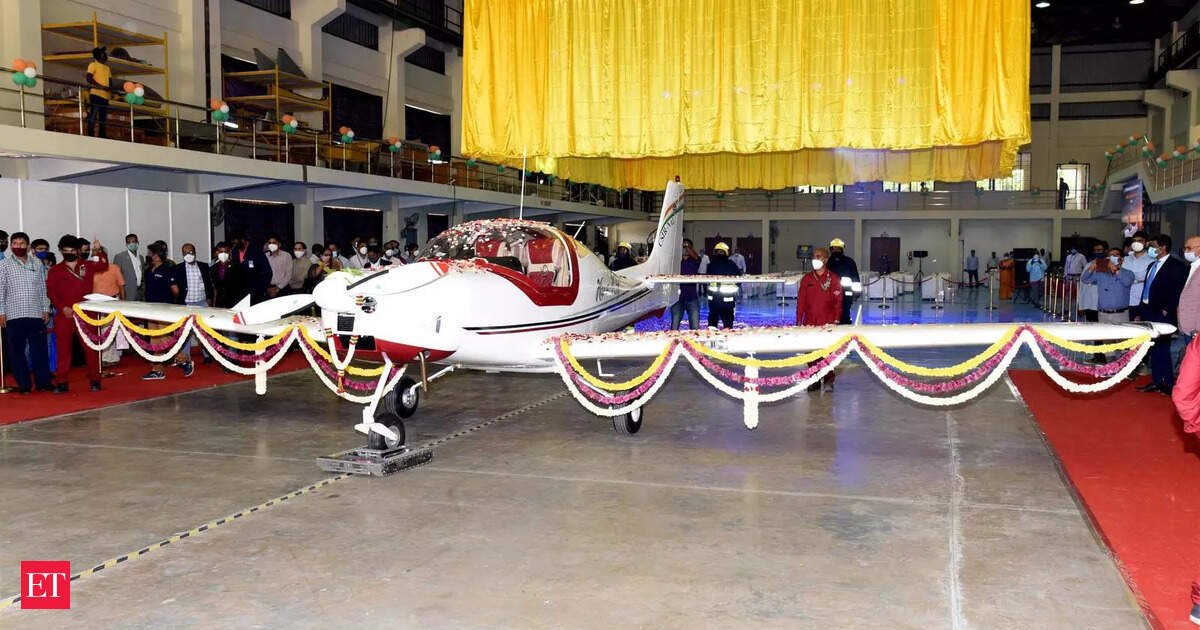
He also said that the SARAS Mk-2 aircraft programme remains in the design phase.
He was speaking on the sidelines of a pre-event press conference held for Conclave-RISE 2026, which is scheduled to begin this weekend.
SARAS Mk-2 is a 19-seat multi-role light transport aircraft, while the HANSA-3 (NG) is an indigenous next-generation two-seater trainer aircraft.
Responding to a question on the status of the SARAS programme, he said, “It is still in the design phase. We have changed the configuration, so the critical design phase will be completed in a month or so. Once those activities are completed, we will start producing the parts…”

The CSIR-NAL director said Pioneer Clean Amps had been working with the laboratory for nearly a year on pilot training initiatives, in the context of the HANSA aircraft.
He said there are currently around 38 Flight Training Organisations in the country and that the Ministry of Civil Aviation aims to increase the number to about 70 or more in the coming years to meet the growing demand for trained pilots.”They require aircraft such as this one (HANSA). This aircraft has been designed for that purpose. The HANSA-3 aircraft was developed nearly two decades ago, but only a limited number were produced because there were very few flight training organisations at that time, most of them government-run,” he told reporters.
Pashilkar noted that although the number of FTOs has increased, India still needs many more, with a requirement to train more than 400 pilots annually.
Stating that the HANSA trainer aircraft has been designed specifically for Commercial Pilot Licence training, he explained that students undergo theoretical instruction and practical flying training at FTOs before qualifying for a CPL after clearing the required examinations conducted by regulatory authorities.
The CSIR-NAL director said that if the organisation is able to produce and supply these aircraft to existing and upcoming FTOs in large numbers, many young men and women who currently go abroad for training could instead complete their training in India.
According to him, the existing facilities are unable to absorb the growing demand.
Asked whether production had started for HANSA, he said, “We have already produced one prototype ourselves. We plan to build three more prototypes to speed up the process. However, our estimates show that more than 100 aircraft will eventually be required.”
“That is where our production partner comes in. They are setting up their facility and will begin acquiring land. Their proposal is already in place,” Pashilkar added.
He said that Pioneer Clean Amps is setting up a facility in Kuppam, Andhra Pradesh.
“They will then ramp up production. We can build prototype aircraft, but we are not equipped for large-scale manufacturing. The production partner will establish the necessary facilities for mass production,” he added.
Pashilkar said an aircraft manufacturing facility requires access to a runway, as every aircraft must undergo flight testing and certification procedures after assembly.