

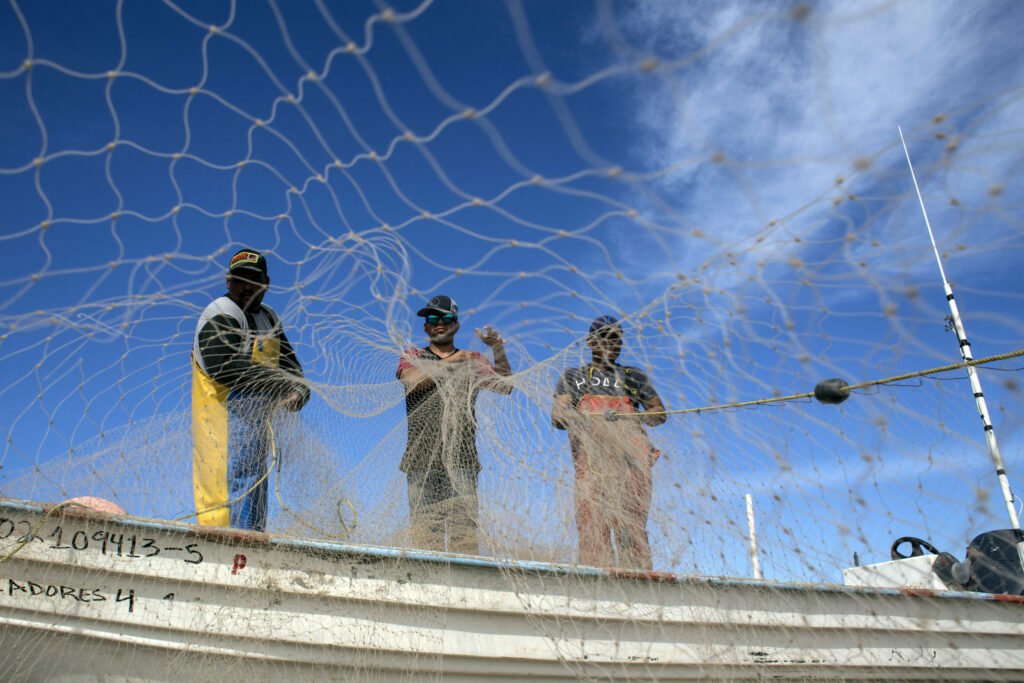
While the Trump administration systematically unravels marine protections at home, it appears to be enforcing far higher conservation standards abroad.
The State Department imposed visa restrictions on 26 foreign nationals engaged in illegal fishing last month. Among those restricted is a former Argentine official allegedly involved in an illegal Patagonian toothfish harvesting scandal and a senior Mexican cartel member smuggling endangered fish along the U.S. border.
Though American visa bans have historically been levied against alleged human rights abusers, corrupt foreign officials and land-based wildlife traffickers, this is the first time they have been deployed to combat marine poaching, according to the State Department.
The move—which stems from President Donald Trump’s Executive Order to Restore American Seafood Competitiveness—signals a willingness by Washington to weaponize the country’s immigration apparatus to limit activities they claim have “undermined fair market access” for the American fleet. While environmentalists have critiqued the order’s widespread deregulation, the combatting of illegal fishing enjoys widespread support across the political spectrum.
“Protecting the bounty of the world’s oceans from illegal, unreported, and unregulated fishing is a US global priority under [President Trump] and [Secretary of State Rubio],” said Deputy Secretary of State Christopher Landau in a post on X, last month. “Those who illegally deplete the fishing resources available to the US and the world are not welcome in our country.”
While unlikely to meaningfully prevent illegal fishing, visa restrictions are expected to sever and disrupt the arteries that criminal organizations typically rely on, such as access to U.S. safe houses and American financial institutions.
Though cast by the State Department as an “assertive global approach to protecting the U.S. fishing industry and global fish resources,” the policy is at odds with the administration’s dismantling of domestic marine protections.
In Trump’s second term, the government has accelerated destructive deep-sea mining licenses, Congress has proposed amendments to weaken the Marine Mammal Protection Act, and this February, the President rescinded the protective status afforded to thousands of miles of pristine waters off New England’s coastline, allowing the return of plunderous fishing fleets.
Indeed, the visa revocations—implemented in the name of protecting fish resources—come just weeks after the administration proposed a $1.6 billion funding cut to the National Oceanic and Atmospheric Administration—the very organization that oversees fisheries management plans.
“The administration is absolutely decimating protections for marine species within the United States,” said Sarah Uhlemann, the senior attorney and international program director at the Center for Biological Diversity. “At the same time, there are a series of laws in the U.S. that say that other countries need to meet our conservation standards or they’re not allowed to export to the United States, a ton of them around seafood.”
The world’s largest seafood importer, the U.S. last August banned fish products from 42 countries that exceeded bycatch limits. Bycatch refers to fish and other marine animals caught unintentionally by fishermen using huge nets or long lines baited with thousands of hooks.
Similarly, the Center for Biological Diversity, a nonprofit focused on the protection of endangered species, recently relied on the U.S. Moratorium Protection Act in a petition demanding possible sanctions on Chinese seafood due to shark finning concerns.
The willingness to choke domestic protections while simultaneously chasing international actors indicates this approach is less about ecology and more about protecting financial interests and carrying out the administration’s broader immigration agenda.
When asked for comment, a spokesperson for the State Department told Inside Climate News that the motivations rested, in part, with stopping “the actions of these individuals who seek to ignore the rules for short-term, selfish gain at the expense of U.S. consumers and producers.”
Operating out of the purview of governing bodies, evading quota restrictions and often taking advantage of forced labor, illegal fisheries flood the U.S. market with cheap seafood, much to the detriment of law-abiding American fishing crews unable to compete on prices.
This story is funded by readers like you.
Our nonprofit newsroom provides award-winning climate coverage free of charge and advertising. We rely on donations from readers like you to keep going. Please donate now to support our work.
“I think it’s 100 percent driven by economics,” Uhlemann said. “But at the same time, I’m happy for the result,” noting that any action to help marine wildlife in foreign waters is worth embracing, even if it’s driven by financial interests rather than ecological ones.
Though the State Department denied Inside Climate News’ request to identify a further two dozen individuals implicated, among those publicly named is Pablo Ferrara, a former Foreign Ministry representative and Argentine fisheries council member. Ferrara had allegedly intervened to prevent the Argentine Navy from seizing the Tai An, a Chinese-owned ship intercepted in 2024 with 163 tons of illegally caught Patagonian toothfish onboard, according to La Nacion.
Also identified is Mexican national Jose Ali Amador, accused of illegally plundering an endangered fish species and fueling trafficking operations along the southern border.
A fisherman of the same name was previously arrested in Baja California, Mexico on drugs and weapons charges, and is allegedly involved in cartel smuggling operations of totoaba—a fish whose swim bladders are trafficked to East Asian buyers for between $20,000 and $80,000 per kilo for their supposed medicinal value and aphrodisiac qualities.
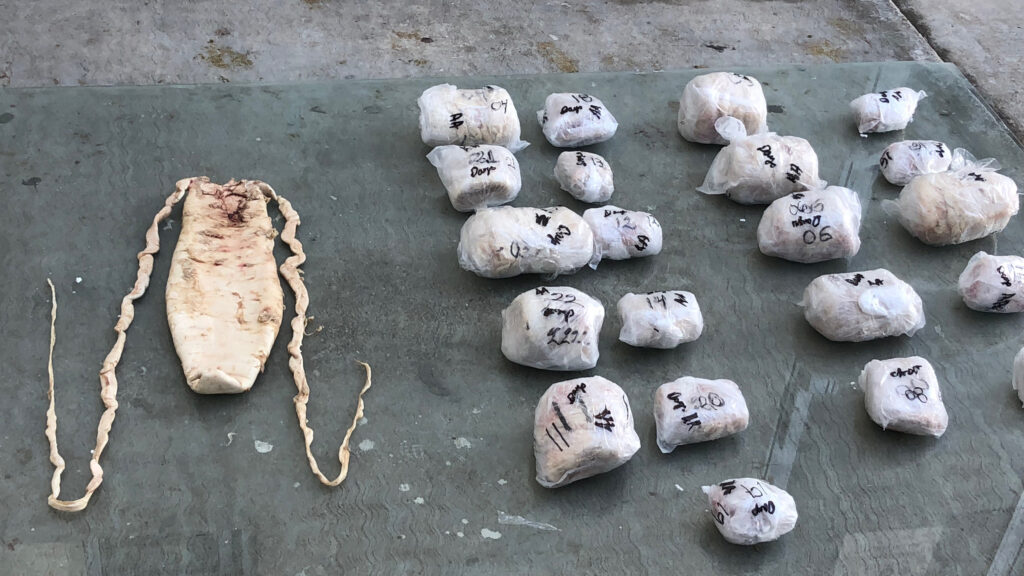
“These traffickers—some of them are Mexican, some of them are Chinese—they don’t just come to the U.S. to enjoy the good life. They operate here,” said Andrea Crosta, founder of Earth League International, an environmental crime intelligence group that has uncovered 25 different seafood trafficking networks in the region.
“Preventing them from coming to the U.S., you disrupt. You don’t destroy but you disrupt their trafficking activities,” said Crosta, who last year handed the U.S. State Department the names of 300 individuals engaged in seafood, weapons and drug smuggling across the border with Baja California.
While the State Department is happy wielding its immigration apparatus to disrupt international illegal fishing operations, it has blunted the domestic law enforcement tools designed to crack down on the problem at home.
According to Crosta, the current administration has quietly disbanded the well-funded wildlife and environmental crimes unit within Homeland Security Investigations, an arm of the Department for Homeland Security. The team, established under former president Joe Biden, was set up to fight wildlife trafficking and illegal fishing but is now having its staff reduced and reassigned to other tasks.
Last week, it was announced that the administration would also pull hundreds of buoys used to monitor the impact of climate change on fish stocks in the Atlantic and Pacific, marking an ever increasing deregulation of oversight in U.S. waters.
This selective approach to environmental protections underscores that a marine species’ best chance of survival is if its existence serves American trade or can be harnessed to thwart Chinese fishing operations. At home, marine protections are now seen as a burden for corporate interests. Abroad, they’ve been transformed into a powerful tool to brandish against foreign actors.
When Inside Climate News asked the State Department about this dichotomy, it neglected to provide an answer.
About This Story
Perhaps you noticed: This story, like all the news we publish, is free to read. That’s because Inside Climate News is a 501c3 nonprofit organization. We do not charge a subscription fee, lock our news behind a paywall, or clutter our website with ads. We make our news on climate and the environment freely available to you and anyone who wants it.
That’s not all. We also share our news for free with scores of other media organizations around the country. Many of them can’t afford to do environmental journalism of their own. We’ve built bureaus from coast to coast to report local stories, collaborate with local newsrooms and co-publish articles so that this vital work is shared as widely as possible.
Two of us launched ICN in 2007. Six years later we earned a Pulitzer Prize for National Reporting, and now we run the oldest and largest dedicated climate newsroom in the nation. We tell the story in all its complexity. We hold polluters accountable. We expose environmental injustice. We debunk misinformation. We scrutinize solutions and inspire action.
Donations from readers like you fund every aspect of what we do. If you don’t already, will you support our ongoing work, our reporting on the biggest crisis facing our planet, and help us reach even more readers in more places?
Please take a moment to make a tax-deductible donation. Every one of them makes a difference.
Thank you,

Fisheries Reporter
Johnny Sturgeon is a London-based reporter covering fisheries and aquaculture. Joining us from the Outlaw Ocean Project, he has experience producing in-depth maritime investigations for nonprofit newsrooms. A former boatbuilder, he holds a B.A. in History & Politics from the University of Oxford, and an M.S. from Columbia Journalism School.