

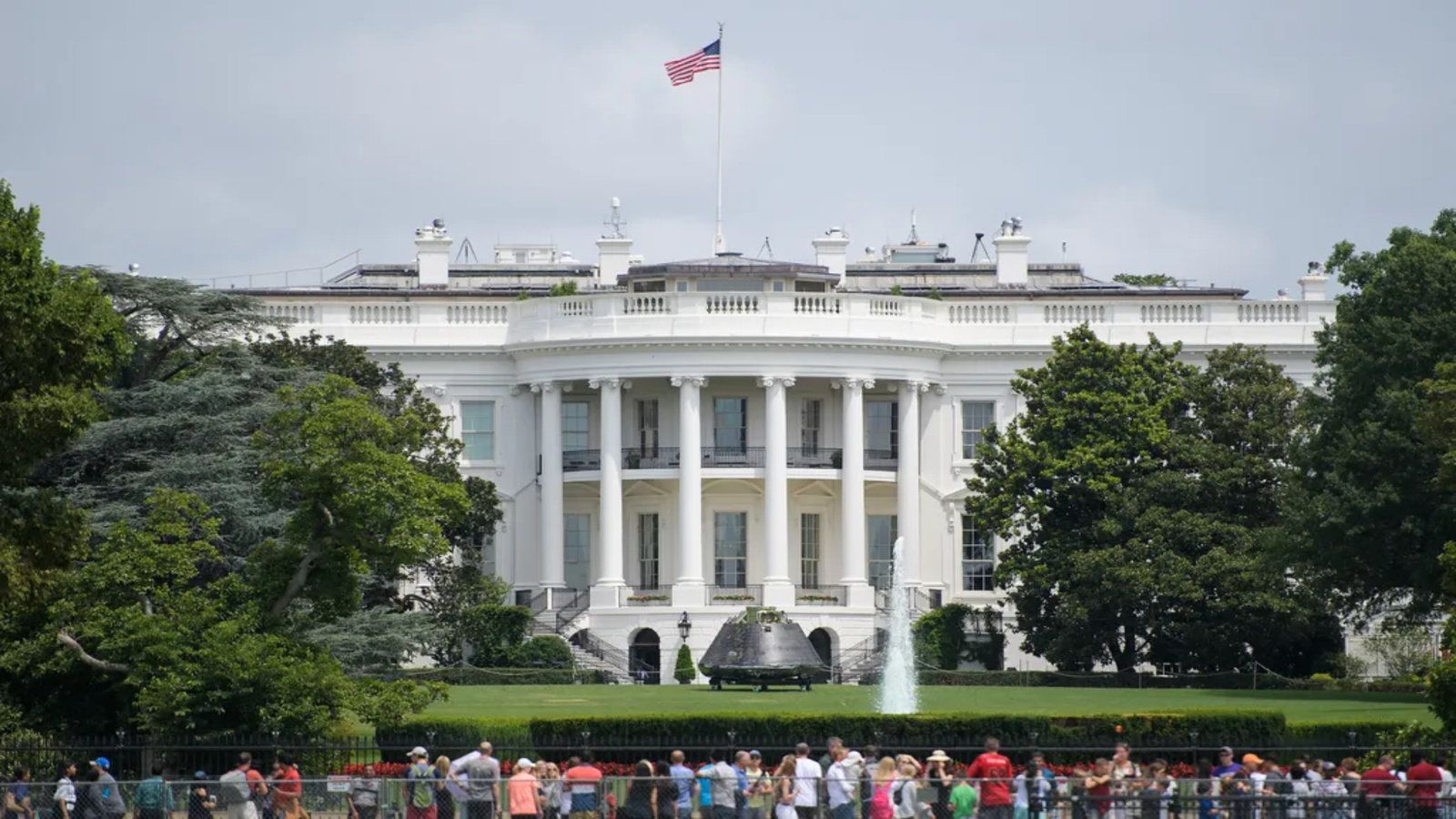
The White House has proposed massive changes to the scientific process in the U.S. which, if passed, could make science funding dependent on the whims of political appointees.
The Office of Management and Budget (OMB) proposed a new rule called “Guidance for Federal Financial Assistance” on May 28. This rule would give political appointees the power to change, limit, or even fully overturn support and funding for scientific grants. Not only would political appointees have authority over science funding — and therefore the science that gets done — but the decisions they make could also depend on whether scientists’ social media and personal lives align with the values of the current political party.
To clarify, political appointees are government employees who are given those positions by elected officials. Their position is not dependent on educational background, expertise, or experience. “This is an insidious set of proposals put forward through the most dry and uninteresting sounding processes that you can imagine,” Casey Dreier, Chief of Space Policy at The Planetary Society, told Space.com.

Breaking it down: What is being proposed? And what does it mean?
If finalized, this proposed rule would allow political appointees the power to change science funding no matter what has been decided through the traditional peer review scientific process. The rule states that scientific peer review “remains advisory and does not replace agency discretion.”
“You replace merit review, peer review, with partisan political review,” Dreier said.
What this means is the appointees could make the choice to go against peer review decisions based on their evaluation of the science itself — as well as whether or not they think that the personal lives of the scientists involved are aligned with the current political party.
“If you are part of a peaceful protest, if you post something on social media saying you disagree with the policy of the administration,” Dreier said, that “can be actually used against you. [They can] just quietly deny you, your graduate students, [or] your staff access to scientific research money that you otherwise would have earned by merit.”
And while this rule is being proposed by the current Trump administration, Dreier warns that even those who align with the current political party in charge should be concerned.
“Even if you are sympathetic to the political perspectives at play here, you are giving and centralizing control … you are opening up for a future Democratic administration to impose their partisan tests on what gets funded and not,” Dreier said. “You’re handing [over] incredible amounts of centralized control and restrictions on free speech, free associations, [and] free inquiry.”
While we have not seen attempted control over science funding in the U.S. like this before, Dreier draws a direct parallel to political decisions in China: “For an administration that says it wants to compete with China, this is actually taking a page out of the Communist Party playbook and saying, ‘what if we actually impose a partisan political test on these things?'”
And this rule wouldn’t just grant political appointees this power — it would also make it mandatory that every grant is reviewed by a political appointee. Furthermore, the rule would build on a 2025 executive order that ordered federal agencies to award grants that “advance the President’s policy priorities.”
It would also mean scientists working at federal agencies like NASA wouldn’t be able to use funding to publish their science in journals or in open access publications, and forbids scientists from participating in professional scientific societies if those organizations do what could be seen as “issue advocacy,” Dreier says.
So, why is this happening? According to the proposed rule, this is a response to a lack of “transparency, accountability, and proper oversight” in U.S. science between 2021 and 2024. There are also several criticisms of science handling during the previous presidential administration’s tenure.
The proposal elaborates, saying: “Federal awards were often used during those years to promote a ‘woke’ policy agenda that did not reflect the values of the vast majority of the American public.” The proposal further references what it describes as “unlawful DEI [Diversity, Equity, and Inclusion] practices, various anti-American ideologies in American education.”
What about space?
If finalized, this rule would affect all science in the U.S.
Looking at space science in particular, we can see not just how individual research grants might be affected, but also how large-scale research at NASA might be upended, changing how science (and which science) is funded at the agency.
For example, if you are a scientist working at NASA whose lifelong expertise is in Venus, and you apply for funding for research on Venus — and even if “maybe it’s profound, or maybe it’s very important research [or] it’s rated very highly by your peers,” Drier explains, you may run into an issue. “An assigned political appointee at NASA says, ‘you know, actually the President doesn’t care about Venus anymore, he only cares about the moon,’ so [they] reject it,” Dreier said.
He added that political appointees will be able to make these funding changes even if Congress has specifically allocated that money for that exact Venus research.
“This is a way to functionally impound resources,” Dreier said.
“NASA’s success depends on world-leading scientific capabilities. The nation’s scientific workforce, working closely with their international collaborators, has enabled historic discoveries such as past water on Mars, the accelerating Cosmos, the existence of exoplanets, and more,” The Planetary Society said about what’s at stake with this proposed rule in a statement.
But even beyond NASA, this proposed rule, which would include new limitations on collaboration with other countries, could jeopardize the position the U.S. has maintained as an authority in space science for decades.
“New restrictions on international activities would effectively decouple the United States from the rest of the world while introducing new security risks,” Cole Donovan, the director of policy at Stand Up for Science, told Space.com. “It would limit U.S. presence in international conferences, make it harder to publish information, and bog down what are currently routine transfers of information between international communities.”
Donovan added that this rule would also prevent astronomers from accessing certain observatories or facilities. Besides disconnecting space science communities, that could also introduce serious risks in orbit.
Under this proposed rule, “satellite operators can’t contact Chinese operators if there’s a risk of collision,” Donovan said. “This isn’t a hypothetical — there are dozens of these types of emergency notifications involving a U.S. and a Chinese satellite generated every day.”
The backlash
Science advocacy groups like The Planetary Society and Stand Up for Science have been quick to speak out about the proposed rule and the disruptive effects it could have on science in the U.S.
“The United States cannot be first in space if it is second in science. And the nation cannot lead the world in science if the systems are driven by politics rather than merit,” The Planetary Society said in a statement speaking out against the proposal. “The U.S. would cede the next generation of discoveries in space to other nations — including the potential detection of biosignatures or even life beyond Earth — if these rules are implemented.”
“We warned of this exact form of government overreach in science a year ago,” Colette Delawalla, founder of Stand Up for Science, told Scientific American. “It replaces expertise with political appointees, globally decouples the U.S. and completely guts our scientific ecosystem.”
With these concerns in mind, this proposed rule is not finalized, and it will not be finalized until public input has been completed. And not only is the government legally obligated to allow for comments on the rule, they are also obliged to respond.