

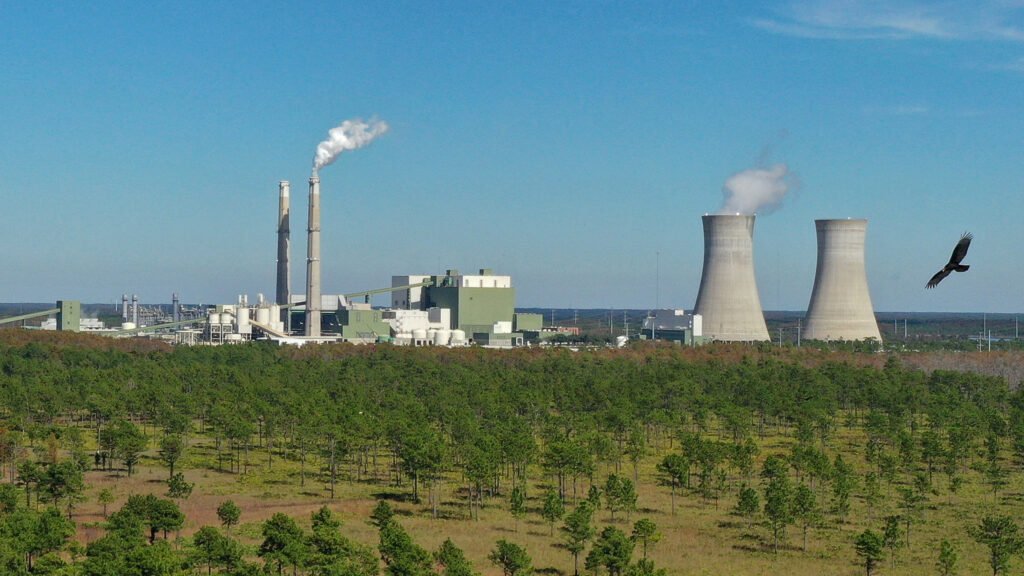
Under a Trump administration emergency order, a Florida coal-fired power plant will continue operating.
The facility had been scheduled for retirement in 2025 as part of an Orlando Utilities Commission (OUC) plan to transition to renewable energy sources such as solar, with the goal of achieving net zero emissions by 2050. OUC is the second-largest municipal utility in the state, serving more than 288,000 customers in Orange and Osceola counties.
In a statement, OUC said that as a result of the order, the utility “will not be able to place Stanton Energy Center Unit 1 into extended cold shutdown at this time. Additionally, OUC will fully comply with the order while continuing to prioritize the safe and reliable delivery of electricity to our customers and community.”
In his order, U.S. Energy Secretary Chris Wright cited an energy emergency in Florida that he attributed to a shortage of facilities and expected demand associated with a burgeoning data center industry in the state. The order also noted a February cold snap that strained OUC’s resources and forecasts for an especially hot summer. The order took effect June 4 and remains in place through Sept. 1.
“As described above, the conditions resulting from the combination of increasing demand and shortage will continue on in the near term and are also likely to continue in subsequent years,” the order states. “This could lead to the loss of power to homes and local businesses in the areas affected by curtailments or power outages, presenting a risk to public health and safety.”
Similar orders were issued in Colorado, Indiana, Michigan and Washington, reversing plans across the country for winding down coal plants, according to the Environmental Defense Fund.
Despite the concerns the DoE raised about increasing demand, an analysis by the North American Electric Reliability Corporation and OUC’s own public filings show the coal plants are not necessary to keep up with the demand, according to the group.
In the areas where the orders have been issued they are poised to boost electricity bills, as coal is a more costly and unreliable energy source, said Ted Kelly, director and lead counsel specializing in clean energy for the Environmental Defense Fund. The orders are issued under a law designed for temporary emergencies such as a weather event, with the Trump administration continuously renewing them, he said. In Michigan the continued operation of the J.H. Campbell coal plant since May 2025 has cost families and businesses more than $180 million, the group estimated.
In Orlando, the two large coal plants, with their looming cylinder-shaped cooling towers sending curls of steam into the clouds, are the most conspicuous part of the Stanton Energy Center, the sprawling energy-generating complex on the east side of the city. Coal plants in general are responsible for emissions that can harm people’s health and warm the global climate, leading to impacts such as hurricanes and wildfires.
When OUC announced in 2020 its commitment to net zero emissions by mid-century, the utility and city were recognized as leaders in a state where most municipalities were more focused on climate impacts such as sea level rise and flooding. The commitment set into motion one of the biggest evolutions at the utility in its nearly century-long history, utility leaders said at the time. OUC is expected to make a decision about its second coal plant by the end of the year.
“It’s been this real pattern we’ve seen, where utilities put together in a lot of areas of the country where it’s a progressive local government, put together a really thoughtful decarbonization plan,” Kelly said. “It’s really been a harmful disruption of that for the federal government to come in and say, ‘You can’t close down any coal plants.’ Effectively every large coal plant that was scheduled to retire since the Trump administration started, they have issued one of these orders and stopped it from retiring.”
About This Story
Perhaps you noticed: This story, like all the news we publish, is free to read. That’s because Inside Climate News is a 501c3 nonprofit organization. We do not charge a subscription fee, lock our news behind a paywall, or clutter our website with ads. We make our news on climate and the environment freely available to you and anyone who wants it.
That’s not all. We also share our news for free with scores of other media organizations around the country. Many of them can’t afford to do environmental journalism of their own. We’ve built bureaus from coast to coast to report local stories, collaborate with local newsrooms and co-publish articles so that this vital work is shared as widely as possible.
Two of us launched ICN in 2007. Six years later we earned a Pulitzer Prize for National Reporting, and now we run the oldest and largest dedicated climate newsroom in the nation. We tell the story in all its complexity. We hold polluters accountable. We expose environmental injustice. We debunk misinformation. We scrutinize solutions and inspire action.
Donations from readers like you fund every aspect of what we do. If you don’t already, will you support our ongoing work, our reporting on the biggest crisis facing our planet, and help us reach even more readers in more places?
Please take a moment to make a tax-deductible donation. Every one of them makes a difference.
Thank you,

Reporter, Florida
Amy Green covers the environment and climate change from Orlando, Florida. She is a mid-career journalist and author whose extensive reporting on the Everglades is featured in the book MOVING WATER, published by Johns Hopkins University Press, and podcast DRAINED, available wherever you get your podcasts. Amy’s work has been recognized with many awards, including a prestigious Edward R. Murrow Award and Public Media Journalists Association award.