

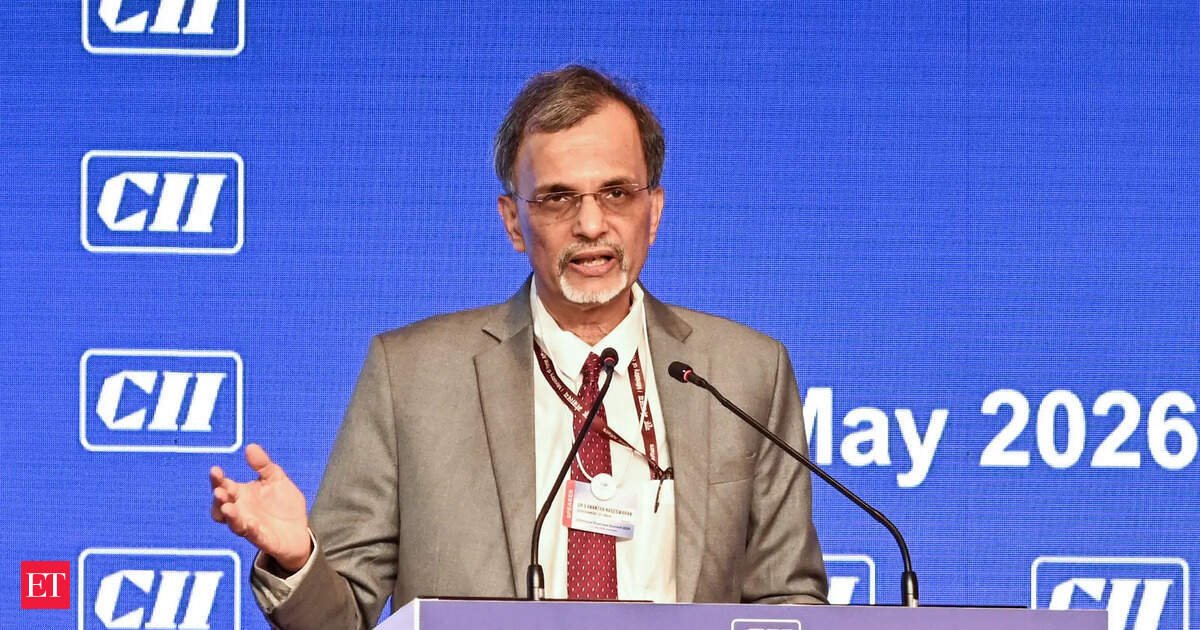
“India has a very short window, if at all, to absorb companies genuinely seeking to diversify. Whether we act within that window matters enormously,” the official noted in a presentation before the Parliamentary Standing Committee on Finance, sources said.
The presentation on the country’s overall economic situation was made before the panel, chaired by BJP MP Bhartruhari Mahtab, by chief economic adviser V Anantha Nageswaran last week.
The presentation identified ‘Three Forces Reshaping the World’ – Great-Power Competition, Fracture of the Western Alliance and China’s Manufacturing Supremacy – arguing that shifting geopolitical and economic realities require India to adopt a more agile and strategic response, sources said.
On China’s growing dominance, the presentation flagged Beijing’s expanding manufacturing and trade footprint as a major concern, noting that China’s trade surplus crossed a record $1.2 trillion in 2025.

The presentation suggested that China is creating hurdles for firms seeking to diversify operations beyond the country, complicating global supply-chain shifts, sources said.
Under the Great-Power Competition theme, the presentation noted that trade, technology and finance are increasingly being driven by strategic interests rather than comparative advantage.The multilateral framework that once served as a neutral platform for global growth is coming under pressure from competing power centres, requiring countries to recalibrate their economic approaches, the presentation noted, as per sources.
On the erosion of the Western Alliance, the presentation highlighted that Europe and the United States are increasingly diverging on trade, defence and economic sovereignty issues. This could create coalition-building opportunities for India while cautioning that the strategic space may narrow if not leveraged in time.
On the domestic front, the presentation said India’s economy has remained relatively resilient so far, with high-frequency indicators till April 2026 suggesting stable demand and economic activity. However, it flagged emerging signs of stress, warning that supply-side price pressures, monsoon uncertainties and widening trade deficits could create risks for inflation and the current account position.
At the same time, the presentation stressed that managing supply disruptions, maintaining macroeconomic stability, and pushing structural reforms during global uncertainty would strengthen India’s long-term economic foundations.