

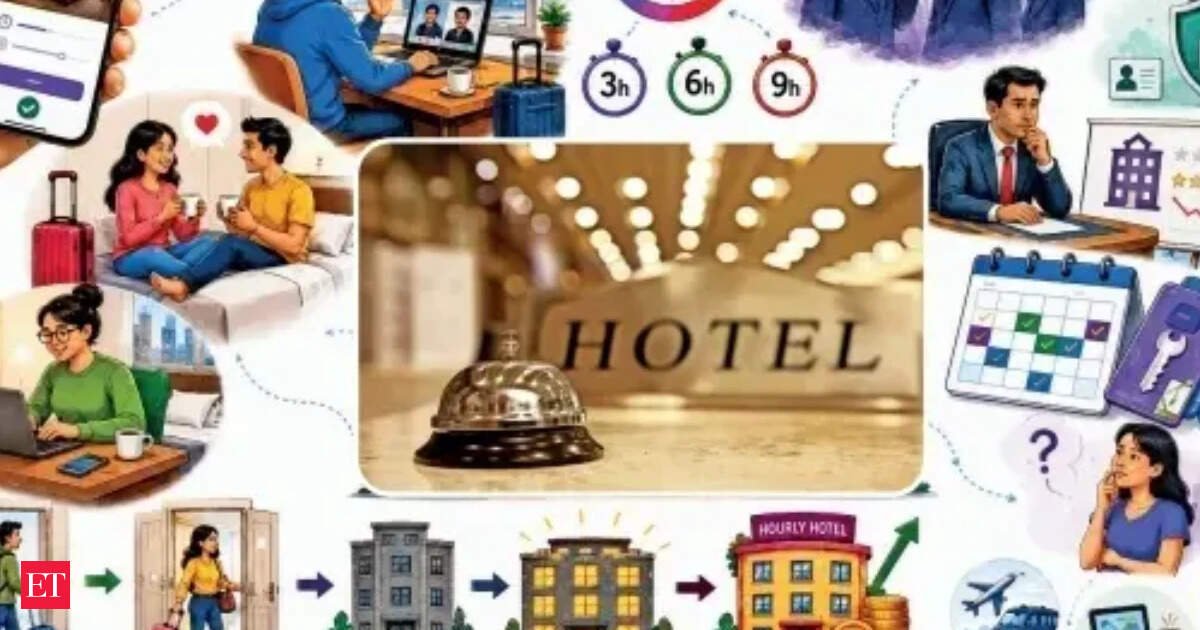
In 2014, during a trip with his wife, Mishra needed a hotel room for six hours as he did not want to drive late at night. But he was asked to pay for a full day and subjected to a series of intrusive questions despite being married—and was finally refused a room. “That got me thinking that there might be travellers like me who need rooms only for a few hours but have to pay for an entire day. Later, while working in the US, I came across pay-for-use concepts and felt that India needed a more flexible, customer-friendly model,” he says.
That experience led to the launch of Bag2Bag in 2019, an online platform for booking hotels, service apartments, homestays and other accommodations, with a focus on hourly stays.
The business started gaining momentum around 2021. Bag2Bag’s hourly-stay revenue has risen from roughly Rs 50 lakh in 2021 to Rs 5-6 crore today. The company has served more than 1 lakh customers, lists over 10,000 properties across India and offers hourly stays at 6,000-7,000 of them. The service is available in more than 50 cities, though Bengaluru and Mumbai remain its strongest markets.
Also read | The safe keepers: Inside India’s booming locker economy

“People now understand that this is a practical solution rather than a niche service. One of our biggest achievements has been to help normalise the category. Earlier, hourly stays were often associated with couples seeking privacy,” he says. “We deliberately broadened the use case by allowing family bookings, including travellers with children. We wanted people to see hourly stays for what they really are— a convenient accommodation option.”
HOUR OF NEED
That convenience is growing as online hotel booking platforms that allow short stays are on the rise. Alongside Bag2Bag, there is Noida-based Brevistay, Bengaluruheadquartered MiStay, Mumbai’s Hourly Rooms and Qwiksta, all specialising in micro stays. Larger travel platforms like MakeMyTrip, Agoda and Goibibo have also introduced hourly booking options.
Like Bag2Bag, Brevistay was born out of a travel inconvenience. In 2016, cofounders Prateek Singh, Aditya Naithani, Shubham Agarwal, Avnish Kumar and Nikhil Pathak arrived in Manali at 5 am only to find that hotels would not allow early check-ins without charging for an extra night. The friends went on to cofound the travel tech startup Brevistay, which raised Rs 3 crore in 2023 and today reports revenue of about Rs 18 crore. It has 15 lakh registered users, 4 lakh monthly active users and around 11,000 listed hotels, including brands such as Ginger, Ramada and Blue Motel.
LONG JOURNEY
Getting there, however, was not easy.
Pathak, cofounder and chief technology officer of Brevistay, says, “The challenge in this segment is not customers but hotels. In 2016, many hoteliers would simply bang the phone on us. Some agreed in principle but didn’t want their properties listed publicly and preferred bookings to come through offline calls. It took us nearly two years before we started seeing meaningful traction and recurring bookings,” says Pathak.
The same resistance greeted MiStay when it launched in 2016. Starting with a pilot in Delhi, MiStay has since expanded to more than 100 cities. Shwetha Sameernath, general manager, business and growth, MiStay, says, “When we launched, scepticism was high. Most hotels were uncomfortable with the model, concerned about guest quality and operational challenges. Over time, that changed as hotels began seeing it as a revenue opportunity.”
MiStay tackled resistance through education and curation. The company worked to show hoteliers that short stays served a broad and legitimate market of business travellers, transit passengers and day-use guests. It also selectively onboarded premium hotel brands, helping build credibility for the category. “When hotels see actual customer segments across varied, legitimate use cases, it builds their confidence that the model won’t compromise their brand,” says Sameernath, adding that the concept is now largely normalised.
Also read | Major change in buyer behaviour as e-scooters race deeper into Bharat
Pathak says the customer has evolved as well. Brevistay continues to market actively to couples, but he argues that the category should no longer be viewed through that lens. “There’s nothing illegal happening. In fact, there’s no law that prevents consenting adults from booking a hotel room. The issue was perception, not legality. What eventually changed minds was revenue,” he says. “Once hotels realised they could sell the same room multiple times in a day and generate seven or eight bookings instead of one, the business case became impossible to ignore.”
The use cases have expanded too. Back in 2017, couples accounted for nearly 90% of Brevistay’s bookings. Today, that figure is down to 50-60%. Business travellers, transit passengers, tourists looking to freshen up between journeys, students travelling for exams and people attending interviews or meetings have all emerged as important customer segments.
Hotels, meanwhile, have had to adapt operationally. Mishra says the biggest challenge is that traditional hotel system was never designed for flexible check-ins and check-outs. Bag2Bag addressed this by developing its own software platform for partner hotels. “Once they realised they could monetise idle inventory and generate additional revenue from rooms that would otherwise remain empty, adoption became much easier,” he says.
REVENUE CHECKS IN
For Sameernath, the turning point was the entry of premium hotel brands. “Today, acceptance has grown across the ecosystem. Channel managers and property management systems are evolving to support slot-based bookings, and customers increasingly treat hourly booking as the natural way to reserve a room for less than a day,” she says.
Also read | Indian tourists go viral for all wrong reasons. Here’s how not to become the next horror story
Mishra has observed another interesting shift. Reliability and brand trust are becoming increasingly important. “Whether it’s a three-star or a five-star property, even if a branded hotel costs 20-25% more, customers prefer it because they know what they’re getting,” he says. The economics are compelling for hotels too. Sameernath points out that average hotel occupancy in India is under 65%, while daytime occupancy can fall to as low as 30% as guests check out in the morning and new arrivals come in much later. Platforms like MiStay help hotels monetise those idle hours by attracting guests who would never have booked a full-day room. “For hotels near airports or railway stations, the upside is even greater. A room priced at Rs 8,000 for a full night could earn Rs 3,500-4,000 for a daytime slot and another Rs 6,000 for the night—generating `10,000-plus from the same room in a single day,” she says.
CHANGING PERCEPTION
MiStay today works with brands like IHG, Pride, Ramada, The Park, Radisson and Novotel IHG, while Brevistay is in discussions with Hyatt. Sameernath says that on the demand side, once customers experience flexible booking, they don’t go back. Their repeat rate reflects this, as 48% of MiStay’s monthly business comes from repeat guests “The pay-per-use model in hospitality is the same transformation that happened in transport. You no longer book a cab for a full day; you pay for the distance. Hotels are heading the same way,” she says.
Pathak believes the next wave of growth will be driven by younger travellers. “They’re vocal about spending time with their partners and don’t carry the hesitation earlier generations did. In metros, the industry has largely moved beyond the old perceptions, and hourly stays are increasingly viewed as a convenience product rather than something unusual.”
The customer, it seems, has reached the destination. The hospitality industry needs to arrive.
Challenges
- Persistent social stigma
- Trust and safety concerns
- Branded hotels worried about perception
- Complexities in managing multiple check-ins and check-outs
- Lack of awareness among travellers
Opportunities
- Rise in domestic travel and frequent short trips
- Growth of bleisure (business + leisure) travel
- Younger consumers demanding flexibility
- Tech platforms making discovery and booking seamless
- Hotels looking to monetise vacant rooms