

Diamonds in India have always been associated with generational wealth, to tradition and celebrations, especially weddings. However, India today is predominantly a country of young people—its Gen Z makes about 25-30 per cent of the country’s population, according to a joint report by Boston Consulting Group (BCG) and Snap Inc., influencing 43 per cent of household consumption, of which $200 billion comes directly from their own earnings.
Younger people have more disposable wealth—than earlier generations did. They also live away from families, i.e. parents, asserting independence and self-reliance. In this scenario, the association natural diamonds share with this generation, therefore, has also evolved.
Millennials and Gen Z buyers are not moving away from luxury—on the contrary, the growth of luxury in fashion, for example, is an indication that luxury spending is on a steady rise. Gen Z (aged 18-28) generate 51% of the total diamond market value, according to the 2025 De Beers India Diamond Acquisition Study (DAS), driven by population growth, a high acquisition rate (3.4%), and the highest average price paid per piece (Rs198,000).
 Spotlight Wire
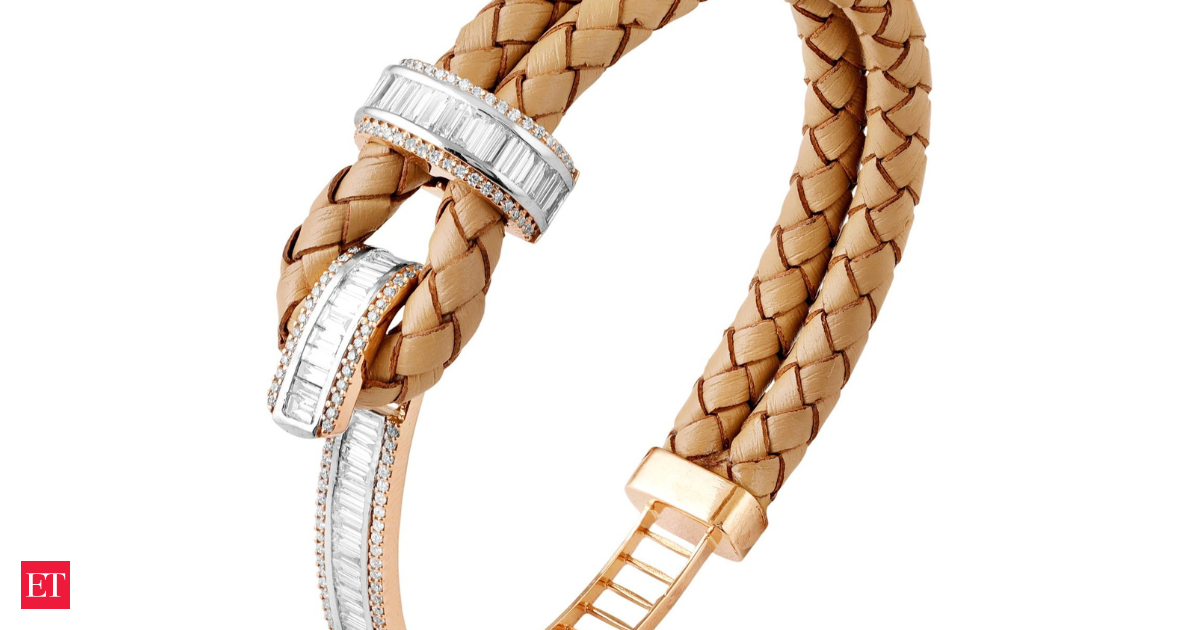
Anmol Accents -The Serpentine Y-Chain
But they are changing the terms around it. For many, value lies less in show and more in meaning. Purchases are expected to reflect identity, personal milestones and individual taste. That’s also because we live in a world of social media, of shares and likes, of photos and reels, so diamonds become a statement of personal style rather than just a symbol of wealth.

“Today’s customers seek authenticity, emotional connection, and transparent narratives around craftsmanship,” says Suraj Shantakumar, director of business strategy, Kirtilals Fine Diamond and Gold Jewellery. “We strive to continuously enhance our design portfolio to increase relevance to younger consumers. An ongoing upgradation of our in-house artisans’ skillsets and manufacturing technology builds more relevance and desirability for the discerning younger customer.”
This shift is allowing the natural diamond industry, as Shantakumar says, to reconfigure how it presents itself to a younger audience.
Spotlight WireYounger professionals are making independent spending decisions earlier in life. Jewellery is not just a wedding purchase or a family investment. The extended family does not collectively troop down to the store, as was the case two decades ago. Increasingly, consumers are buying for themselves—to mark professional successes or personal triumphs. Or even just because they liked something or because they saw someone else wear it. Purchases are not ‘need-based’, but ‘want-based’. This rise in self-purchase is changing both demand and design.
“The younger generation today is quite exposed to what is happening internationally, thanks to social media,” says Ishu Datwani, the founder of Anmol.
Datwani adds that Anmol, therefore, works on designs and creative communication comparable to international standards. Jewellers are keen on introducing collections that fit into daily life rather than cater only to special occasions. Rings, diamond tennis bracelets, pendants and smaller pieces are becoming more common among younger buyers who want jewellery that can be worn regularly and not just for special occasions. There is also greater interest in pieces that can be layered, mixed or styled across settings, from work meetings to a date to a larger social event.
The DAS found that while in 2014, the majority of diamond jewellery was kept in lockers, with 56 per cent worn only for special occasions and just 27 per cent worn daily. Now, 52 per cent of acquired diamonds are worn every day, while special-occasion-only wear has plummeted to 10 per cent.
The messaging around diamonds is changing too. For decades, advertising for diamonds has focused on the idea of marriage and romance—with a strong influence of the family. While those narratives are still relevant, brands are taking the conversation further. They are talking about self-worth, independence, women’s empowerment and personal choices. Many now feature women buying jewellery for themselves rather than waiting to receive it as a gift.
Campaigns led by celebrities have reach, but consumers are also responding to creators, stylists and influencers who make it more personal. Younger consumers are open to global trends but still connected to cultural ideas around celebration and family. This has led brands to develop communication that feels current without moving too far from familiar emotional themes.
Driven by access to information, buyers are asking more questions before making purchases. They want to know where the diamond has come from, how they are sourced and what goes into the making of each piece. In response, companies are putting more focus on craftsmanship and traceability.
“Emphasising pipeline integrity, traceability and associated sourcing best practices further enhances customer confidence for natural diamonds,” adds Shantakumar.
Spotlight WireBrands are investing in private consultations and digital experiences. Consumers often browse online before visiting stores, and retailers are creating systems that connect both experiences. This includes the use of technology, which young people love. Virtual try-ons, video consultations and online previews are now common. Platforms such as Instagram and Pinterest have also become important discovery channels, influencing how buyers research designs and compare options.
Vipin Sharma, the chief merchandising officer and head of design for BlueStone, says, “We are seeing young diamond buyers evolve with a strong point of view on the importance of design. They are more confident than before, choosing pieces that express a personal sense of style unique to them, rather than just what is popular or trending. For this generation, it’s about being true to what the product means to them specially.”
India remains one of the largest centres for diamond cutting and polishing, but it is also one of the most important consumer markets for the category. India is the second-largest diamond jewellery market globally, with a 12 per cent share of global demand (up from 10 per cent in 2019). It now trails only the United States (53 per cent), having overtaken both China and Japan, notes the DAS.
For the natural diamond industry, success may depend on how well it continues to adapt to changing ideas around identity, ownership and value.
Disclaimer: Information and images by Natural Diamond Council.