

Phantom pain is one of the most puzzling pain conditions in medicine. Even after a limb or body part has been removed, the brain can continue to perceive sensations, sometimes mild, sometimes debilitating.
What is phantom pain?
The term “phantom” originates from words meaning illusion or ghost, describing the strange experience of sensing a missing body part. Historical descriptions date back to the 16th century, when French military surgeon Ambroise Paré observed patients reporting pain in amputated limbs. The term “phantom limb” was later coined in 1871 by American neurologist and Civil War surgeon Silas Weir Mitchell.
While phantom pain is most commonly associated with arm or leg amputations, it is not limited to limb loss. T. Swathi, consultant neurologist, SRM Prime Hospital, Chennai, notes that it can also occur after breast removal surgery, eye removal, tooth extraction, rectal surgery, and other procedures involving the loss of a body part.
J. Alex, neurologist, SRM Global Hospitals, Chennai, distinguish between phantom sensation and phantom pain. Phantom sensation refers to the feeling that a removed body part is still present, while phantom pain involves actual discomfort or pain arising from that absent part. As Arun Kannan, senior consultant and robotic orthopedic surgeon, Apollo Hospitals, Chennai, explains, phantom sensation is generally harmless, whereas phantom pain can significantly affect sleep, daily activities, and quality of life.
Contrary to popular belief, phantom pain is not imagined. Brain imaging studies have shown measurable changes in pain-processing networks, making it a neurological condition.

What are the signs and symptoms?
Phantom pain can vary widely from person to person. Patients may describe burning, stabbing, cramping, throbbing, electric shock-like pain, itching, tingling, or a sensation that the missing limb is still moving.
Dr. Swathi explains that symptoms range from mild discomfort to severe pain episodes. Not all phantom sensations are painful. Some individuals experience feelings such as tingling or tickling, while others report intense pain that can be physically and emotionally exhausting.
The timing of symptoms can also differ. Although some people experience phantom pain soon after surgery, others may develop it months later. Experts note that the incidence tends to rise during the first six to twelve months after amputation before gradually declining, though symptoms can occasionally appear years after the loss of a limb.

Who is most at risk?
Phantom pain is remarkably common. Roopesh Kumar, director of neurosurgery, MGM Healthcare, Chennai, notes that global studies suggest between 50% and 80% of amputees experience phantom pain at some point. In India, available studies report similar rates, with prevalence generally ranging between 40% and 70%.
Several factors increase the likelihood of developing phantom pain: severe pain before amputation, significant pain in the residual or stump limb after surgery, traumatic amputations, nerve injuries or neuromas, anxiety, depression, post-traumatic stress disorder, or poor sleep, delayed rehabilitation, higher levels of amputation and poorly controlled post-operative pain. Dr. Arun Kannan notes that patients who experienced severe pain before surgery often have sensitised nerves, making them more vulnerable. Surgical technique also matters, particularly how nerves are handled during the procedure.
Experts say phantom pain represents an under-recognised public health issue in India, given the country’s substantial burden of diabetes-related amputations, vascular disease, road traffic injuries, and trauma.

Why is pain felt in a missing body part?
The answer lies in how the brain maps the body. Dr. Roopesh Kumar explains that every part of the body’s surface has a corresponding representation in the brain, often illustrated by the famous “homunculus” map. When a limb is amputated, the physical limb disappears, but its representation in the brain remains. “The arm may be gone, but the brain map remains,” he explains. “Its job is still to represent that arm.”
As a result, the brain continues to generate sensations linked to the missing body part. Dr. Alex describes this as the brain retaining a “memory map” of the limb. Meanwhile, the remaining nerves connected to the brain can become overactive, sending abnormal signals that the brain interprets as pain.
This combination of persistent brain representation and abnormal nerve signalling is believed to be a major contributor to phantom pain.

What are the treatment options?
There is currently no single cure for phantom pain, but experts say that a multidisciplinary approach can provide significant relief.
Medications such as gabapentin and pregabalin are commonly used to reduce nerve-related pain. Certain antidepressants may also be prescribed as part of pain management.
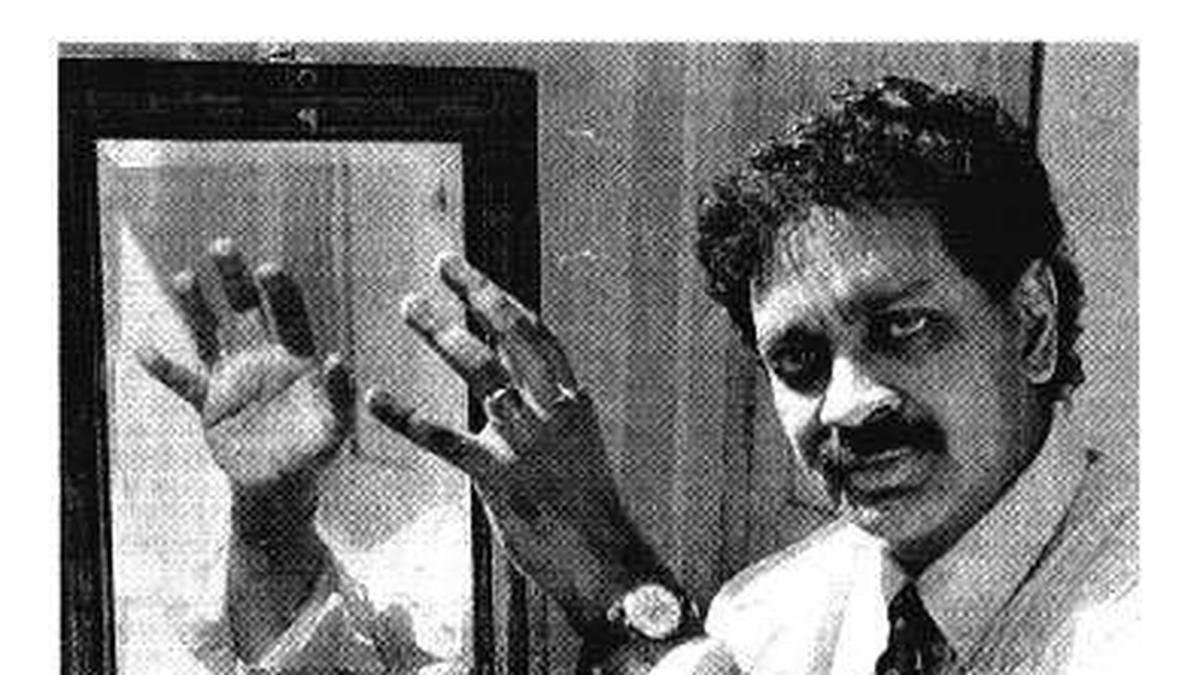
One of the best-known therapies is mirror therapy, popularised by Indian neuroscientist Dr. V.S. Ramachandran. In this technique, a mirror creates the visual illusion that the missing limb is still present. By observing movements of the intact limb reflected in the mirror, the brain can gradually “relearn” and reorganise its perception, reducing pain in some patients.
Other treatment approaches include: early rehabilitation and mobilisation, proper prosthetic fitting, physical stimulation of the residual limb, psychological support and cognitive behavioural therapy, pain management before and immediately after amputation, acupuncture and other complementary therapies and emerging techniques such as virtual reality-based rehabilitation and brain stimulation
Experts stress that emotional wellbeing is an important part of treatment. Anxiety, stress, and sleep disturbances can worsen symptoms, making psychological an important component of care.
Published – June 04, 2026 07:38 pm IST