

Close Menu

    Subscribe to Updates

    Get the latest news information from worldwide businesses.

    What's Hot

    Ex-WWE star was called dumb for dating CM Punk!

    June 4, 2026

    ‘One dangerous habit of India is calling every stomach issue gas’: Doctor explains why | Health News

    June 4, 2026

    After 20 years, scientists finally shrink a powerful laser onto a chip

    June 4, 2026
    Facebook Instagram YouTube LinkedIn X (Twitter)
    Trending
    • Ex-WWE star was called dumb for dating CM Punk!
    • ‘One dangerous habit of India is calling every stomach issue gas’: Doctor explains why | Health News
    • After 20 years, scientists finally shrink a powerful laser onto a chip
    • Mankind Pharma Buys Remaining 10% Stake in Upakarma Ayurveda for Rs 75 Lakh
    • Amazon’s new plan for games: James Bond and AI Snoop Dogg
    • Meta’s Oversight Board says account bans lack due process, transparency
    • Economist Neelkanth Mishra appointed India’s Executive Director at World Bank
    • Microfinance NPAs may edge up in FY27 as write-off practices normalise: CareEdge
    Newspublicly
    • About Us
    • Advertise & Partner with us
    • Pitch Your Story
    • Contact Us
    Facebook Instagram LinkedIn X (Twitter)
    Subscribe
    • Home
    • World News
      • Asia
      • India
      • USA
      • UK & Europe
      • Middle East
    • Economy & Business
      • Global Economy
      • Corporate & Industry
      • Finance & Markets
      • Policy & Trade
    • Technology
      • Gadgets & Devices
      • Software & Apps
      • AI & Machine Learning
      • Robotics & Automation
    • Health & Medicine
      • Fitness & Nutrition
      • Research & Innovation
      • Disease & Treatment
      • Doctors, Clinics & Patient Care
    • Travel & Tourism
    • Automobile
      • Electric & Hybrid Vehicles
      • Auto Industry Insights
    • Sports
    • More
      • Education
      • Real Estate
      • Environment & Climate
      • Space & Astronomy
      • War & Conflicts
    Newspublicly
    Home»More»Space & Astronomy»NASA’s dead Mars orbiter MAVEN will crash into the Red Planet in the next 100 years. It’s not the only probe in the Mars morgue
    Space & Astronomy

    NASA’s dead Mars orbiter MAVEN will crash into the Red Planet in the next 100 years. It’s not the only probe in the Mars morgue

    AdminBy AdminJune 4, 2026No Comments3 Mins Read0 Views
    Share
    Facebook Twitter LinkedIn Copy Link WhatsApp


    The Mars graveyard just welcomed another corpse.

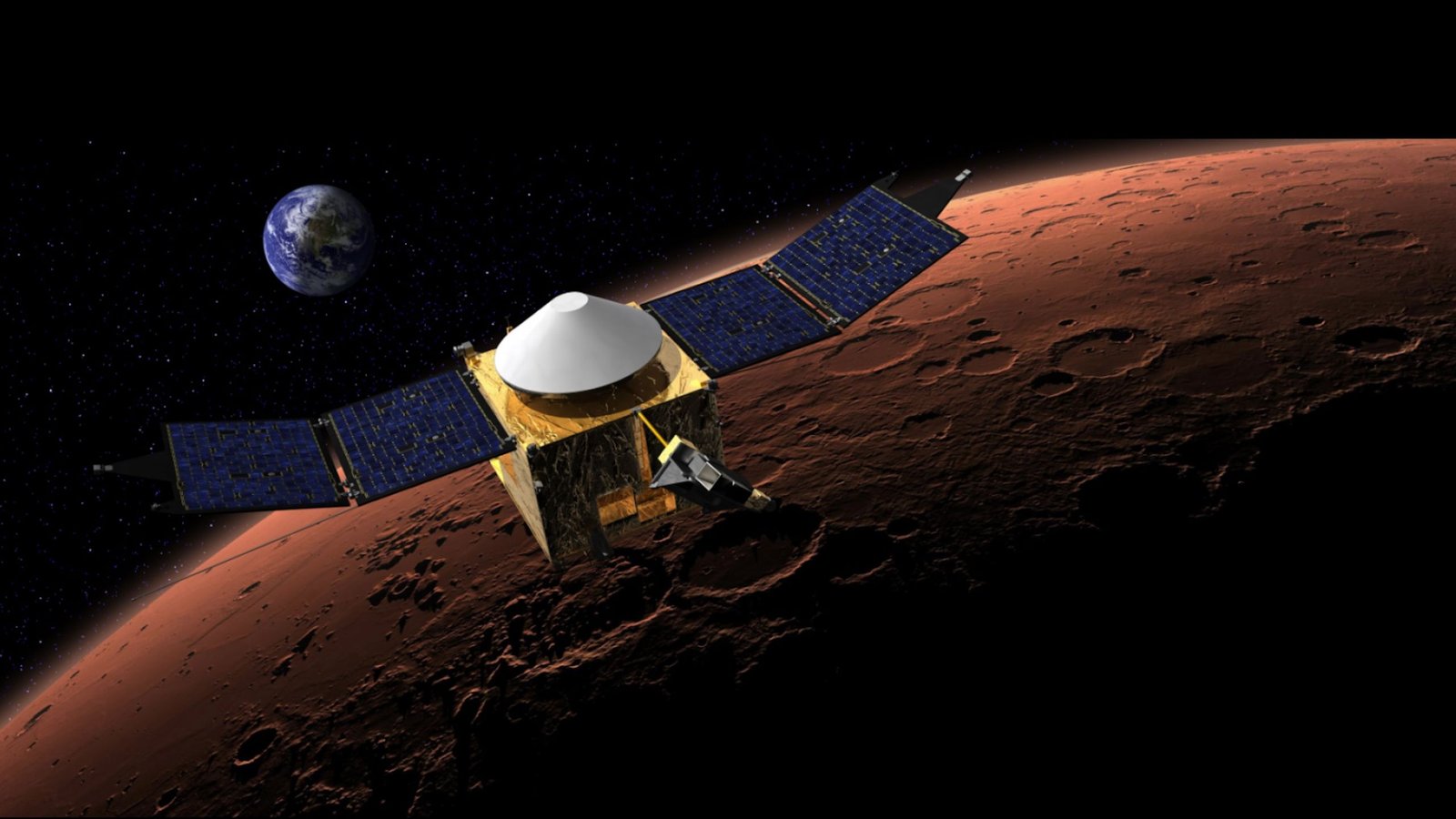
    On Wednesday (June 3), NASA officially declared its MAVEN orbiter dead, closing the book on a highly successful mission that studied the Red Planet’s atmosphere for nearly a dozen years.

    The MAVEN team didn’t script this ending; the orbiter went dark without warning this past December, and it remained silent despite repeated attempts to hail it. But MAVEN’s ultimate fate would have been roughly the same even if its handlers had been able to shut it down in a controlled fashion.

    “The nominal plan for disposing of the spacecraft at the end of its mission was just to leave it in that nominal orbit, where it would remain for a period of 50 to 100 years before entering the Martian atmosphere,” MAVEN Project Manager Mike Moreau, of NASA’s Goddard Space Flight Center in Greenbelt, Maryland, said during a press conference on Wednesday.

    “So, the spacecraft’s basically in a configuration, in an orbit, that’s very similar to what it would have been if the mission had ended nominally,” he added.


    You may like

    And that’s what happens to dead Mars orbiters: They generally keep circling for a half-century or more, until the planet’s thin atmosphere drags them down and burns them up. Or the end could come considerably sooner, if they’re unlucky enough to slam into one of their brethren or into Phobos or Deimos, the two moons of Mars. (Indeed, MAVEN had to perform a maneuver in February 2017 to avoid a potential collision with Phobos.)

    Some of these probes may already have been pulled down, considering the long timeline of Mars exploration. Here’s a brief rundown of the orbiter missions that have successfully arrived at the Red Planet to date:

    Space

    • Mariner 9 (NASA; arrived November 1971)
    • Mars 2 (USSR; November 1971)
    • Mars 3 (USSR; December 1971)
    • Mars 5 (USSR; February 1976)
    • Viking 1 (NASA; June 1976)
    • Viking 2 (NASA; August 1976) 
    • Phobos 2 (USSR; January 1989)
    • Mars Global Surveyor (NASA; September 1997) 
    • Mars Odyssey (NASA; October 2001)
    • Mars Express (European Space Agency; December 2003); 
    • Mars Reconnaissance Orbiter, or MRO (NASA; March 2006)
    • Mars Orbiter Mission (India; September 2014)
    • MAVEN (NASA; September 2014)
    • ExoMars Trace Gas Orbiter, or TGO (ESA; October 2016)
    • Emirates Mars Mission, or Hope (UAE; February 2021)
    • Tianwen 1 (China; February 2021)

    Only Mars Odyssey, Mars Express, MRO, TGO, Hope and Tianwen 1 remain operational today, meaning the orbital graveyard has up to a dozen bodies in it. (It’s tough to track unresponsive spacecraft in Mars orbit, so we generally don’t know which dead ones are still aloft.)

    There’s a Mars graveyard on the surface, too. Among the many robots being buried by the wind-blown red dirt are NASA’s Spirit and Opportunity rovers, Ingenuity helicopter and Pathfinder lander (which Mark Watney finds and uses in the book and movie “The Martian“), and Zhurong, a rover that was part of China’s Tianwen 1 mission.

    Just two Mars surface craft remain operational today: NASA’s Curiosity and Perseverance rovers, which landed in August 2012 and February 2021, respectively.

    But let’s end with an appreciation of MAVEN (whose name is short for “Mars Atmosphere and Volatile Evolution”). The probe’s data has helped scientists better understand Mars’ dramatic transition from a relatively warm and wet world to the frigid desert we know today.

    That change occurred because Mars lost most of its once-thick atmosphere. (The planet’s air is now just 1% as dense as that of Earth at sea level.) Thanks to MAVEN, we know that loss was driven by the solar wind and occurred between 4.2 billion and 3.7 billion years ago — around the time that life was getting started here on Earth.


    Source link

    Author

    • Admin

      NewsPublicly.com is News & Articles Platform that creating SEO-focused articles on travel, lifestyle, and digital trends.

    Admin
    • Website

    NewsPublicly.com is News & Articles Platform that creating SEO-focused articles on travel, lifestyle, and digital trends.

    Related Posts

    Most exoplanets might be ‘soot factories,’ scientists say: ‘Like you have a natural diesel engine’

    June 4, 2026

    A rainbow patchwork quilt shows agriculture from space photo of the day for June 4, 2026

    June 4, 2026

    ‘Silo’ season 3 trailer teases showing us how the world ended (video)

    June 4, 2026
    Leave A Reply Cancel Reply

    Demo
    Top Posts

    The Blue Moon rises on May 30— Where and when to see the second full moon of the month

    May 30, 202640 Views

    New SOCOM rifle allows barrel swapping and cartridge changes

    June 1, 202632 Views

    “Inside Gemini Robotics 1.5: How Robots Learn to Reason & Act

    November 22, 202525 Views

    525 pounds of cocaine seized after Nebraska K9 alerts troopers on I-80

    May 28, 202624 Views
    Don't Miss

    Ex-WWE star was called dumb for dating CM Punk!

    June 4, 20263 Mins Read0 Views

    It’s been around two decades since CM Punk made his first appearance in WWE, but…

    ‘One dangerous habit of India is calling every stomach issue gas’: Doctor explains why | Health News

    June 4, 2026

    After 20 years, scientists finally shrink a powerful laser onto a chip

    June 4, 2026

    Mankind Pharma Buys Remaining 10% Stake in Upakarma Ayurveda for Rs 75 Lakh

    June 4, 2026
    Stay In Touch
    • Facebook
    • Twitter
    • Instagram
    • YouTube
    • LinkedIn
    • WhatsApp

    Subscribe to Updates

    Get the latest creative news from SmartMag about art & design.

    Demo
    NEWSPUBLICLY
    Facebook X (Twitter) Instagram LinkedIn

    Home

    • About Us
    • Leadership
    • Advertise & Partner With Us
    • Pitch Your Story
    • Media Kit & Pricing
    • Career
    • FAQs

    Guidelines

    • Editorial & Submission
    • Partnership
    • Advertising & Sponsor
    • Intellectual Property Policy
    • Community & Comment
    • Security & Data Protection
    • Send Your Opinion

    Quick Links

    • Cookie Policy
    • Payment & Billing Terms
    • Refund & Cancellation
    • Copyright Policy
    • Complaint & Support
    • Sitemap
    • Contact Us

    Subscribe Us

    Get the latest news and updates!

    Copyright © 2026 Newspublicly (DIGITALIX COMMUNICATION). All Rights Reserved.
    • Privacy Policy
    • Terms of Use
    • Disclaimer