

France is a country that fastidiously applies rigorous nomenclature to everything from cheese to wine. (You know the rule: If it’s not made in Champagne, it’s not Champagne.) So of course a nation famed for its exacting culture and being the most visited in the world—clocking 102 million international tourists in 2025—has a very specific appellation system for its luxury hotels.
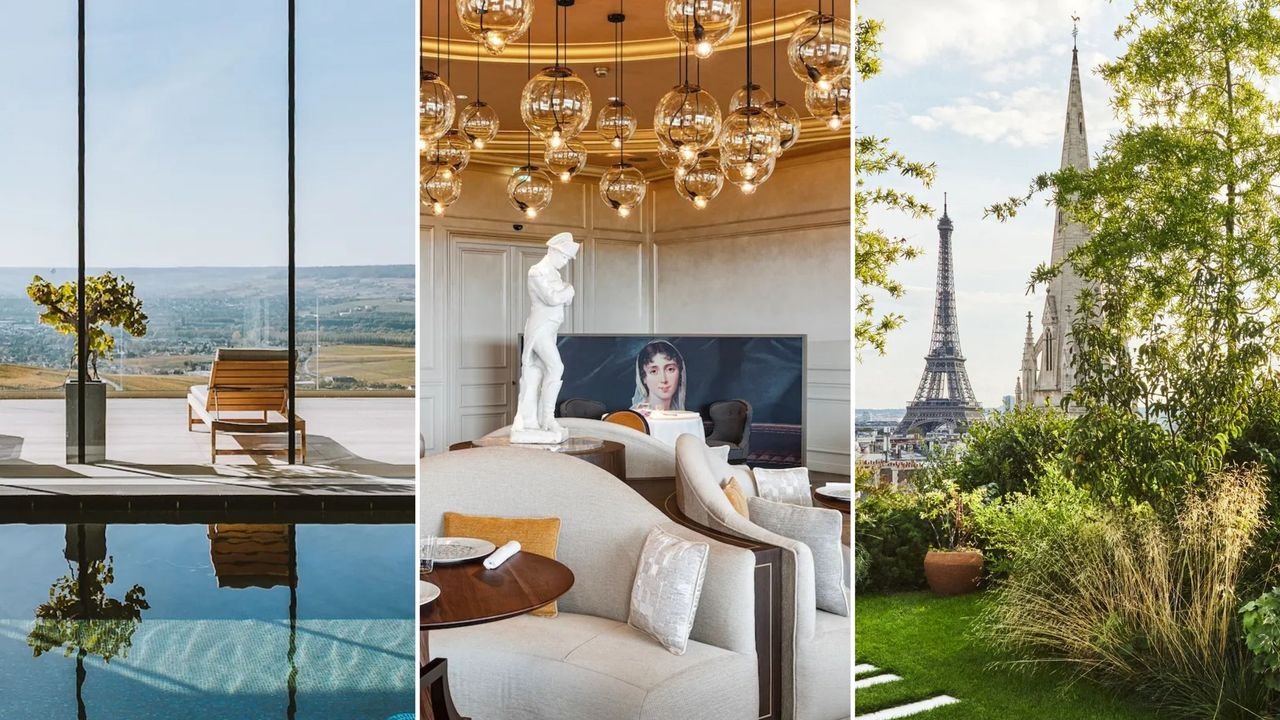
On June 2, France’s Ministry of Tourism has expanded its list of hotels and resorts with the highly-coveted “Palace” distinction for the first time since 2022. The designation recognizes a level of hospitality that, in the Ministry’s view, exceeds even that of a traditional five-star property. There are six newly minted Palace hotels in metropolitan France: Bulgari Hotel Paris, Cheval Blanc Paris, and Fouquet’s Paris in the capital; Four Seasons Megève in the French Alps; Hôtel Martinez – The Unbound Collection by Hyatt in the South of France; and Royal Champagne Hotel & Spa in—where else?—Champagne.
Additionally, Palace status was renewed for 27 other hotels who reapplied for it, a coterie of urban grandes dames, rural retreats, beachfront pads, and sumptuous alpine lodges that include iconic names like Hôtel de Crillon, A Rosewood Hotel; Le Meurice; and Airelles Gordes, La Bastide (all three of which have just received CNT Triple Crown status, our newest—and most prestigious—award yet).
The exact criteria for what makes a Palace hotel are well guarded, but applicants are evaluated on their location, design and appearance, cultural heritage, spa and restaurant venues, and level of service, among other considerations. The distinction is not permanent and must be retained through a reapplication process every three years. In 2026, the complete tally of Palace hotels in France now comes to 33, the largest the list has ever been.
All the properties—the new initiates and those who re-pledged, so to speak—were honored at an event at the Hôtel Salomon de Rothschild in Paris on June 2. Following the announcement of the six new Palaces, representatives from the hotels and members of the media were invited to something that resembled a high school science fair for luxury tourism: Select Palaces manned booths and stations that demonstrated their hotels’ offerings. Le Meurice handed out desserts by celebrity pastry chef Cedric Grollet. Hôtel de Crillon served cocktails—and non-alcoholic versions—from its popular Bar Les Ambassadeurs. Shangri-la Paris had a spa therapist on hand for five-minute face massages. Les Sources de Caudalie (another CNT Triple Crown winner) poured Bordeaux wine from its estate’s vineyards. Southwestern countryside hotel Les Prés d’Eugénie brought jars of honey as well as the bees that made them.
Not present, however, were the hotels whose Palace distinctions were not renewed after the latest nationwide evaluation: Hôtel Du Palais Biarritz – The Unbound Collection by Hyatt; Mandarin Oriental, Paris; and Park Hyatt Paris-Vendôme (a winner of the CNT Triple Crown). Answering a question from the audience, Christian Mantei, the president of the country’s tourism development agency Atout France, explained that any hotel that has lost its Palace label is welcome to reapply again next year. According to chatter among the event attendees, all three will likely pursue Palace status after significant property renovations.
Perhaps that’s what France has figured out, the whole point to such meticulous labeling processes. No one gets to rest on their laurels, and so the standards—whether of cheese, wine, or luxury hotels—are raised ever higher, most often to the benefit of travelers. To next year’s would-be Palaces: Bon chance.