

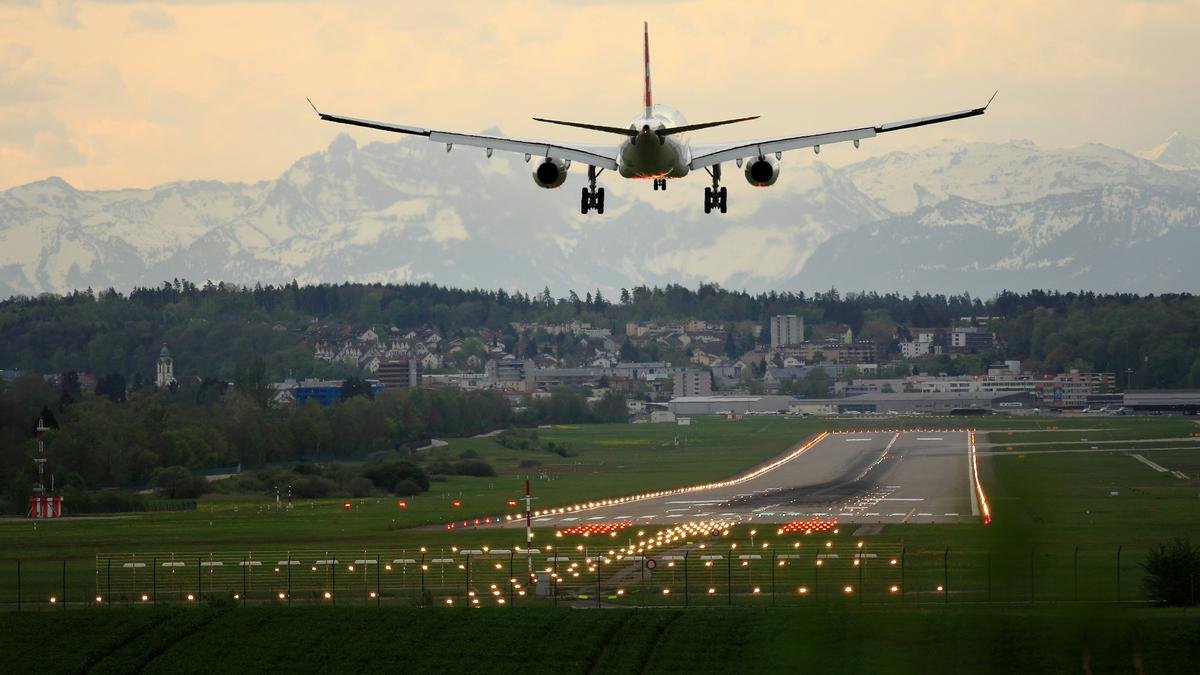
Every few minutes, aircraft descend over densely populated neighbourhoods near India’s major airports. For the people here, the noise has been almost constant for years, often even continuing through the night. India’s aviation and environmental regulations require airports to map the aircraft noise exposure using decibel contours — maps showing how the air pressure varies around the airport. Official assessments have also identified high-noise zones extending into residential areas.
But even as India’s airports monitor sound with increasing technical precision, they have paid far less attention to what years of repeated exposure may be doing to people. Research on the long-term biological effects of chronic aircraft noise in India is also limited. Some emerging research has pointed to inflammation, stress-related changes, and even cognitive effects. The fact remains, however, that the gap between regulatory noise monitoring and understanding biological risk is widening.
Aircraft noise, biological stress
The limited research available, often confined to high-intensity occupational settings such as aviation personnel, nevertheless suggests aircraft noise may have effects far beyond hearing loss alone. One 2025 study led by Manish Shukla, a scientist at the Defence Institute of Physiology and Allied Sciences, a laboratory under the Defence Research and Development Organisation in New Delhi, checked 621 Air Force personnel who were chronically exposed to aircraft noise. The researchers found elevated levels of systemic inflammation and oxidative stress and lower heart-rate variability.
These personnel also showed subclinical cochlear and neural damage. While their standard hearing tests were normal, they had inner-ear and auditory nerve dysfunction.
Together, the findings suggested aircraft noise may be a chronic biological stressor affecting both auditory and cardiovascular systems. Dr. Shukla noted that even lower urban noise levels, when experienced over long periods, could potentially trigger similar stress-related pathways in the body.
He added that current aircraft noise assessment frameworks may underestimate broader public health risks because they remain largely centered on hearing damage and decibel thresholds. He noted that emerging evidence increasingly links chronic noise exposure to stress-related inflammation and cardiovascular effects, even at lower exposure levels.
The current approaches to monitoring also fall short of addressing cumulative biological stress, Dr. Shukla said.
Unequal risk
The gap between monitoring noise and understanding risk requires technical but also social solutions because of how the options of the people at risk are constrained. Not all people living near airports can afford to move elsewhere or fully proof their homes from the vibrations and noise.
Rajeev Kariya, who has lived near Delhi airport flight paths for decades now, said aircraft noise has become more intense over the years as flights have become larger and more frequent and airports have extended runway operations. He said the continuous noise regularly disrupts sleep and irritates him throughout the day. He installed expensive double-glazed windows but they did little to keep the noise out. His neighbourhood, he said, is suffused with it.
Researchers have said the health effects of noise depend on how loud it is as well as on how often it occurs, how long it continues for, whether people have enough time to recover before the next exposure — especially as they sleep at night — and cumulative long-term exposure.
Both World Health Organization and International Civil Aviation Organization guidelines have acknowledged these factors.
The standard acoustic metrics are designed for steady industrial noise. They do not capture the intermittent, burst-like nature of the noise from aircraft flying overhead. That is, each takeoff produces sudden sound peaks and that can trigger disproportionate psychological responses.
Markandeya Tiwari, a former faculty member of the Department of Civil Engineering at IIT-Banaras Hindu University, said relying only on averaged indicators, such as Leq and LDN, is insufficient to understand aircraft noise exposure. He added that additional metrics such as L10, L50, and L90 are required to capture fluctuations, peak exposure periods, and intermittent noise.
Leq is the average acoustic energy. LDN is a variant of Leq over 24 hours plus 10 dB added to all nighttime noise. L10, L50, and L90 are the sound levels exceeded for 10%, 50%, and 90% of the time.
Activist Anil Sood, who has been involved in legal disputes over airport noise for nearly 17 years, has disputed whether averaged indicators can capture repeated noise peaks, nighttime disturbances, and long-term exposure linked to health risks. Using RTI applications and court proceedings, Mr. Sood has questioned official monitoring methodologies and airport-noise assessments.
According to him, while the Central Pollution Control Board (CPCB) is formally responsible for monitoring aviation noise, most of the compliance is handled by airport operators and the Directorate General of Civil Aviation (DGCA).
Former CPCB regional director D.K. Soni said the current regulations do not adequately address the long-term public-health implications of chronic noise. Cumulative exposure assessment, he said, remains a low regulatory priority.
CSIR-National Environment Engineering Research Institute senior technical officer Satish K. Lokhande said India’s aircraft noise monitoring needs substantial improvements.
”Currently, monitoring is largely limited to regulatory compliance rather than long-term health-based assessments,” he said, recommending real-time noise monitoring networks around residential and hospital zones with public dashboards.
Beyond decibels
According to Dr. Tiwari, acoustic monitoring that is mindful of fluctuations in sound levels could help identify when peak exposure occurs. That then could allow doctors and hospitals, urban planners, and architects to develop more targeted ways to mitigate noise and health-based standards for affected populations.
Taken together, the challenge now is not that data is unavailable — it exists — but that health-based evidence of harm is linked in a very limited way to aviation regulations. Until that changes, India may continue to measure aircraft noise with great precision even as it knows less and less about the noise’s long-term impact.
Rohan Singh is an independent science journalist in Lucknow. Kushagra Rajendra is Head, Environment and Sustainability, Amity University, Haryana. Argha Kamal Guha is assistant professor, Adamas University, Kolkata.
Published – June 03, 2026 07:30 am IST