

Dr Rani Bang and Dr Abhay Bang are a world-renowned Gandhian couple based in Maoist-affected Gadchiroli, whose remarkable contribution to tribal health has earned them several national and international accolades. Their Gadchiroli model, which involved the training of healthcare workers to diagnose and treat pneumonia in children, was adopted by 16 countries and was accepted by international bodies like WHO, UNICEF. It has also became the blueprint for the Government of India’s National ASHA Program, launched in 2005 under the National Rural Health Mission. The couple sits down at their NGO SEARCH (Society for Education, Action & Research in Community Health) to critically review India’s community health care system, the role of ASHAs and an urgent need for a change in the system.

Twenty years after the ASHA (Accredited Social Health Activist) programme was launched, how do you critically assess it? You had trained the trainers for ASHA programme and had also developed the training material two decades ago.

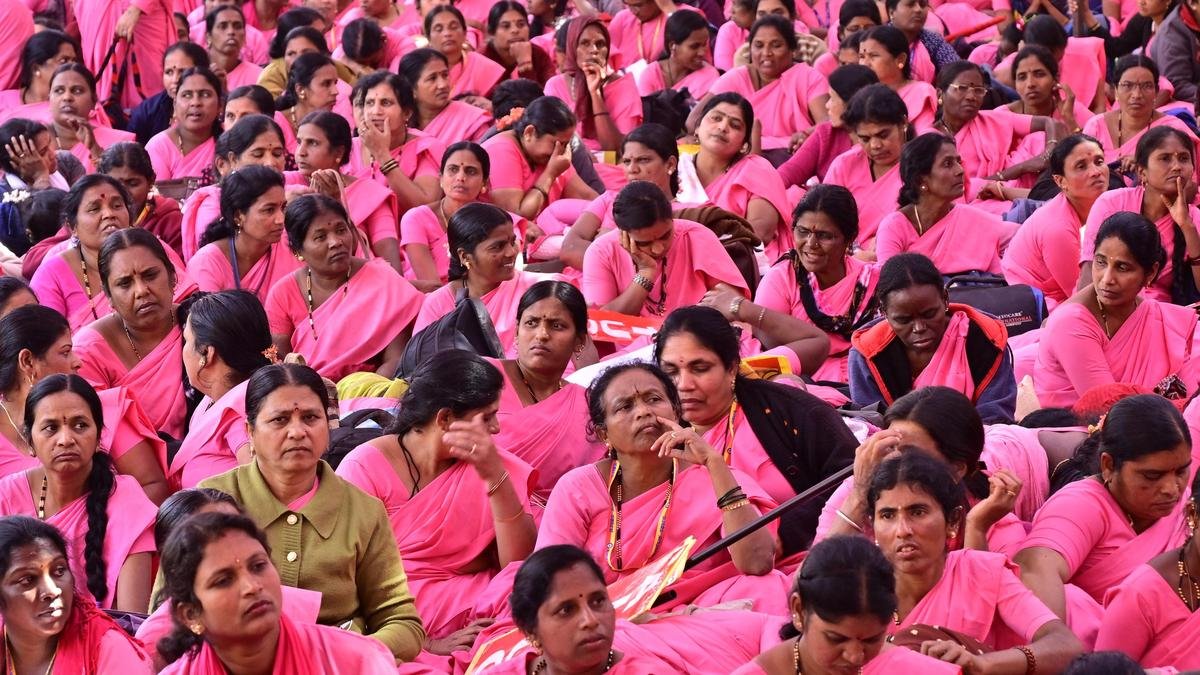
ASHA programme is a remarkable tribute to the capacity of rural women. They have made a significant contribution to India’s health care system. Initially, when the programme was launched, there was resistance from bureaucrats and technocrats. They had thought, what would a semi-literate woman do? You always need doctors. They used to compare with the international standards. But Indian villages did not need international standards. They needed something which was immediately accessible 24 hours. So, ASHA programme was launched. We trained the trainers. The national trainers trained the district trainers who trained about 10 lakh ASHAs. So currently there are one million ASHAs in India. This period has seen the most remarkable drop in child mortality, which had never seen such rapid reduction.
ASHAs have proven their effectiveness not only in reducing child mortality using home-based newborn care, but for several other programmes too. Today, if the health department has some presence in six lakh villages, though inadequate, it is thanks to ASHAs.
Of late, the ASHAs have been protesting, demanding better wages. How do you think their concerns can be addressed?
Firstly, ASHA should not be considered as a panacea for all the problems. Today, they are overburdened. We think that ASHAs should be given limited responsibility which they can do properly. When importance is given to only quantity, quality suffers. So, government has to decide what our main priorities are. ASHAs need to be given more role, but in a defined manner. What is being done currently is that she identifies the illness and brings the patient to the door of Primary Health Centre (PHC). But there is no doctor at that PHC. The community health officer is often absent. And so, instead of making her merely a recruitment agent of patients for healthcare system, she should be empowered to manage cases. That will give her more credibility.
Her training and supervision needs to strengthen. She needs to be properly remunerated. There is so much work they do at the rural level that several villages now want the ASHAs to become their Sarpanchs.
Is that not overburdening her with responsibilities? Does the community health care system in India’s villages need any changes now?
European countries spend 10%of their GDP on health care. The USA spends 17% of its GDP on health. In India, Centre and State together spend 1% of GDP on health care. This allocation needs to increase three to four times more. India should have 30 million people involved in healthcare. And India’s health budget should be at least three times more. And then the picture can change. In tribal villages, if they can do their farming, if they can do their forestry, why not healthcare? Healthcare can be simplified and made accessible to tribal villages too. Local youngsters can be identified to be bare-feet doctors there.
There are six lakh villages in India. If you consider the tribal padas, the figure goes to one million. In this age of non-communicable diseases, every village today has 200 hypertensive and 40 diabetic patients behind 1,000 population. Then, the older people need a lot more care. Today, there are one million ASHA workers. But we need the same number of additional health workers. In fact, in each village, we need two to three community health workers. One limitation for ASHAs is, they may not reach the male population effectively. Thus, a pair of a man and a woman will create more access for the entire population.
The male health worker can be named ‘Ashok’, the one who reduces pain.
In this age of privatisation of healthcare services, has your concept of ‘Arogya Swarajya’ changed too?
Arogya Swarajya means ‘I am empowered to take care of my health, individually, family-wise or community-wise.’ And most of the care for illnesses should be possible within the community. Which villager wants to go to some city and wait outside a big hospital? So, they need everything in their own village. We should be able to provide that, so that power is in the hands of the people, the individual and the family to prevent illness, to live in such a way that illnesses will not occur. Now, tobacco and alcohol have become so common in India. Fast foods have become very common. Excess use of sugar and salt have become very common. And these produce all non-communicable diseases. Once you develop non-communicable disease like heart attack, stroke, diabetes, hypertension, cancer, then it is lifelong disease.
So, empowering people to live a healthy lifestyle, to manage their own health especially with modern technology, makes it immediately feasible. Now, with the self-monitoring devices, you can monitor your pulse rate, your BP, your sugar. Your ECG can be taken and tele consultation can be provided. The modern apps and tele connectivity have made it eminently possible that people should be able to manage their own health.
And the more we do it, more we will reduce their dependence on the medical care system. Still, for 10-20% illnesses, advanced medical care systems will be required. There, the government cannot shrug off its responsibility. The government has to provide for that.