

Close Menu

    Subscribe to Updates

    Get the latest news information from worldwide businesses.

    What's Hot

    Best Sprites in Fortnite Chapter 7 Season 3

    June 7, 2026

    Experts stress early diagnosis and awareness to improve outcomes in brain tumour

    June 7, 2026

    Study Suggests Hysterectomy and Oophorectomy Linked to Reduced Breast Cancer Risk

    June 7, 2026
    Facebook Instagram YouTube LinkedIn X (Twitter)
    Trending
    • Best Sprites in Fortnite Chapter 7 Season 3
    • Experts stress early diagnosis and awareness to improve outcomes in brain tumour
    • Study Suggests Hysterectomy and Oophorectomy Linked to Reduced Breast Cancer Risk
    • Kill some time with these much needed distractions
    • Can Nvidia’s RTX Spark do for Windows what Apple silicon did for Macs?
    • My husband and I are 75. We have $1.5 million in stocks and $425,000 in savings. Is that too much cash?
    • Pete Hegseth’s D-day speech on immigration condemned as ‘grotesque stupidity’ | D-day
    • Bishnoi Gang: Evening news wrap: Bishnoi gang claims responsibility for shootings targeting Indians in Portugal; India dominates Afghanistan in one-off Test & more | India News
    Newspublicly
    • About Us
    • Advertise & Partner with us
    • Pitch Your Story
    • Contact Us
    Facebook Instagram LinkedIn X (Twitter)
    Subscribe
    • Home
    • World News
      • Asia
      • India
      • USA
      • UK & Europe
      • Middle East
    • Economy & Business
      • Global Economy
      • Corporate & Industry
      • Finance & Markets
      • Policy & Trade
    • Technology
      • Gadgets & Devices
      • Software & Apps
      • AI & Machine Learning
      • Robotics & Automation
    • Health & Medicine
      • Fitness & Nutrition
      • Research & Innovation
      • Disease & Treatment
      • Doctors, Clinics & Patient Care
    • Travel & Tourism
    • Automobile
      • Electric & Hybrid Vehicles
      • Auto Industry Insights
    • Sports
    • More
      • Education
      • Real Estate
      • Environment & Climate
      • Space & Astronomy
      • War & Conflicts
    Newspublicly
    Home»Health & Medicine»Research & Innovation»Antarctica’s ice sheet hit a climate tipping point 1 million years ago
    Research & Innovation

    Antarctica’s ice sheet hit a climate tipping point 1 million years ago

    AdminBy AdminMay 29, 2026No Comments4 Mins Read0 Views
    Share
    Facebook Twitter LinkedIn Copy Link WhatsApp


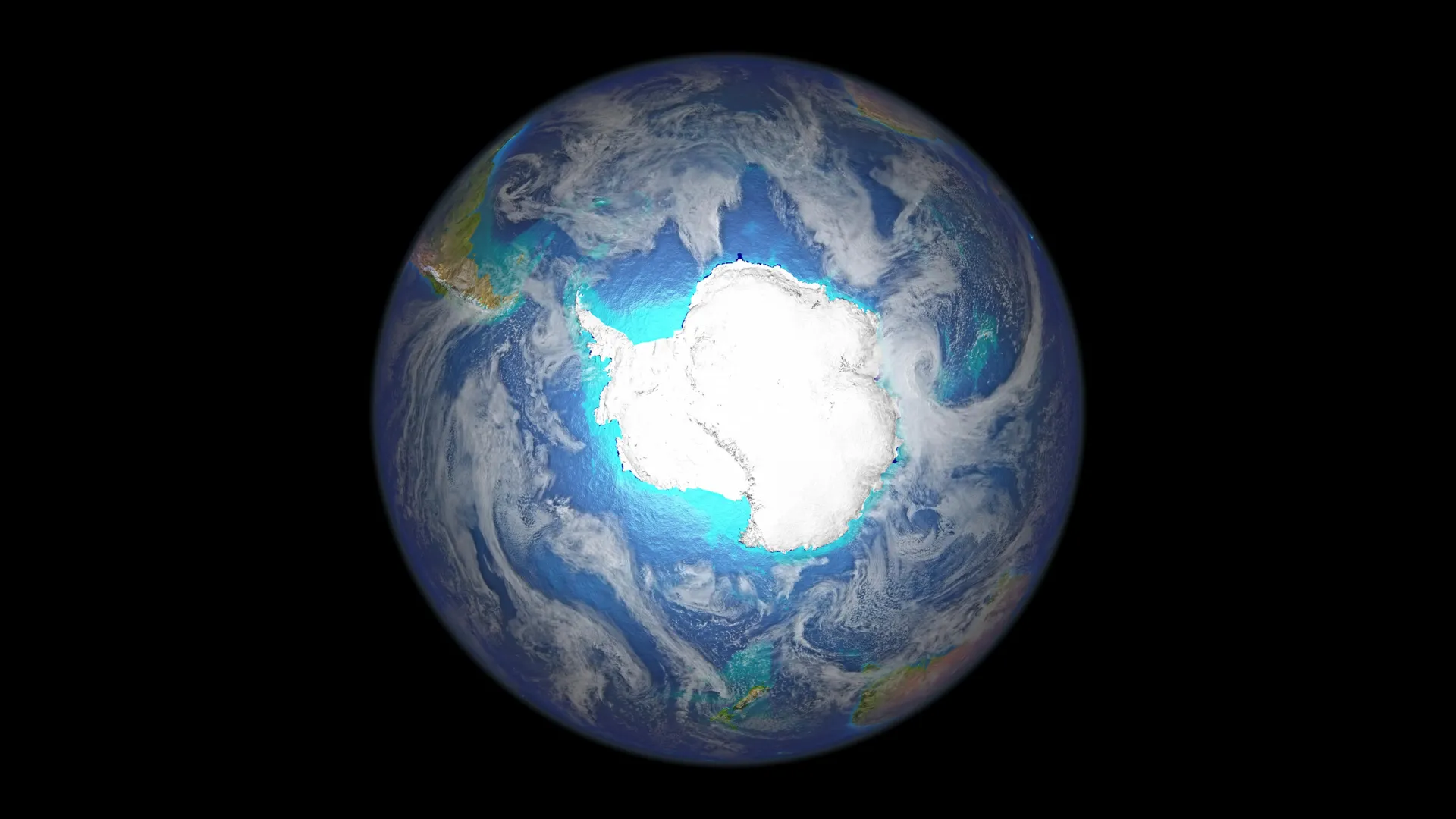
    A new study published in Nature Geoscience suggests Antarctica’s ice sheet underwent a dramatic change about one million years ago, becoming much more responsive to shifts in Earth’s climate.

    The research, led by scientists at the IBS Center for Climate Physics (ICCP) at Pusan National University in South Korea, offers fresh insight into how massive ice sheets react to long term climate changes and what that could mean for future sea level rise.

    Today, Antarctica contains the largest mass of ice on the planet and plays a major role in regulating global sea levels. Around one million years ago, Earth experienced a major climate transition in which ice ages became longer, colder, and more intense. Scientists refer to this period as the Mid-Pleistocene Transition. Although researchers have known about this shift for decades, exactly how Antarctica’s ice sheet responded has remained uncertain.

    Simulating 3 Million Years of Climate History

    One of the biggest obstacles has been the lack of realistic long term climate records needed to test ice sheet behavior under ancient conditions.

    To solve this problem, the team used an advanced paleoclimate simulation recently developed at the ICCP that reconstructs global climate patterns over the past 3 million years. The simulation provided detailed temperature and precipitation data, which researchers fed into the Penn State University ice-sheet-ice-shelf model.

    That model tracks changes in ice sheet movement, thickness, temperature, and elevation across Antarctica and the Northern Hemisphere. It also simulates the behavior of floating ice shelves, including those in the Ross and Weddell Seas.

    Using one of South Korea’s most powerful supercomputers dedicated to basic science research, the team produced a physically consistent picture of how Earth’s major ice sheets evolved as climate conditions changed over time.

    Antarctic Ice Reached a Critical Threshold

    The simulations revealed that Antarctica entered an entirely different mode of behavior after the Mid-Pleistocene Transition.

    Researchers identified a key atmospheric carbon dioxide threshold of roughly 240 parts per million. Once CO2 levels dropped below that point, Antarctic ice volume began responding much more dramatically to changes in atmospheric and ocean temperatures.

    “After this transition, the Antarctic ice sheet reacts much more strongly to changes in climate forcing. This indicates that the system does not evolve gradually but instead becomes more responsive after crossing a particular threshold in the climate system,” said Dr. Kyung-Sook Yun, researcher at the IBS Center for Climate Physics and lead author of the study.

    Why Antarctica’s Ice Expanded So Rapidly

    According to the simulations, several processes worked together to accelerate Antarctic ice growth after the climate transition around one million years ago.

    First, colder ocean temperatures during ice ages reduced melting beneath portions of the Antarctic ice sheet that extend below sea level. At the same time, global sea levels were approximately 50-100 meters lower than today. Lower sea levels reduced pressure on the bedrock beneath Antarctic ice shelves, allowing the land underneath to slowly rise upward. That uplift helped support additional thickening of coastal ice.

    Together, these mechanisms helped create the larger and more persistent Antarctic ice sheets that later defined Earth’s ice age cycles.

    “Our findings suggest that the Antarctic ice sheet was more sensitive to external forcings than previously assumed. This also raises important questions about its future response to global warming,” said Prof. Axel Timmermann, Director of the IBS Center for Climate Physics and co-author of the study.

    What the Findings Could Mean for the Future

    The study highlights that ice sheets may not always respond to climate change in a slow, predictable way. Instead, they can suddenly shift into a much more sensitive state after crossing critical climate thresholds.

    Scientists say understanding these abrupt transitions is essential for improving future projections of Antarctic ice loss and global sea level rise.


    Source link

    Author

    • Admin

      NewsPublicly.com is News & Articles Platform that creating SEO-focused articles on travel, lifestyle, and digital trends.

    Admin
    • Website

    NewsPublicly.com is News & Articles Platform that creating SEO-focused articles on travel, lifestyle, and digital trends.

    Related Posts

    Scientists finally complete Schrödinger’s 100-year-old color theory

    June 7, 2026

    Ancient Chinese medicine could transform hair loss treatment

    June 7, 2026

    NASA just proved spacecraft can switch between multiple satellite networks

    June 6, 2026
    Leave A Reply Cancel Reply

    Demo
    Top Posts

    The Blue Moon rises on May 30— Where and when to see the second full moon of the month

    May 30, 202640 Views

    New SOCOM rifle allows barrel swapping and cartridge changes

    June 1, 202632 Views

    “Inside Gemini Robotics 1.5: How Robots Learn to Reason & Act

    November 22, 202525 Views

    525 pounds of cocaine seized after Nebraska K9 alerts troopers on I-80

    May 28, 202624 Views
    Don't Miss

    Best Sprites in Fortnite Chapter 7 Season 3

    June 7, 20263 Mins Read0 Views

    Sprites in Fortnite Chapter 7 Season 3 are one of the most unique and important…

    Experts stress early diagnosis and awareness to improve outcomes in brain tumour

    June 7, 2026

    Study Suggests Hysterectomy and Oophorectomy Linked to Reduced Breast Cancer Risk

    June 7, 2026

    Kill some time with these much needed distractions

    June 7, 2026
    Stay In Touch
    • Facebook
    • Twitter
    • Instagram
    • YouTube
    • LinkedIn
    • WhatsApp

    Subscribe to Updates

    Get the latest creative news from SmartMag about art & design.

    Demo
    NEWSPUBLICLY
    Facebook X (Twitter) Instagram LinkedIn

    Home

    • About Us
    • Leadership
    • Advertise & Partner With Us
    • Pitch Your Story
    • Media Kit & Pricing
    • Career
    • FAQs

    Guidelines

    • Editorial & Submission
    • Partnership
    • Advertising & Sponsor
    • Intellectual Property Policy
    • Community & Comment
    • Security & Data Protection
    • Send Your Opinion

    Quick Links

    • Cookie Policy
    • Payment & Billing Terms
    • Refund & Cancellation
    • Copyright Policy
    • Complaint & Support
    • Sitemap
    • Contact Us

    Subscribe Us

    Get the latest news and updates!

    Copyright © 2026 Newspublicly (DIGITALIX COMMUNICATION). All Rights Reserved.
    • Privacy Policy
    • Terms of Use
    • Disclaimer