

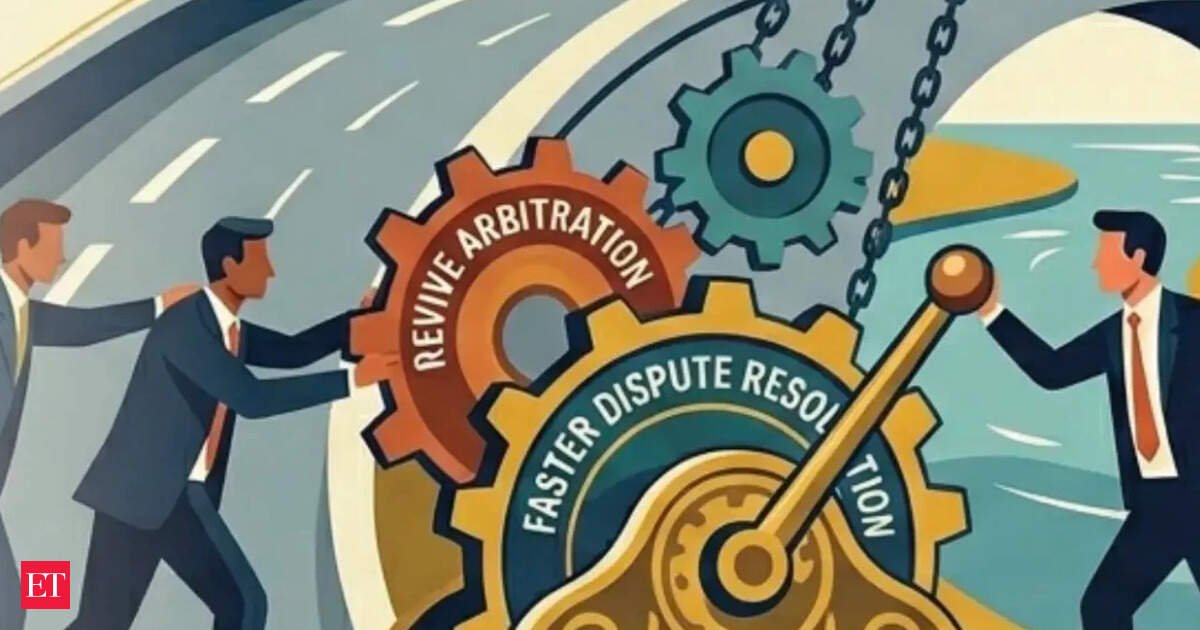
In January, the road transport and highways ministry had done away with the option and shifted resolution of high-value highway disputes of more than ₹10 crore to mandatory conciliation and mediation followed by an appeal in the civil courts by amending the contract agreements.
Banks are wary of lengthy court litigation for high-value claims, according to the people, who spoke on condition of anonymity.
“Arbitration plays an important role in expeditious dispute resolution and overall stability in infrastructure financing,” said a bank executive, adding that the issue was flagged to the finance ministry earlier this month.
A senior government official said that the matter had been raised at the highest level as the arbitration procedure for all projects, which was in place earlier, ensured certainty in contractual enforcement, expeditious dispute resolution and overall stability in infrastructure financing.


Lenders fear credit squeeze due to lengthy court litigation and delay in recoveries
The changes, which came into effect on January 12, are in line with the finance ministry guidelines of 2024 advising against routine arbitration in large procurement contracts and are applicable to all types of road contracts-build-operate-toll-transfer, hybrid annuity model and engineering, procurement and construction projects.
Internal estimates suggest that the highways sector saw nearly 2,600 arbitration awards totalling about ₹30,000 crore between 2015 and 2025, with concessionaires raising disputes of about ₹90,000 crore.
While the rationale behind scrapping arbitration for big-ticket projects was to help the government regain control over large dispute outcomes as many arbitration awards had been challenged or awarded against the government, the government is hopeful that the introduction of a conciliation or mediation mechanism will help fast-track dispute settlements.
The National Highways Builders Federation had opposed the move, saying the absence of an arbitration process in high-value road projects might prove counterproductive in the absence of a parallel time-bound adjudication framework and might multiply claim values due to interest accrual, thus increasing the burden on the exchequer.
Past disputes suggest that the original claim of ₹50-100 crore escalates to ₹150-300 crore or more after 10-15 years, with the interest component exceeding the principal amount and courts consistently awarding interest where delays are attributable to the authority.