

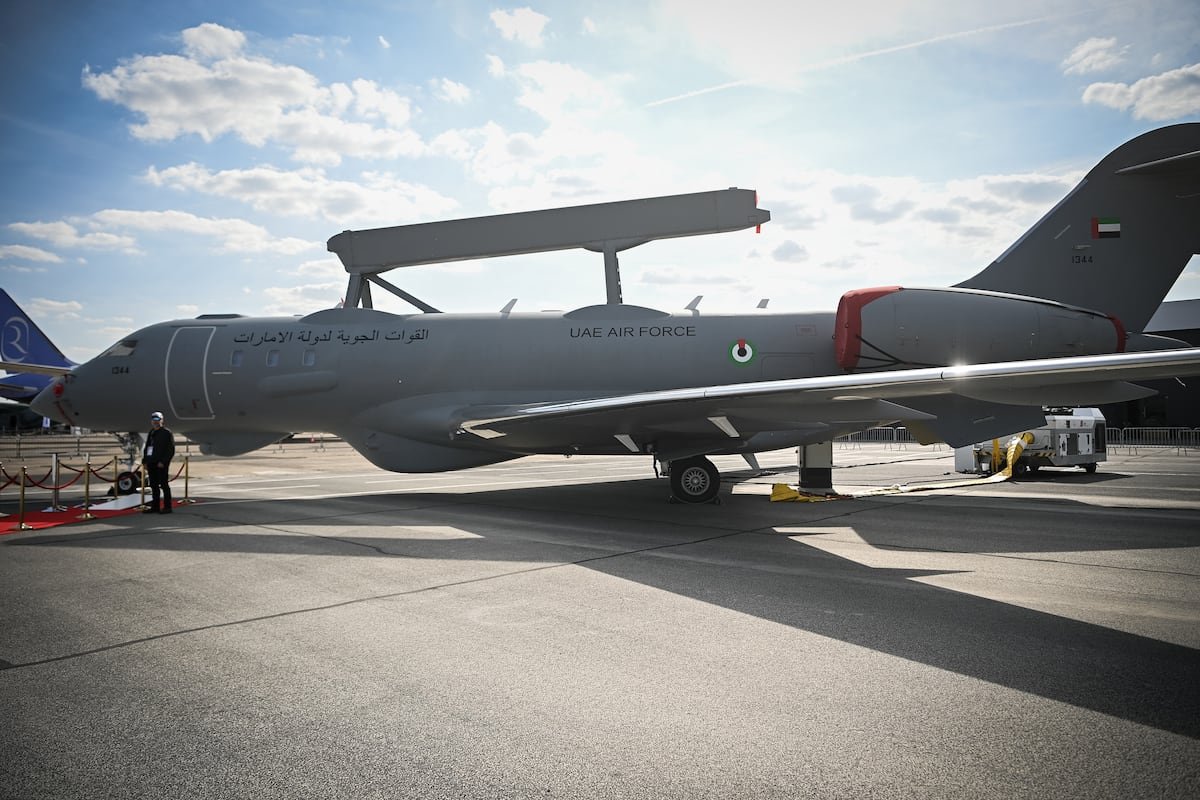
VICTORIA, British Columbia — Canada will purchase six GlobalEye early warning and control aircraft from Saab as part of deal to not only boost Canadian military capabilities but energize domestic defense production.
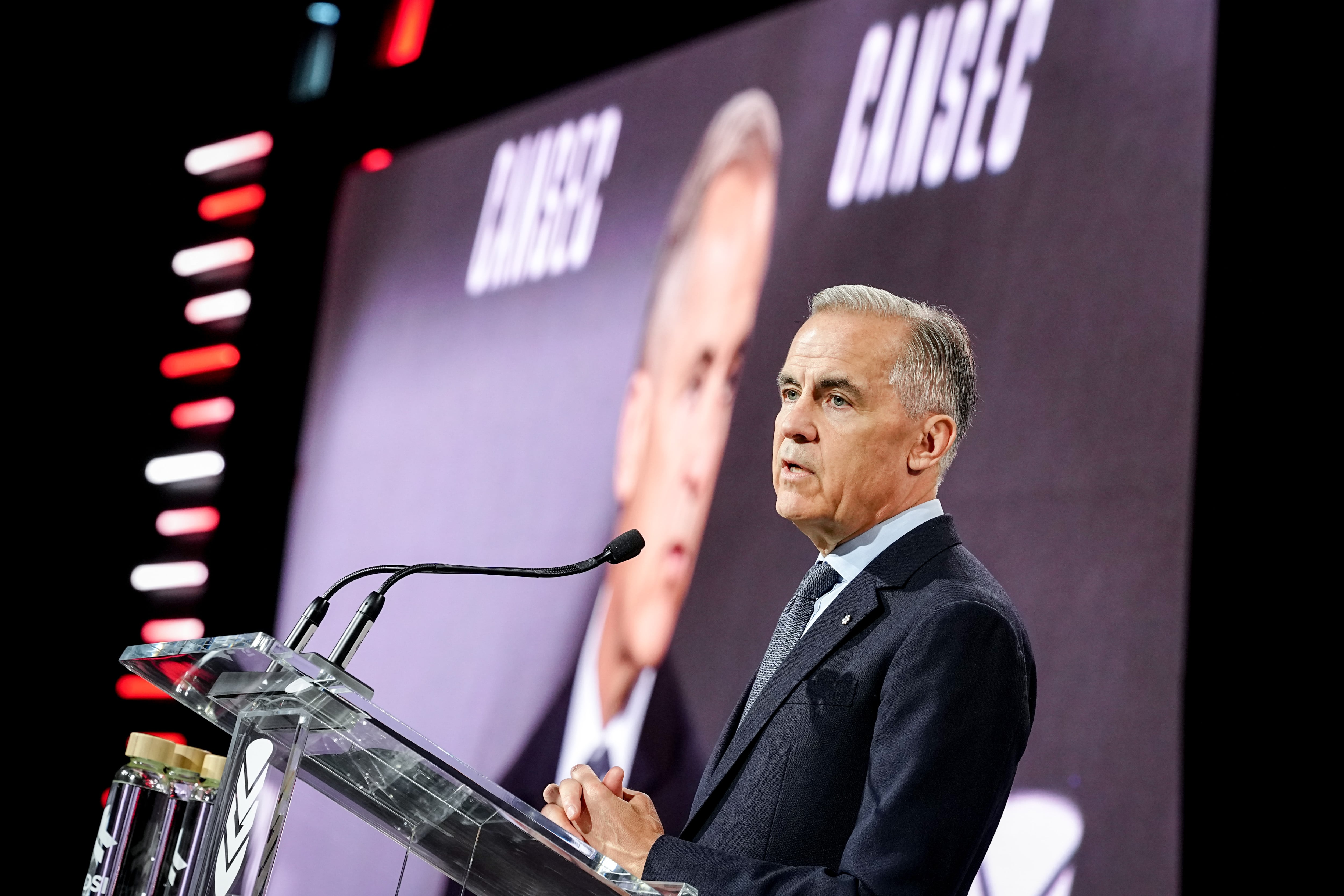
Prime Minister Mark Carney announced the news May 27 at the CANSEC defense trade show in Ottawa. It was the first time that a Canadian prime minister had appeared at the show, the country’s largest defense and security industry event.
Carney said the proposed GlobalEye purchase, estimated to cost more than $5 billion CAN (US$3.6 billion), will not only expand the country’s military capabilities but support his government’s initiatives to use defense purchases to support domestic firms.
“With a suite of advanced sensors and mission systems, Saab’s GlobalEye will be a key resource for the Canadian Armed Forces to detect and deter threats across the Arctic,” Carney said in a speech to CANSEC delegates. “It builds Canadian strategic autonomy, creates Canadian jobs and reinforces Canada’s position as a global leader.”
GlobalEye is based on a Bombardier 6500 executive jet, an aircraft that is manufactured in Toronto. Carney said that at least one-third of the projected GlobalEye aircraft orders for various allies will be built in Canada. That is expected to be 40 aircraft over the next 15 years.
Carney’s announcement that Saab is the preferred supplier for Canada’s Airborne Early Warning and Control project signaled the start of negotiations with the company. No details were provided on when a contract could be signed.
With it airborne surveillance capability, GlobalEye can track objects up to 650 kilometers away and collect real-time intelligence for the Canadian Armed Forces, according to the Canadian government.
Government officials also noted the new capability would strengthen Canada’s contributions to the joint U.S. -Canadian North American Aerospace Defense Command (NORAD) and improve operational reach in remote regions, particularly the Arctic.
Canada embarked on a major defense-spending initiative in 2025, with a commitment to spend $180 billion CAN on defense procurement in the next ten years and another $290 billion CAN on defense and security-related infrastructure. The purchase of new self-propelled howitzers, submarines, armored vehicles and fighter jets are part of that procurement initiative.
Carney’s push to spend more on defense has also transformed CANSEC. Usually the show attracts around 14,000 but organizers say this year some 20,000 visitors are expected over a two-day period. Attendance at CANSEC is limited to industry and military personnel.
Canada’s boost in defense spending was, in part, fueled by pressure from U.S. president Donald Trump’s administration. Trump has continually complained that Canada does not do enough in defense. In addition, he has hit Canada with significant tariffs as well as other threats of economic punishment. Trump has warned that the only way Canada could escape such economic measures would be to become a U.S. state.
Carney responded by embarking on a program to focus defense spending on domestic companies as well as seeking new alliances with European and other nations. He also noted that Canada needed to reduce its reliance on the United States, particularly in regard to U.S.-built military equipment. “We should no longer send three-quarters of our defense capital spending to America,” Carney said June 9, 2025.
In response to ongoing U.S. economic threats, Carney also ordered a review of Canada’s purchase of the Lockheed Martin F-35 fighter jet. The Canadian government announced in January 2023 it planned to spend $13.2 billion for the purchase of 88 F-35s from the U.S. government. But at this point it has only paid for and committed to buy 16 of the aircraft.
Saab has offered its Gripen fighter jet to Canada, with the promise that the aircraft could be produced in the country. The Canadian review of the F-35 purchase, and the Saab Gripen proposal, is still ongoing.
During a televised news conference at CANSEC, Carney was asked whether the GlobalEye purchase was part of larger package that would include the acquisition of Saab Gripen fighter jets. He declined to comment.
Both Saab and Bombardier greeted Carney’s announcement as a sign that domestic firms would play a greater role in defense procurement.
“We welcome Canada’s decision to enter into discussions with Saab as the preferred supplier of the future Canadian AEW&C capability,” Micael Johansson, President and CEO of Saab noted in a statement. “GlobalEye offers proven capability for the Royal Canadian Air Force, sovereign ownership for Canada and comprehensive and skilled work for Canadian industry.”
David Pugliese is the Canada correspondent for Defense News.