

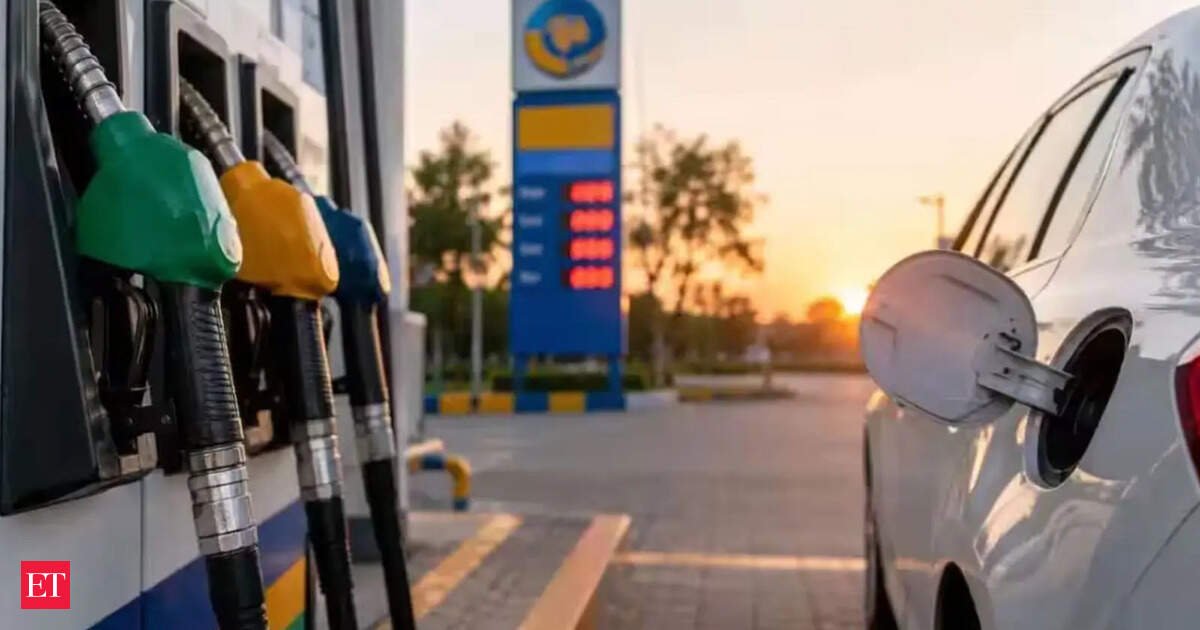
According to the report, the government has advised state-run oil marketing companies Indian Oil Corp. Ltd, Bharat Petroleum Corp. Ltd and Hindustan Petroleum Corp. Ltd, along with private fuel retailers Jio-bp Mobility, Nayara Energy and Shell, to begin work on infrastructure for dispensing E20, E22, E25 and E30 fuels.
The move follows recent Bureau of Indian Standards (BIS) norms for new ethanol blends and comes shortly after the government’s April proposal to permit fully ethanol-powered vehicles.
Also Read: India proposes new vehicle rules to allow higher ethanol-blended fuels
Mint reported that the rollout would require investments in separate dispensing infrastructure, underground storage systems, blending controls and fuel quality monitoring mechanisms at retail outlets.

“Information on ethanol-blended petrol sold at fuel stations will have to be displayed clearly on dispensing pumps so that consumers can easily identify the fuel they are buying. Retail outlets will have to label the different variants,” one of the people cited in the report said.
The initiative comes at a time when India is looking to deepen ethanol adoption amid volatile crude oil prices and energy security concerns linked to the ongoing West Asia conflict. The report noted that the closure of the Strait of Hormuz — through which around 20% of the world’s oil supply passes — has intensified concerns around crude supply disruptions and price volatility.“It is also obvious that the prices of different variants are likely to differ,” another person cited by Mint said.
India currently has around 100,000 fuel stations, of which about 90,600 are operated by state-run oil marketing companies. While pumps currently retail E20 petrol, industry bodies and ethanol manufacturers have been advocating movement beyond the 20% blending mandate, citing surplus ethanol availability and the need to reduce dependence on imported crude oil.
C.K. Jain, president of the Grain Ethanol Manufacturers Association, told Mint that countries such as Brazil have successfully adopted higher ethanol blends through consumer flexibility and separate dispensing systems.
“Retail outlets in India should also eventually offer multiple ethanol blends, but it would be based on regional demand, infrastructure, and vehicle compatibility,” Jain said.
Also Read: What India’s new E22 to E30 Petrol variants mean for fuel prices, vehicles and ethanol use
According to government data cited in the report, ethanol blending helped India save ₹1.7 trillion between November 2014 and February 2026, while reducing carbon emissions by 87 million tonnes — equivalent to planting around 350 million trees. In the ethanol supply year 2024-25 alone, India saved more than ₹40,000 crore by replacing imported crude with ethanol.
India, the world’s third-largest oil consumer, imported crude oil worth $123.1 billion in FY26, down from $137 billion in the previous fiscal year.
Industry executives said the required infrastructure changes at fuel stations may not be extensive. K.P. Murali, president of the Tamil Nadu Petroleum Dealers’ Association, told Mint that oil companies would bear the cost of tankages and dispensers, while existing storage systems could be adapted for different ethanol blends.
“At present, a fuel dispenser already has separate nozzles for diesel, premium petrol and regular E20 petrol. The same dispensing system can be expanded further to accommodate additional ethanol-blended variants such as E22 to E30,” Prashant Sinha, a fuel station operator in Patna, told the publication.
The push towards higher ethanol blends has also sparked debate among consumers over possible impacts on fuel efficiency and engine performance. However, the government has maintained that E20 petrol improves acceleration and ride quality, and has rejected claims that the fuel causes a drastic reduction in efficiency.
India produced around 20 billion litres of ethanol as of March 2026, significantly higher than the estimated demand of 11 billion litres under the current 20% blending mandate, leaving manufacturers with surplus capacity, the report said.
Also Read: India may soon increase ethanol blending in petrol to 25%. Here’s what consumers should know
According to provisional data from the Petroleum Planning & Analysis Cell, India’s total petroleum product consumption reached a record 243.19 million tonnes in FY26, with petrol demand touching 42.58 million tonnes.