

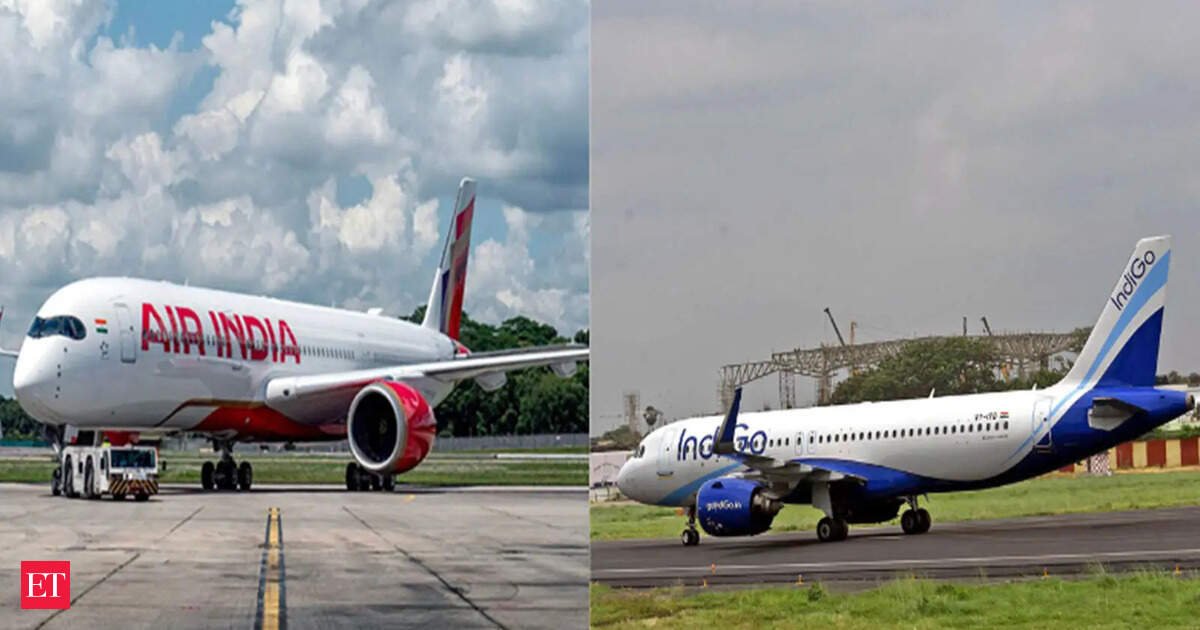
According to aviation data analytics agency Cirium, Air India and its low-cost arm Air India Express will operate about 20% fewer domestic flights during June and July, while market leader IndiGo is expected to cut flights by 10-12%.
Also read: India’s top airlines cut domestic flights between 5-22%
The reductions are likely to push up fares as the two airlines together account for more than 90% of India’s domestic aviation market.
The June-August period is typically a weak quarter for Indian airlines as it coincides with the monsoon season and a seasonal slowdown in travel demand after the summer holidays. Airlines usually trim flights during this period to undertake maintenance work. This year, however, the cuts are steeper because of higher jet fuel prices.

Air India had earlier significantly reduced international flights for the June-August period, including suspending services to key US destinations such as Chicago and Newark.
“These adjustments are driven by the sustained impact of high fuel prices on overall operations. Air India will continue to monitor demand and operating conditions closely, with a view to restoring frequencies as conditions stabilise,” an Air India spokesperson said.Also read: Cheap flights alert: Air India Express opens 5 million-seat sale
While the government has absorbed 75% of the increase in jet fuel prices, airline executives said the rise was still hurting costs. They also expect a sharper increase in jet fuel prices on June 1 in line with higher petrol and diesel prices.
Global average jet fuel prices rose to $195.19 a barrel for the week ended March 27 after the US and Israel launched attacks on Iran. Prices have since cooled but were still at $159.85 a barrel, about 70% higher than February levels.
At the same time, the rupee has weakened sharply against the dollar since February, falling from about ₹91.68 to beyond ₹96 to the dollar.
For airlines, that is a double blow as most costs, including aircraft leases and maintenance expenses, are dollar-denominated. A stronger dollar against the rupee further raises operating costs.