

There is a joke Mónica Godoy Molero likes to make with her family: if you swim in Venezuela’s Lake Maracaibo after an oil spill, you’ll sprout a third eye.
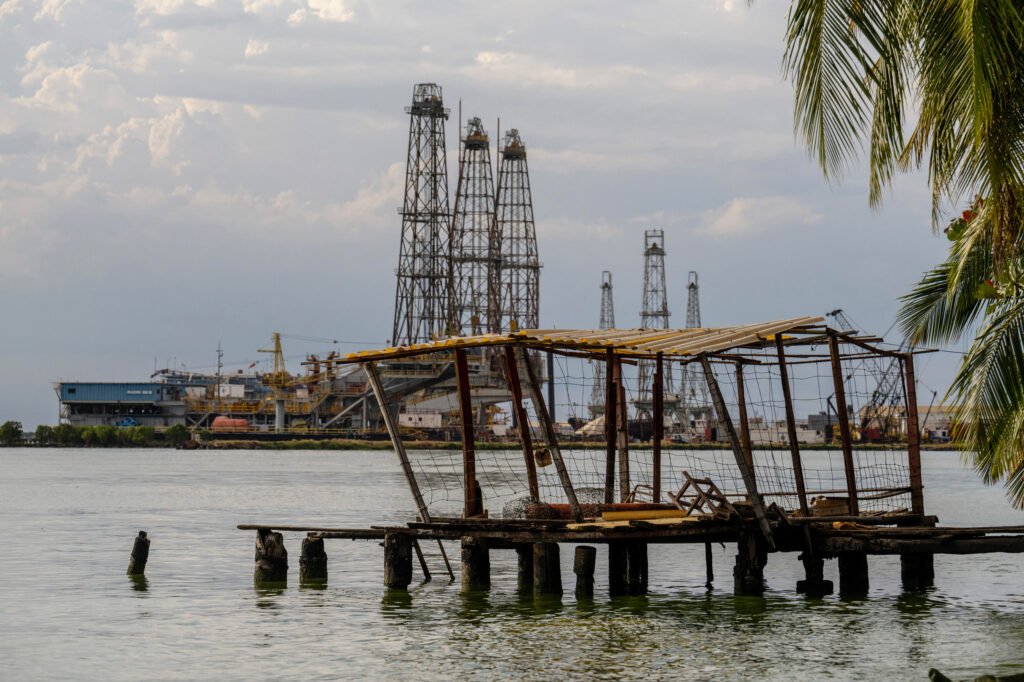
It helps to have a twisted sense of humor when you live in a place exploited by oil companies for more than a century and is likely at the center of any effort to rebuild the country’s vast but crumbling oil infrastructure.
“All of the beaches … are very contaminated, and unfortunately, these beaches are mostly crowded by the poor population,” Molero said.
Gustavo Carrasquel Parra can tell you stories, too. An activist and ecotourism guide who lived near Lake Maracaibo’s oil rigs for 27 years, Parra said it’s not a matter of if, but when, another oil spill will happen. He saw his business struggle after a spill two years ago—one of many he’s experienced firsthand.
“My clients’ feet became coated in oil and tar,” he said, “and this created a very poor impression and dealt a significant blow to local tourism. As a Venezuelan, I have witnessed firsthand the consequences of oil-related impacts, particularly in terms of environmental contamination.”
About 4 million people live in the state of Zulia, which surrounds Lake Maracaibo, a huge, brackish tidal bay in northwestern Venezuela that is central to the country’s petroleum industry.
Spills are a part of daily life here, and are only becoming more common as the local oil infrastructure continues to deteriorate, according to Parra and reports from the Observatory of Political Ecology of Venezuela, a research organization that tracks environmental conflicts in the country. From 2021 to 2022, the number of reported oil spills rose from 77 to 84. The country has not released oil spill reports or data in the last four years, making it difficult for experts and activists to gauge the severity today.
Now, with the Trump Administration pressing for a revival of the Venezuelan oil industry amid volatility in the Persian Gulf and rising global oil prices, activists and residents in the Maracaibo region say they are bracing for a familiar cycle of exploitation. This time, they want the government to use a portion of any new oil revenues to clean up Lake Maracaibo. But it’s hard to be optimistic after so many years of lax enforcement of the country’s environmental laws.
“The government hasn’t shown that they want to follow the law,” said Antonio Machado Allison, a Venezuelan ecologist at Wesleyan University in Connecticut.
Even during the frequent spills, hundreds of thousands of people in the region have no choice but to rely on polluted waterways for drinking, bathing, fishing and more, exposing them to a slew of heavy metals, oils and industrial chemicals.
Breathing the air is a risk, too, thanks to gas flaring from wells and refineries that lack the technology to capture emissions. The towns lining the huge lake are subject to contaminated floodwaters, too, thanks to land subsidence caused by decades of careless drilling.
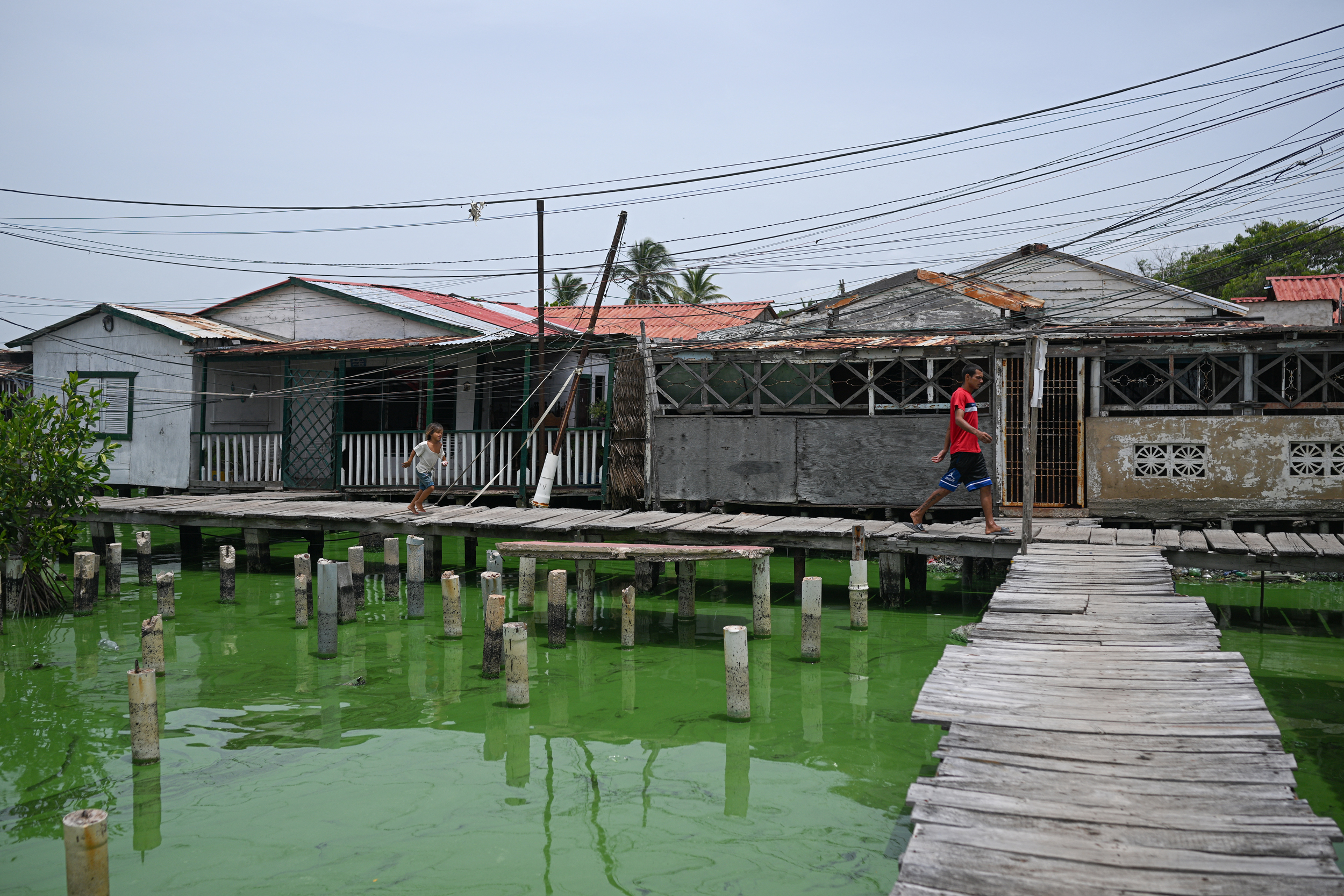
Exposure to these industrial byproducts, either directly or by eating contaminated fish, is associated with neurotoxicity, cancer and cardiovascular disease.
Now that Nicolás Maduro, Venezuela’s illegitimately elected president, has been captured by American forces and taken to New York to face drug trafficking charges, the government under Interim President Delcy Rodríguez has been looking to change Venezuela’s oil policy to jump-start its economy, according to Petróleos de Venezuela, S.A. (PDVSA), the country’s state-owned oil and natural gas company.
In January, under pressure from the Trump Administration, the country reformed its hydrocarbons law to open it up to “broader private participation,” allowing U.S. companies to invest not only in extraction but also in refining and distribution, a source at PDVSA said.
Experts said these changes might expose the country to more environmental exploitation if managed poorly. The problem is not a lack of legislation, but of enforcement, Allison said. Venezuela already has robust environmental laws that regulate oil extraction, including waste management, greenhouse gas emissions reduction and hazardous materials handling, according to Allison.
Under Article 12 of Venezuela’s constitution, for example, there is supposed to be an environmental impact study at every stage of an oil extraction project. But it doesn’t always play out that way. The question of who is responsible for the studies—the government or private companies—is open to interpretation, he explained. In any case, the oil spills and flaring of the past decade show that mismanagement and a lack of judicial oversight have rendered this process obsolete, Allison said.
Chevron, the only major U.S. oil company operating in Venezuela, declined to answer questions about its role in the country’s environmental problems, or what policies it will support going forward.
This story is funded by readers like you.
Our nonprofit newsroom provides award-winning climate coverage free of charge and advertising. We rely on donations from readers like you to keep going. Please donate now to support our work.
Venezuelan oil takes the form of a viscous black goo that settles to the bottom of waterways and mixes with sand during spills. Cleaning it up requires not only capturing the spilled oil but also removing contaminated sand, which otherwise could stay there indefinitely. Remediation is a tedious and expensive process that takes years of follow-up. “Accidents always happen,” Allison said.
Communities like Parra’s, not the government, are supposed to have the final say in approving new drilling projects. Locals often give their consent because of the economic activity drilling brings.
In some cases, though, these projects end up damaging the economies of the communities they are supposed to help, said Jesus Aboud, a Venezuelan geophysicist based in Canada.
Aboud worked for PDVSA in his hometown of Guira, where the state-run oil company obtained a large amount of land but didn’t actually use it for extraction. This severely disrupted the community’s ability to farm cocoa and coffee, he said.
Even with his experience working in the oil sector, Aboud agreed with Allison that PDVSA and foreign oil companies entering Venezuela need to be transparent about their activities to protect the environment, communities and “the culture of the people.”
“There’s a big environmental liability produced by years and years of oil exploitation, and companies come and go, but they don’t have the obligation of leaving it clean enough,” Aboud said.
On the other hand, another former PDVSA employee and geologist, Juan Francisco Arminio, isn’t worried about the talk of reviving the country’s oil industry. The environmental problems, he said, come only when companies and operators cut corners or break the rules.
“The petroleum industry, from a distance, flocking into Venezuela to increase production, can be seen by sectors of society as an invading force that is going to spoil the environment,” Arminio said. “But that is not necessarily the way things go.”
To him, the spike in oil spills over the last few years is not the industry’s fault, but the government’s. “They take place because of bad policies, because of corruption,” Arminio said.
Beyond oil spills and flaring, the industry and government will need to be careful not to triggering more of the land subsidence that can flood communities. It can cause anywhere from a few inches to tens of feet in elevation loss, as was the case in Venezuela’s Bolivar Coastal Fields.
Lake Maracaibo, where oil extraction started in 1914, has a long history of subsidence. To counter its effects and prevent flooding, the government installed dikes and raised earthen and concrete barriers along coastlines. They are supposed to protect against sea-level rise by helping stabilize the ground underneath and replenish floodplains by allowing controlled flooding.
The dikes, now decades old, have held up so far, but their effectiveness is hard to determine because studies on subsidence in the region are outdated and inconclusive, Arminio said.
Parra, the activist and ecotourism guide, now lives along the coast in Choroní and is working to raise awareness of the environmental harms caused by oil spills. He is lobbying for a regulatory change that would require 5 percent of the state’s oil revenue to be allocated to Lake Maracaibo’s environmental remediation.
While his faith in the government remains low, he said he will keep fighting for a future where he can keep surfing along Venezuela’s coast and enjoying what its nature has to offer.
“Although we may appear few in number, our environmentalist ranks are constantly growing because the impact of the problem has led many communities to understand that we—ecologists and environmentalists—backed by science and scientists, provide clear answers and concrete actions regarding specific environmental issues,” Parra said. “And in the case of oil spills—even though we lack the budget, technology, or infrastructure to address a crisis as serious and complex as this—we were the ones on the ground, constantly monitoring the situation, not the government.”
Molero, who plans to keep living in Maracaibo, hopes it will get better. She has her doubts, however, because the lake has been contaminated her whole life and the government continues to leave communities in the dark about what the future holds.
“Apparently, they put in actions to protect and sanitize the lake, but I don’t know if it’s helped at all,” she said.
About This Story
Perhaps you noticed: This story, like all the news we publish, is free to read. That’s because Inside Climate News is a 501c3 nonprofit organization. We do not charge a subscription fee, lock our news behind a paywall, or clutter our website with ads. We make our news on climate and the environment freely available to you and anyone who wants it.
That’s not all. We also share our news for free with scores of other media organizations around the country. Many of them can’t afford to do environmental journalism of their own. We’ve built bureaus from coast to coast to report local stories, collaborate with local newsrooms and co-publish articles so that this vital work is shared as widely as possible.
Two of us launched ICN in 2007. Six years later we earned a Pulitzer Prize for National Reporting, and now we run the oldest and largest dedicated climate newsroom in the nation. We tell the story in all its complexity. We hold polluters accountable. We expose environmental injustice. We debunk misinformation. We scrutinize solutions and inspire action.
Donations from readers like you fund every aspect of what we do. If you don’t already, will you support our ongoing work, our reporting on the biggest crisis facing our planet, and help us reach even more readers in more places?
Please take a moment to make a tax-deductible donation. Every one of them makes a difference.
Thank you,