

- China is going from global EV boundary-pusher to global EV safety watchdog.
- Regulators are targeting EV gimmicks like hidden handles, yokes, and reclining seats.
- China’s rules could shape how future EVs are designed far beyond its own market.
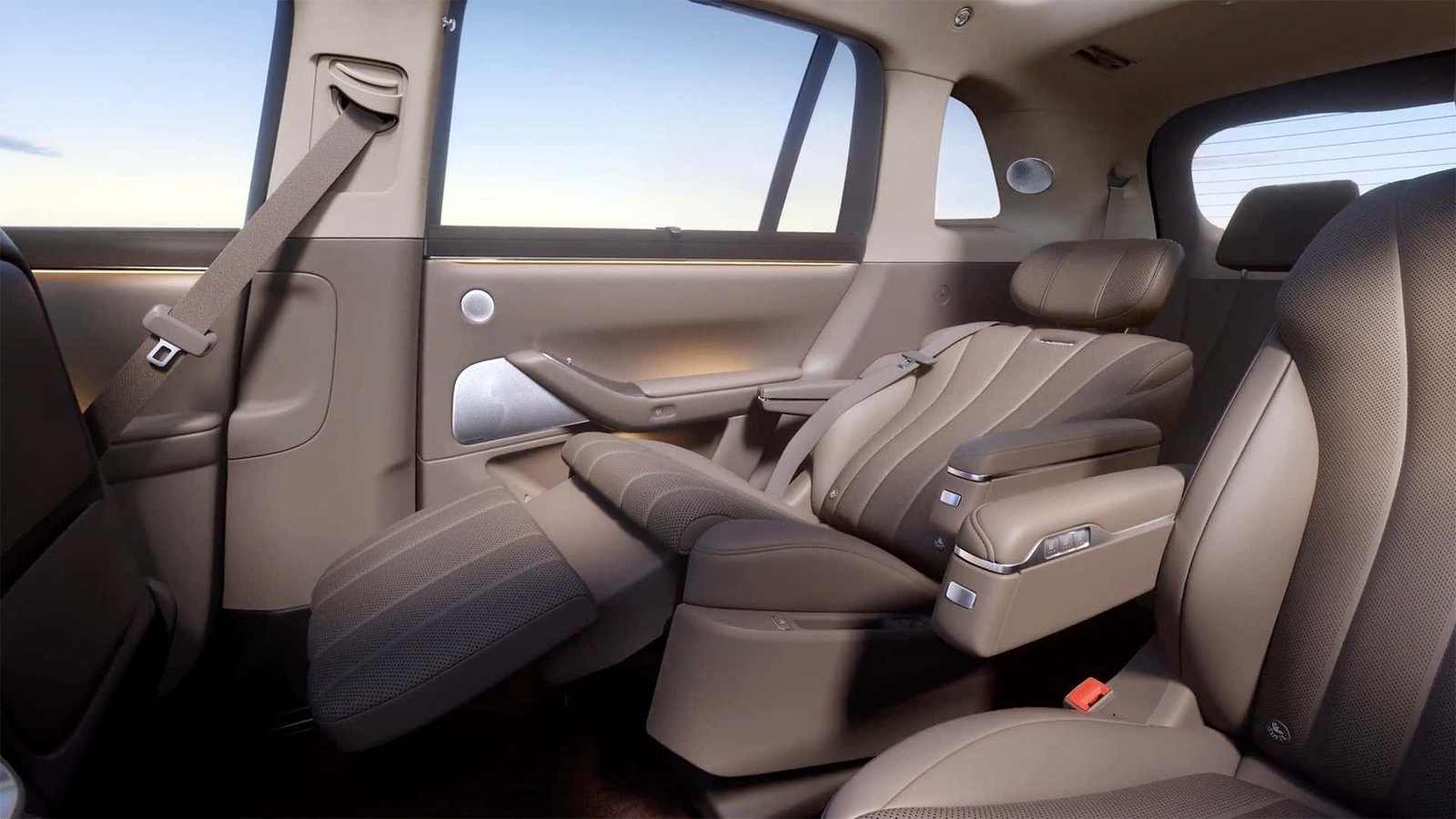
Chinese car owners use and view their vehicles differently from people in the West. It is very common for passengers to take a nap in a moving car in China, which is why many vehicles offer heavily reclining seats that almost turn into beds. This might sound like a comfy way to watch the miles roll by, but it can also be a safety hazard in a collision, and now regulators are taking aim at these so-called ‘zero-gravity’ seats.
When you’re in a steeply reclined seat in a car and that car crashes, there is a very high chance that your seatbelt will not restrain you properly. You may even slip under the belt and miss the airbags, which are designed to deploy and protect occupants in a more upright seating position.
The Chinese Ministry of Industry and Information Technology is aware of this and, according to Reuters, it issued a statement saying “When these seats are in a semi-reclined position, occupant safety in a collision may not be guaranteed.”

China is the undisputed global leader in EV tech, but it’s increasingly becoming the global EV safety watchdog too. This crackdown on these ‘zero-gravity seats’ is the latest in a series of actions meant to enhance safety.
Flush, motorized door handles that pop out when you unlock the car, as well as electronic-only interior door handles, were the first to come under scrutiny after a series of crashes that resulted in fatalities.
The most notorious of these involved a Dongfeng electric sedan with four people inside that spun off the road after hitting another vehicle and caught fire. The driver was able to open their door and get out, but realized that none of the handles on the other doors had popped out, and once his door closed, he couldn’t open it again. The three people still inside the car all lost their lives in part due to the doors not opening. The incident inspired public outrage that prompted regulators to make this style of door handle illegal.
Next came yoke steering wheels, which are very common among Chinese EVs and certain Teslas. Yokes are basically non-round steering wheels that may look cool and futuristic, but they make regaining control of a car that much more difficult, since you may grab air instead of the wheel rim. Chinese regulators also expressed concerns about airbag deployment, which isn’t consistent in vehicles with a yoke.
There’s also some pushback about one-pedal driving in China. One-pedal driving uses the car’s electric motors to slow down when you lift off the accelerator, bringing the car to a halt without applying the physical brakes. Regulators argue that while there’s nothing inherently wrong with this, since you can always press the brake pedal, it is used so rarely in some cases that drivers may take longer to press it in an emergency, and it makes pressing the wrong pedal more common.
So while China still allows one-pedal driving, it’s not the standard driving mode as of 2026. The driver still needs to press the brake pedal to fully stop the car, and they have to manually select one-pedal driving if they want it. China also introduced standards for when the brake lights need to come on, as in some cases, cars using regenerative braking were decelerating like under braking, but with no brake lights.
Tesla may have introduced huge screens into car interiors, but it’s in China that this trend really took off, and it ended up influencing Western cars too. It’s because of what’s happening in China that so many new cars these days have a third screen in front of the passenger. But now China is also mandating that certain key functions have physical controls, according to Automotive News.
They even want to restrict electric vehicles’ performance in China and make their default acceleration mode take at least 5 seconds for the sprint from a standstill to 62 mph (100 km/h), regardless of how much power they have. You will still be able to get the vehicle to accelerate quicker, but not in the default driving mode it starts in, if this proposed new rule becomes law.
EV battery recycling is another area where China is ahead of the rest of the world. The way it recycles spent EV battery packs is inconsistent and has room to improve and expand, but it still does so better than any other country and recovers an increasing percentage of the elements that can then be reused.
They are also looking at ways of minimizing the damage done by EV battery fires, even some unusual ideas that probably won’t become the norm, like jettisoning the burning battery from under the vehicle.
China’s EV industry helped define what modern electric cars look and feel like with giant screens, lounge-like cabins, dramatic lighting, wild acceleration, and features designed to make EVs more attractive than ICE cars. But now the country is doing something that’s maybe even more influential: deciding which of those ideas has gone too far.
What regulators in China decide won’t just stay in China, and it will influence global EV design trends. These new restrictions could quietly shape the next generation of EVs everywhere, making China not just the world’s biggest EV market and innovation hub, but its most important safety watchdog.