

SANTA PAULA, Calif.—As he slowly pulled his beige van into the driveway following a trip to the hardware store for garden supplies, Ethan Higbee didn’t suspect anything was wrong.
Then he got out of his car.
The unmistakable smell of gas subsumed him.
“I heard rushing, gushing water. What I thought was water. But it wasn’t, it was oil,” Higbee said Monday, exactly six months after rivulets of crude oil ran into a waterway near his home.
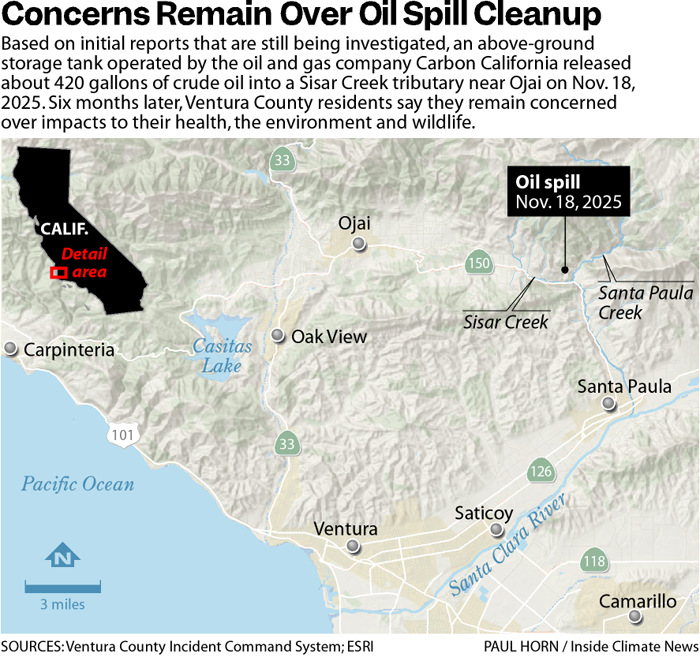
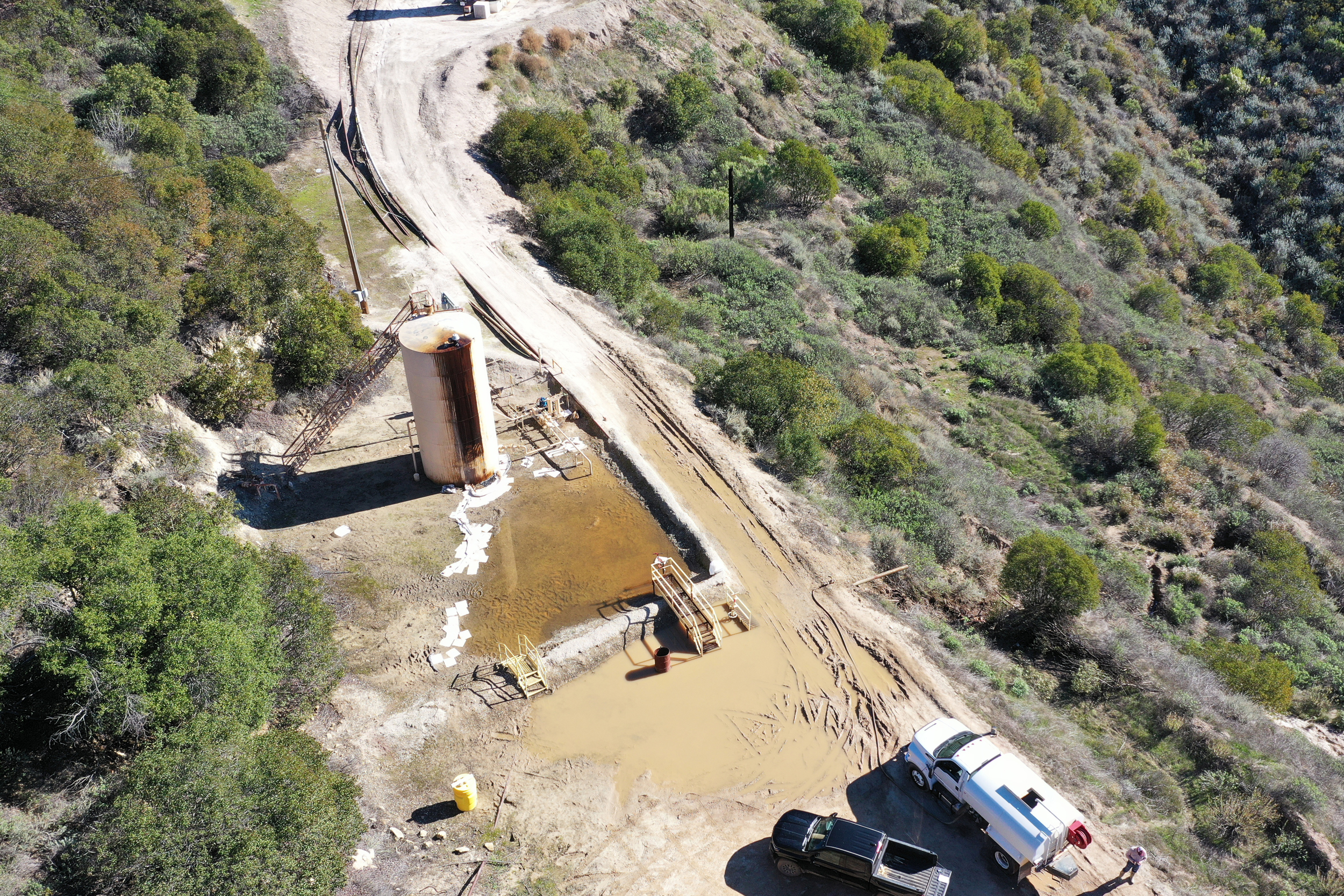
The oil—which contaminated at least three-quarters of a mile of a remote tributary of Sisar Creek—came from the top of the hill next to Higbee’s house in Santa Paula. The origin? Oil inside of an above-ground storage tank had breached, state crews later discovered.
In the moment, it appeared to Higbee that no one up there was the wiser to what was happening. He called 911 and rushed inside.
“I was in my house, because I was like, I’m not going (out), that’s just gonna explode. I was terrified,” the 47-year-old filmmaker said. “I thought I was going to pass out.”
The Ventura County incident—what resulted from a tank overfilling and improper rainwater valve management by oil and gas company Carbon California, according to the state—was described by the business as a “small crude oil spill” in a report obtained by Inside Climate News.
About 420 gallons were accidentally spilled, according to the report and on-scene responders.
Locals in the area near Ojai have cast doubt on the spill estimate. Higbee is among those who believe it was more.
Carbon California did not respond to multiple requests for comment.
In December, state regulators cited the company in a “notice of violation,” highlighting in the letter that enforcement action could follow. An email exchange between the state and Carbon California, obtained by Inside Climate News, included acknowledgement from regulators that the initial malfunction that led to the November spill was fixed. Exactly what steps were taken since remain unclear.
California officials this week said they could not fully confirm how much crude oil was spilled Nov. 18.
State officials from the Department of Fish and Wildlife said the initial spill estimate was included in a joint press release—on behalf of the state, federal officials, county authorities and the company. It was arrived at by experts in calculating spill estimates, a state spokesman said in an email.
The 420-gallon estimate did not change during the response efforts, which ended Dec. 9, the department said. However, a separate investigation was carried out after the incident, and a new spill figure was not immediately available this month.
Eric Laughlin, a spokesman for the Department of Fish and Wildlife’s Office of Spill Prevention and Response, said in an email Thursday that the department’s Law Enforcement Division conducted an investigation and submitted a report earlier this month to the Ventura County District Attorney’s Office .
That office could not be immediately reached for comment.
“Final spill quantification is part of the case we submitted and we are unable to comment on pending litigation,” Laughlin said for the potential of further action by the state.
There was “no oiled wildlife” observed after the incident, a Carbon California official wrote in an incident report prepared Jan. 5.
So far, no specific negative health outcomes have been reported by people in the roughly 20 homes that surround the site where the spill was first reported or elsewhere nearby, according to residents in the area and environmental advocates.
That doesn’t mean people are not on edge.
A new group called “Neighbors of Santa Paula Canyon,” made up of several local residents, has formed in an effort to address local concerns and what’s resulted from the November incident.
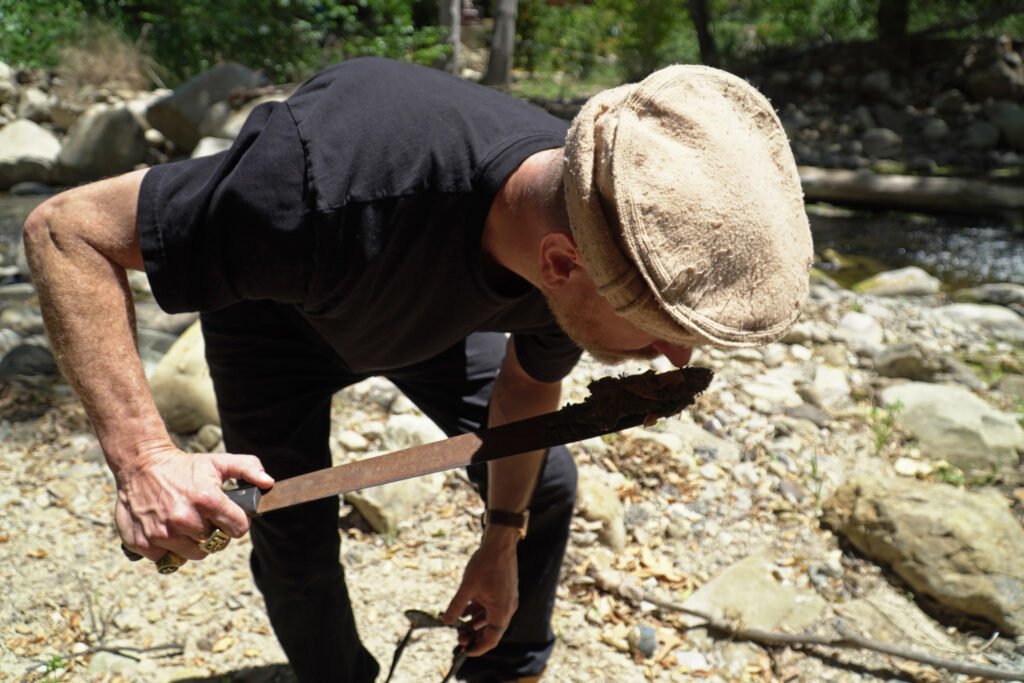
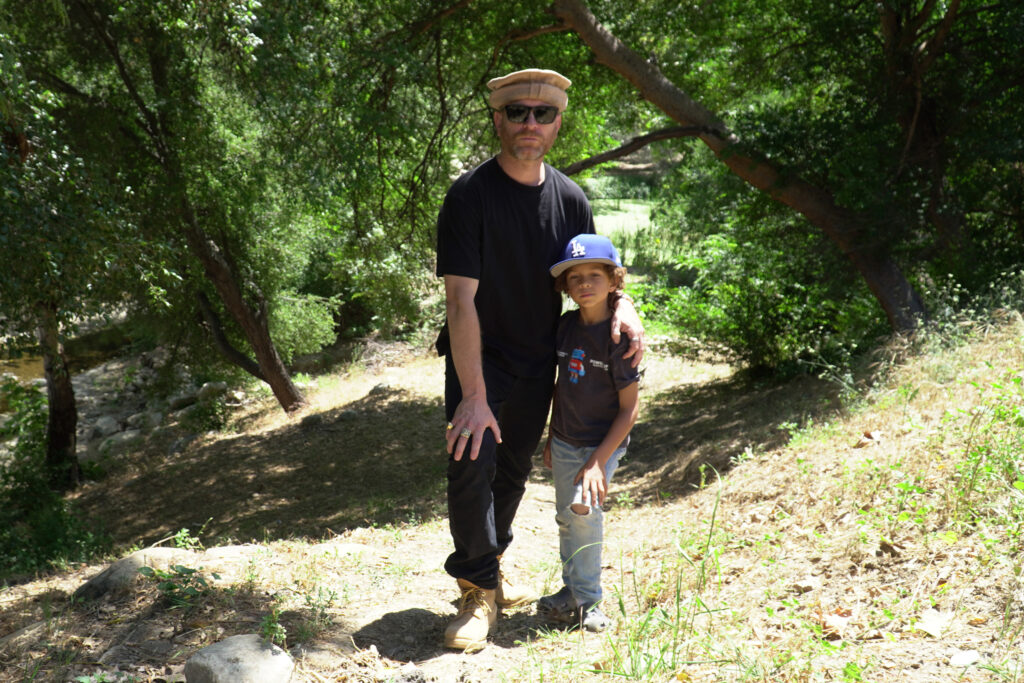
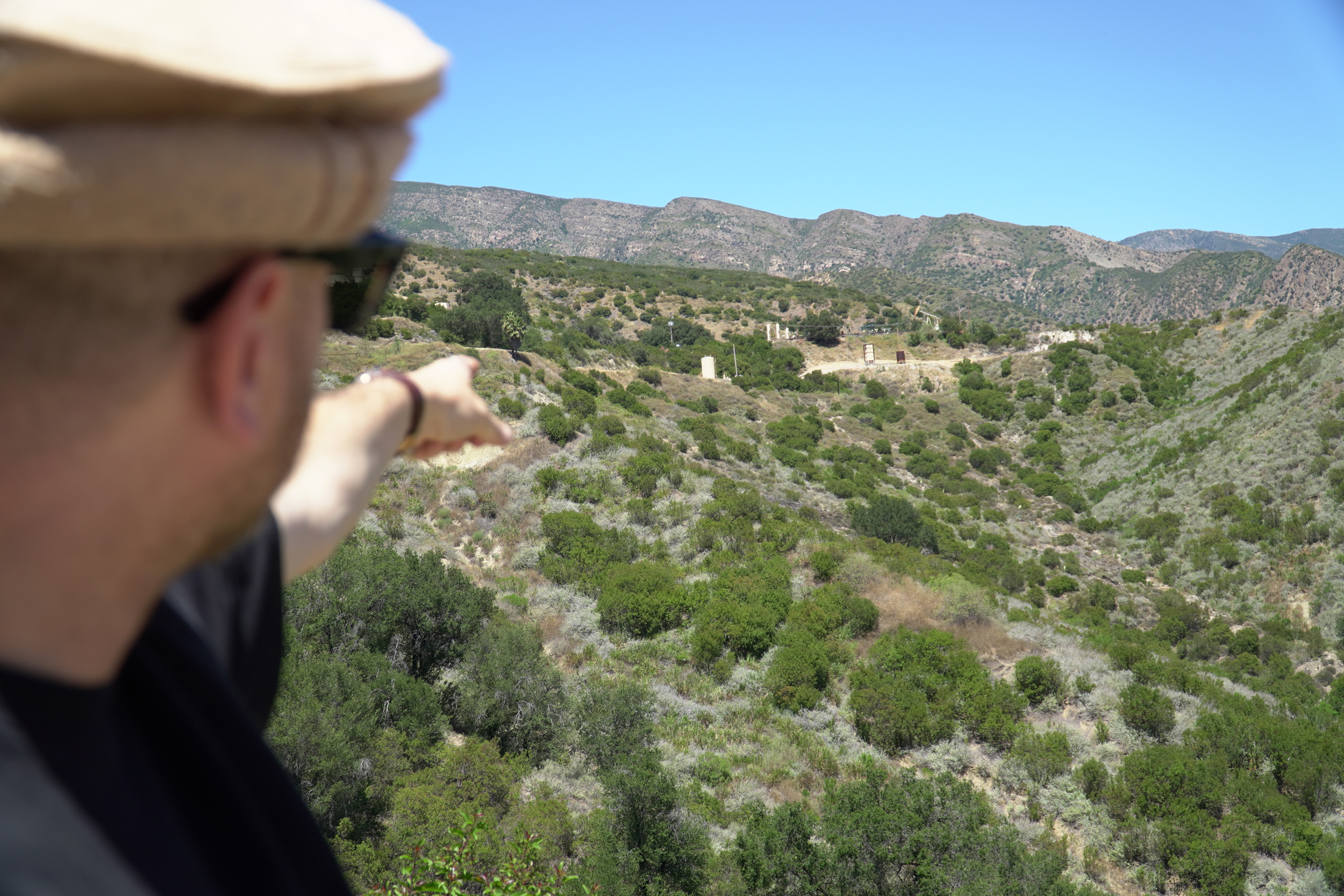
Six months after the oil spill, Higbee walked his property holding a machete.
He used the rusted tip to point to oil stains on rocks and dig for pieces of what he fears are oil remains caked beneath the soil. He pointed to a black stain under one boulder about 85 feet from his front door. His 6-year-old, Noah, played nearby with his baseball.
“You can see the difference in color,” Higbee said, finding another stain.
“Another Acute Example”
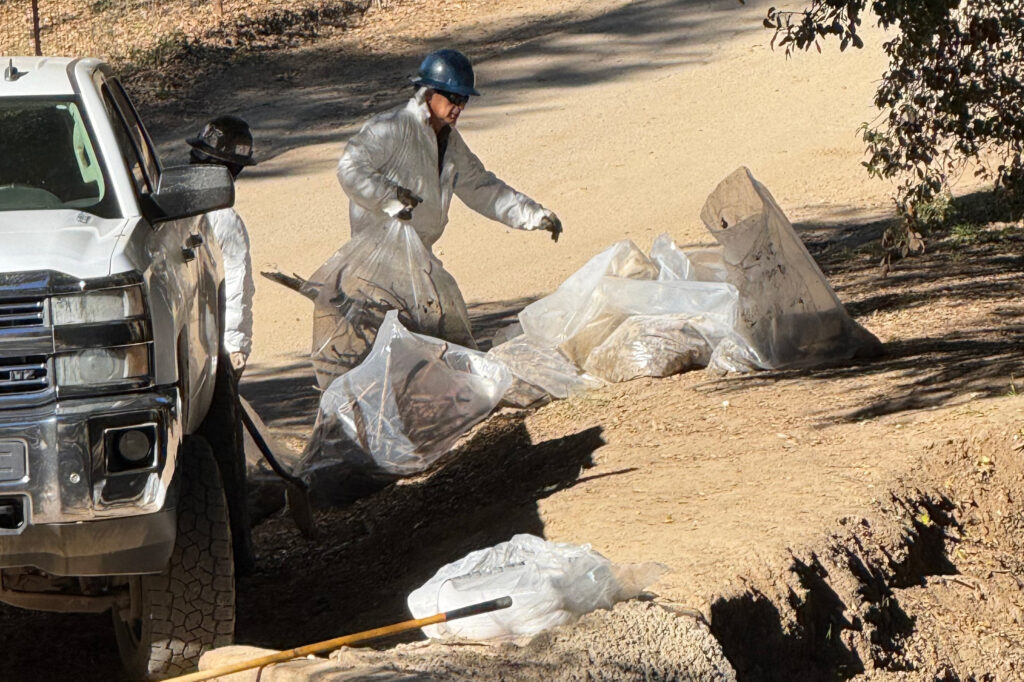
Photos and videos of the oil spill show a bustling scene.
Crews in protective white and yellow suits standing next to lumbering trucks.
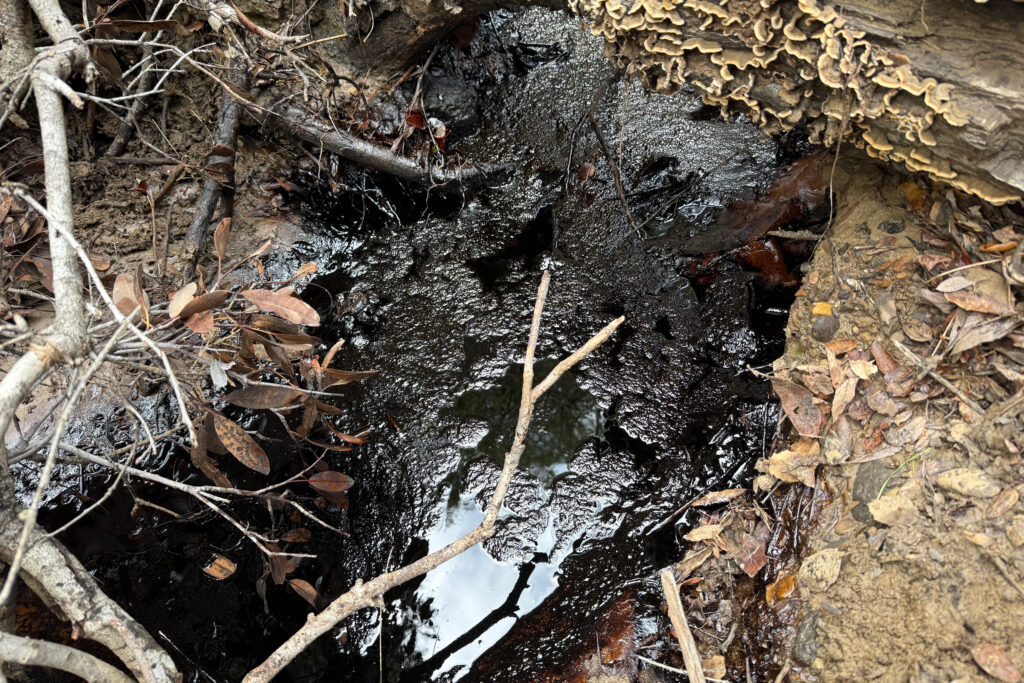
Black globs mixing with discolored water.
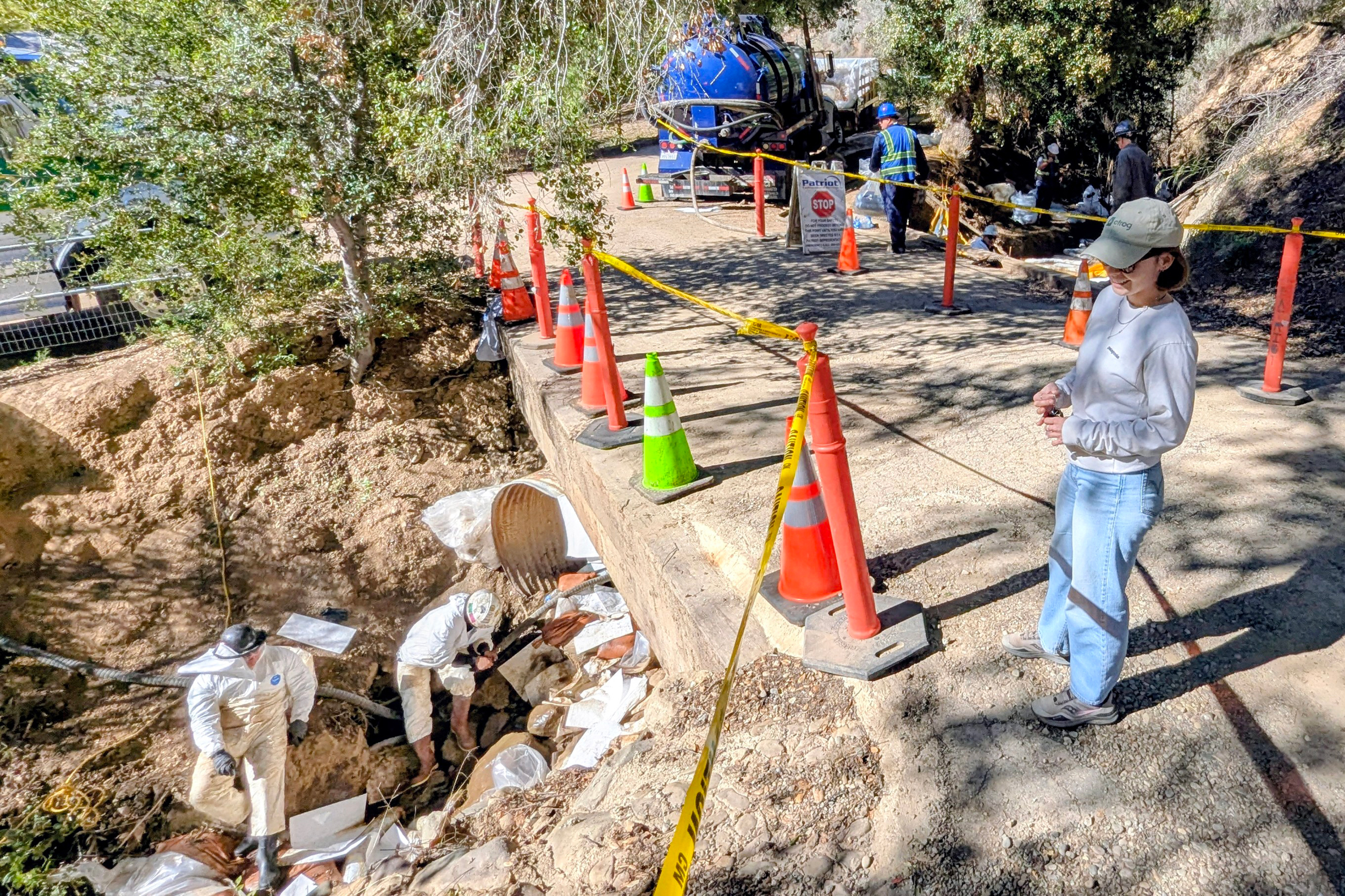
Yellow tape cordoning off cleanup areas next to orange cones.
Today, that tape is tattered and strewn about near a small bridge.
For Haley Ehlers, the executive director of a community advocacy group, Climate First: Replacing Oil & Gas, or CFROG, the scene is all too common.
“This spill, and the incomplete response, is another acute example of the unacceptable harm the oil and gas industry poses for community and environmental health,” said Ehlers.
She echoed Higbee’s concerns over the spill’s potential impacts to the air and water. Another worry: the reporting of the incident itself. Neighbors knocked on doors to warn each other as the oil spill was happening.
Officials did not immediately clarify exactly how the oil spill was called in, but Higbee said no one was on the scene until he dialed the police and fire department.
Ehlers emphasized that “community members are still being left in the dark, with no indication that the operator has been held accountable for this disaster, even six months later.”
How often do oil spills like this happen in California?
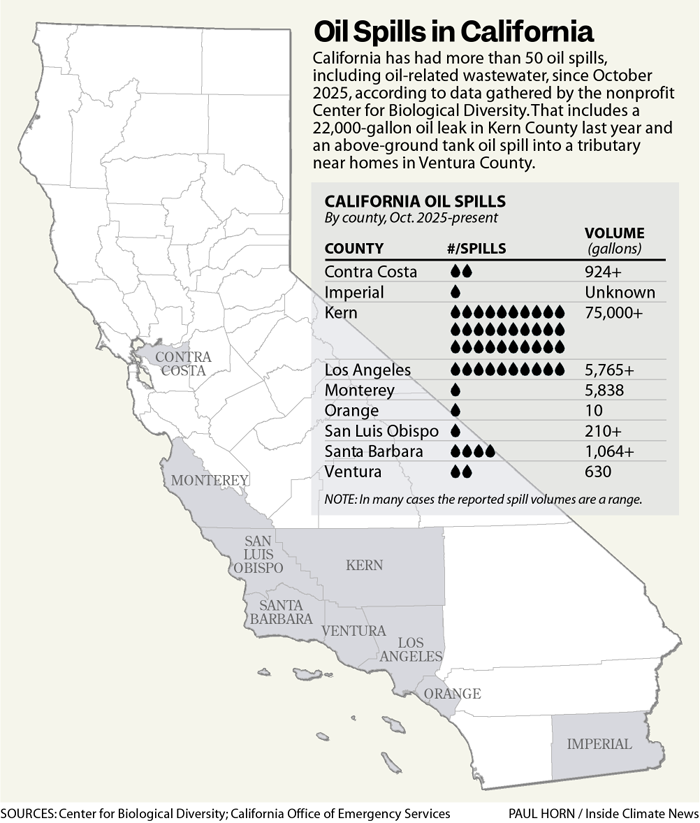
Between October 2025 and this month, more than 50 crude oil spills and other leaks have been reported to the state, according to data provided to Inside Climate News by nonprofit Center for Biological Diversity. The organization noted that these are spills—as well as leaks of produced water—called into California’s Office of Emergency Services.
The spills ranged in size from 210 gallons of crude oil and rainwater in Ventura County this past February to 22,000 gallons released from a pipeline leak in December in Kern County, according to the center’s data.
Just this week, a pipeline ruptured Friday in East Los Angeles—releasing an amount of crude oil still being determined. A day earlier, a storage tank in Kern County accidentally released at least 42,000 gallons of oil-related wastewater.
Acute health effects from exposure to crude oil spills can include respiratory, eye, and skin symptoms, as well as headache, nausea, dizziness, tiredness or fatigue, according to researchers. Health experts also pointed to chronic effects like respiratory disorders, genotoxic effects and endocrine abnormalities, among more serious potential problems.
Oil production factors into where oil spills are most common.
“We estimated approximately 3 million Californians live within 3,200 feet of an active oil or gas development,” said Jill Johnston, an associate professor of environmental and occupational health at the University of California, Irvine.
“The volume of oil extraction and the number of wells is largest in Kern County … and then if you go to the coast, Ventura and Santa Barbara (counties), there’s also some (significant) oil extraction in those counties,” she said.
This story is funded by readers like you.
Our nonprofit newsroom provides award-winning climate coverage free of charge and advertising. We rely on donations from readers like you to keep going. Please donate now to support our work.
In 2025, Ventura County represented 4.2 percent of the state’s crude oil production, said Kyle Ferrar, the western program director for FracTracker Alliance, a nonprofit that tracks oil and gas development data.
According to 2025 data from the state, Kern County significantly outweighed the others, accounting for 73 percent of California’s oil production. Los Angeles County sat at 10 percent and Fresno County at just over 4 percent.
Although federal officials continue to investigate the recent Ventura County oil spill, Julia Giarmoleo of EPA Region 9, said its probe so far found the incident occurred when heavy rain caused a “slop tank,” which is used for oil and water separation to overflow, allowing oil to breach and flow into Sisar Creek.
“EPA is continuing to investigate the incident and cannot comment on the status of our ongoing investigation,” Giarmoleo said Thursday.
A letter from California regulators to the company in December noted “the operator’s failure to close and secure rainwater valves led to the unauthorized release of fluids from the secondary containment.”
Ehlers hopes a new investigation by Ventura County officials working with the state “leads to sufficient remediation, long-term positive environmental impacts, and more responsible operations.”
Families in the Santa Paula area and nearby want to know exactly how much oil spilled, what testing has been carried out so far, what else is planned and in what ways Carbon California has been made to pay following the incident.
“It’s been six months,” Higbee said this week, sounding exasperated, “we want to know answers.”
Hollin Kretzmann, a senior attorney for the Center for Biological Diversity, said the future of the Sisar Creek site is also relevant for another reason.
On Nov. 21, three days after the Ventura oil spill, the state approved the operator’s proposal for wastewater injection activity in the same oil field where the spill took place.
“That means there (could) be oil production in the area until at least 2040,” Kretzmann said.
About This Story
Perhaps you noticed: This story, like all the news we publish, is free to read. That’s because Inside Climate News is a 501c3 nonprofit organization. We do not charge a subscription fee, lock our news behind a paywall, or clutter our website with ads. We make our news on climate and the environment freely available to you and anyone who wants it.
That’s not all. We also share our news for free with scores of other media organizations around the country. Many of them can’t afford to do environmental journalism of their own. We’ve built bureaus from coast to coast to report local stories, collaborate with local newsrooms and co-publish articles so that this vital work is shared as widely as possible.
Two of us launched ICN in 2007. Six years later we earned a Pulitzer Prize for National Reporting, and now we run the oldest and largest dedicated climate newsroom in the nation. We tell the story in all its complexity. We hold polluters accountable. We expose environmental injustice. We debunk misinformation. We scrutinize solutions and inspire action.
Donations from readers like you fund every aspect of what we do. If you don’t already, will you support our ongoing work, our reporting on the biggest crisis facing our planet, and help us reach even more readers in more places?
Please take a moment to make a tax-deductible donation. Every one of them makes a difference.
Thank you,

Reporter, California
Steven Rodas is an environmental and climate reporter for Inside Climate News based in Southern California. He previously reported on the environment in New Jersey, covering energy, pollution, wildlife and development. Steven’s work has appeared in several publications including NJ.com/The Star Ledger, hMAG, The Jersey Journal and The Hudson Reporter. He worked as a copywriter at Google. Steven has a master’s degree from Syracuse University’s S.I. Newhouse School Of Public Communications. He is fluent in English and Spanish (and welcomes your tips).