

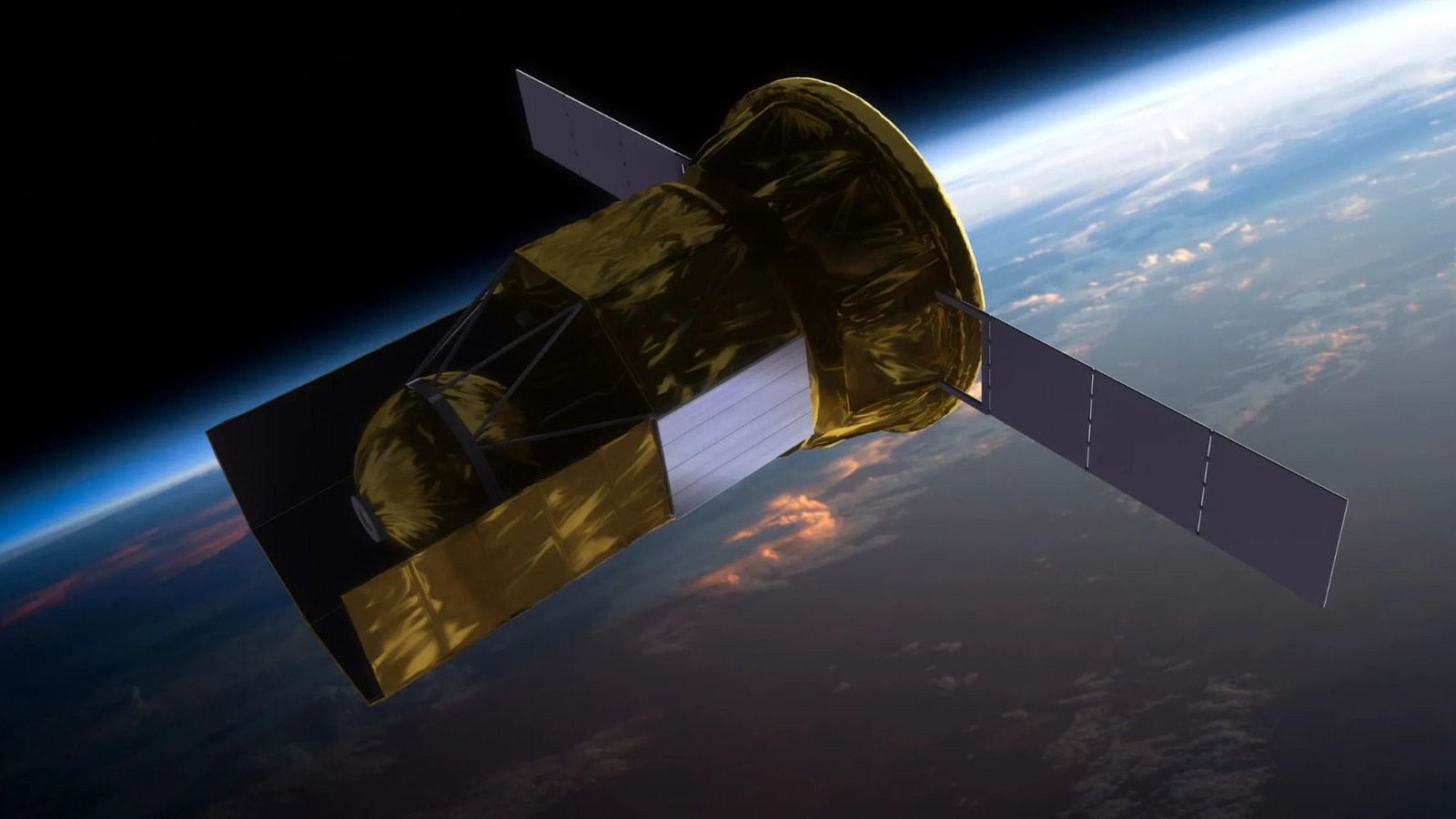
A new NASA satellite will test critical technologies for storing and transferring super-chilled, cryogenic fuels in space in order to help astronauts reach the moon and potentially Mars someday.
The Liquid Oxygen Flight demonstration (LOXSAT) will launch to orbit around the Earth later this year to test the fluid management capabilities that will be needed to maintain cryogenic fuels in microgravity, which come with additional challenges compared to other propellants. In a statement, NASA said these in-space propellant depots could some day be “essentially gas stations in space that could support long-term exploration.”
Cryogenic fuels must be managed with tight temperature controls to prevent them from boiling off, whether on Earth or in space. The same temperature conditions that make those liquids hard to store also make them hard to transfer, and the ability to do so between vehicles in space is a crucial step to unlocking missions to deep space, like those of NASA’s Artemis program to return astronauts to the moon and other exploration efforts such as crewed missions to Mars.
The mission is a collaboration with Eta Space of Rockledge, Florida, and NASA hopes the technology can evolve to support on-orbit fueling depots for spacecraft designed for long-term deep space objectives. It’s central to the success of the agency’s upcoming lunar goals, and part of a larger Cryogenic Fluid Management Portfolio Project involving scientists and engineers from NASA’s Marshall Space Flight Center, Glenn Research Center, and Kennedy Space Center (KSC).
Eta Space was selected under NASA’s Tipping Point initiative, which chose 14 companies to develop a variety of technologies to support the Artemis program’s goal of sustained operations on the surface of the moon by 2030. Managing cryogenic fuels in space is a critical part of that architecture.
Both Artemis lunar landers commissioned under NASA’s Human Landing System contracts rely on cryogenic propellants, and require on-orbit refueling in order to complete their missions of landing astronauts on the lunar surface and delivering them back to lunar orbit.
Both landers also use liquid oxygen as the oxidizer for their respective propellants. SpaceX‘s Starship is powered by a mixture of liquid oxygen and liquid methane (methalox). The other, Blue Origin’s Blue Moon lander, is powered by liquid oxygen and liquid hydrogen (hydrolox) — both of which require constant cryogenic refrigeration to maintain their liquid state. Neither landers (or any other spacecraft, to date) have yet demonstrated how they will handle long-term storage of those super-chilled fuels, or the ability to transfer them between vehicles. That means LOXSAT may be the first.

SpaceX and Blue Origin continue advancing their lunar lander tests. SpaceX’s Starship is poised to launch its twelfth test flight later this week (currently no earlier than May 20), and Blue Origin’s Blue Moon Mark 1 (MK1) is undergoing late-stage testing at the company’s facilities near KSC, in Florida.
The outcome of Starship’s Flight 12 will have deep implications for how the vehicle’s development progresses through the rest of the year. It’s the first launch of Starship Version 3, and the first iteration of the spacecraft designed to eventually demonstrate capabilities like on-orbit refueling. A successful test on its first launch could mean a higher cadence of test launches moving forward — seven months have passed between Starship’s upcoming launch and its last. But a failure could delay Starship’s development further, and, in turn, potentially set back the timeline for NASA’s Artemis missions.
Blue Origin’s Blue Moon MK1 is progressing towards launch readiness, but the company’s New Glenn rocket is currently grounded due to a mishap with its second stage during its most recent mission, which failed to deliver its payload to orbit. MK1 is a cargo variant of the crewed lander Blue Origin plans to use for NASA’s Artemis missions, and is scheduled to perform a lunar landing demonstration later this year, pending the completion of the FAA’s investigation into New Glenn’s previous failure.
NASA is targeting late 2027 for the Artemis 3 mission, which will launch four astronauts to LEO to practice rendezvous and docking maneuvers between their Orion spacecraft and one or both of the program’s lunar landers. NASA has indicated the agency will fly with whichever is ready when it comes time to launch the mission, even if that means leaving one behind on Earth.
By then, LOXSAT will have completed its own on-orbit demonstrations, and, if all goes according to plan, provided scientists and engineers useful data that could potentially inform SpaceX’s and Blue Origin’s efforts to achieve cryogenic fuel management in microgravity, and eventually lead to orbital refueling stations that can support Artemis and other missions to the moon, Mars and other deep space destinations.