

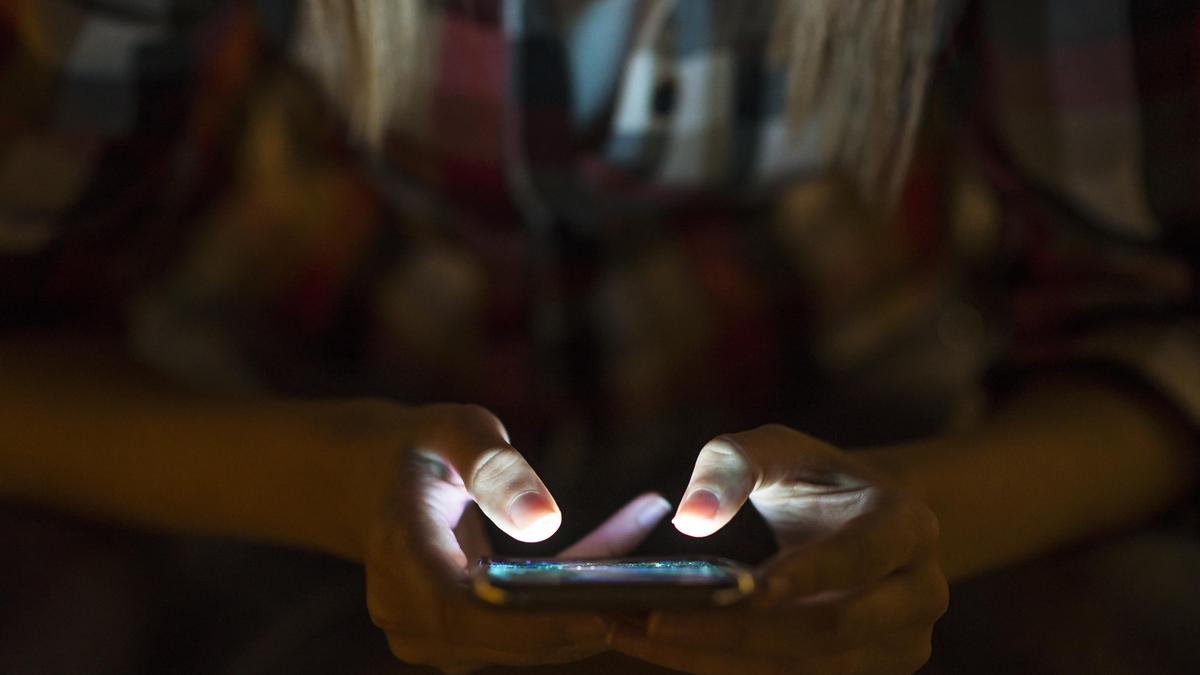
India now has 970 million people online—a statistic often held up as proof of our technological rise and digital confidence. It is, undeniably, a historic milestone. My own 93‑year‑old grandfather navigates his smartphone with an ease that still surprises me. Devices today sit as comfortably in the hands of early teenagers as they do with nonagenarians.
Yet behind this remarkable spread of connectivity lies a quiet, largely unspoken emergency—one unfolding not in tech hubs, policy rooms, or conference halls, but in schools, coaching hostels, nursing homes, and bedrooms across the country. While researchers continue to examine screen time, eye strain, and shrinking attention spans, a more urgent body of evidence is emerging: the link between extended, problematic social media use and self‑harming behaviours.
The question that now demands attention is: what does this mean for India’s young people, who are growing up inside these digital ecosystems rather than alongside them?

The emotional regulation conundrum
At the core of the human experience lies a simple truth: almost everything we do is an attempt to regulate our emotions. If safety alone were our basic need, any sturdy shelter would suffice. Yet we design our homes with meticulous care—choosing colours, textures, objects, and layouts that reflect our identities and soothe our inner worlds. These spaces become extensions of our emotional lives, not just our physical ones.
The same logic applies to food. If eating were purely about sustenance, we would all consume balanced, functional meals with little regard for taste. But comfort eating exists for a reason: it is a form of self‑soothing, a way to manage stress, loneliness, or feeling overwhelmed.
Humans have always used unconventional tools—rituals, objects, habits—to steady their internal states. Social media has quietly joined that list.
Originally designed to help us stay connected, it has evolved into one of the most accessible emotional regulation devices of our time. Doom‑scrolling offers temporary escape from overthinking. Curated feeds offer distraction from distress. Notifications deliver micro‑bursts of dopamine that momentarily lift moods. For teenagers—whose brains are still developing the neural circuitry for impulse control, emotional regulation, and long‑term decision‑making—these platforms can feel less like entertainment and more like relief.

Where this is leading
Non‑suicidal self‑injury (NSSI) refers to the intentional destruction or injury of one’s own body tissue without suicidal intent. Common forms include burning, making superficial cuts or scratches, head‑banging, or hitting oneself. These behaviours may occur in isolation or in combination. NSSI is most often associated with significant emotional distress and is more prevalent among individuals who experience difficulties with emotion regulation or who live with certain personality vulnerabilities. Although the behaviour itself is not driven by a desire to die, it is linked to an increased risk of later suicidal thoughts , which is why researchers continue to examine its conceptual and clinical underpinnings.
Patterns of NSSI vary across cultural and ethnic groups , shaped by differences in emotional expression, coping norms, and social expectations. Understanding NSSI within the Indian context is therefore essential. A recent systematic review examining its prevalence in India identified several key risk factors: family conflict, peer bullying, the need for social acceptance, self‑criticism, and difficulties managing intense emotions.
In today’s digital landscape, these vulnerabilities can be amplified. Young people are more exposed to peer bullying online, where anonymity emboldens cruelty. Social acceptance is increasingly measured through metrics such as likes, followers, and visibility. When these markers of belonging fail to materialise, a teenager—whether or not they have pre‑existing emotional challenges—may turn to NSSI as a way to cope with overwhelming feelings or regain a sense of control. In this way, digital environments can intersect with emotional distress, shaping how young people understand and respond to their inner worlds.
A recent systematic analysis examining NSSI‑related content on TikTok revealed a deeply ambivalent digital landscape. While the platform often provides users with a sense of emotional validation and community, it also uncovered content that normalised NSSI as a coping strategy, presenting it as a relatable or even aesthetically framed response to distress. This means that—often unintentionally—TikTok and perhaps other social media platforms too, can function as an enabling environment for vulnerable young people. For adolescents already struggling with emotional regulation, this can make NSSI appear not only common, but acceptable, even soothing.

Driving engagement, not mental wellbeing
These findings raise urgent questions about the algorithmic infrastructures that sustain the visibility of such content. Recommendation systems are designed to amplify engagement, not safeguard mental health. When a distressed teenager lingers on one emotionally charged video, the algorithm may respond by offering more of the same—deepening exposure and narrowing their digital world.
Recent work by King’s College London’s Institute of Psychiatry, Psychology & Neuroscience, in collaboration with YoungMinds, has added a new dimension to our understanding of how self‑harm intersects with social media behaviour. Instead of focusing on explicit content, the researchers examined the subtle shifts in how young people present themselves online around periods of emotional distress. What they found was striking: many adolescents who engaged in self‑injury showed a noticeable drop in posting activity on the days they were most distressed. Rather than signalling their struggles through overt imagery or captions, young people often became quieter—sharing fewer photos, avoiding personal updates, or posting neutral content that concealed what they were experiencing offline. This pattern suggests that withdrawal, not disclosure, may be the more common digital footprint of distress.
The study highlights a complex emotional calculus. Young people frequently describe feeling caught between wanting connection and fearing judgement or stigma. As a result, their online presence becomes carefully managed during periods of crisis. This digital “quieting” mirrors offline behaviour, where distress is often masked to avoid worrying others or appearing vulnerable.
These findings also raise broader questions about the design of social platforms. If distress manifests not through explicit posts but through absence, how well equipped are algorithms—or adults—to recognise when a young person is struggling? And what does it mean for vulnerable adolescents to navigate online spaces that reward constant visibility at precisely the moments they feel least able to be seen?
Government concerns
The National Human Rights Commission (NHRC) of India recently convened a major multi‑stakeholder open‑house discussion in response to growing concerns about young people’s social media use and how it should be regulated. The meeting brought together representatives from the Ministry of Electronics and Information Technology, child‑rights bodies, mental‑health experts, educators, and civil‑society organisations. A clear consensus emerged: an outright ban is neither practical nor beneficial. Instead, India needs age‑appropriate regulation, stronger digital safeguards, and a unified national framework that protects children without cutting them off from the digital world they inhabit.
Several speakers emphasised the mental‑health implications of unregulated access—highlighting rising exposure to harmful content, cyberbullying, and the emotional strain of algorithm‑driven platforms.
The discussion underscored the urgent need for digital literacy, parental awareness, and platform accountability, alongside policies that recognise the psychological vulnerabilities of children and adolescents.
What the response must be
While setting parental controls or enforcing curfews may feel like the most straightforward response, the first and often most effective step is far less technical: having an open, intentional conversation with your child. Mental‑health difficulties can emerge as early as infancy, and children often turn to social media when they feel unable—or unsure—of how to speak to their parents about what they’re experiencing. Even in the most supportive homes, young people may not recognise that something is troubling them, let alone know how to articulate it.
Regular, present, and emotionally attuned check‑ins—once a week, even for a few minutes—can create the kind of relational safety that encourages children to share. These conversations only unfold when the environment feels calm, non‑judgemental, and genuinely containing. When children feel emotionally held, they are less likely to seek digital spaces as their primary outlet.
It’s also important to remember that young people often turn to social media as a maladaptive coping mechanism or as a substitute for unmet emotional needs. A supportive, predictable home environment—where feelings are named, validated, and understood—can go a long way in reducing the pull of online spaces that promise quick relief but offer little real support.
(People in distress can reach out to helpline numbers available here.)