

Close Menu

    Subscribe to Updates

    Get the latest news information from worldwide businesses.

    What's Hot

    DLF-GIC JV firm’s rent income rises 16% to Rs 5,525 cr in FY26 on demand for commercial spaces

    May 18, 2026

    Here’s where Treasury yields will peak and open up a rare opportunity to buy stocks and bonds, says Wall Street veteran

    May 18, 2026

    India’s fertiliser subsidy bill for FY27 may rise by Rs 70,000 cr on West Asia crisis, official says

    May 18, 2026
    Facebook Instagram YouTube LinkedIn X (Twitter)
    Trending
    • DLF-GIC JV firm’s rent income rises 16% to Rs 5,525 cr in FY26 on demand for commercial spaces
    • Here’s where Treasury yields will peak and open up a rare opportunity to buy stocks and bonds, says Wall Street veteran
    • India’s fertiliser subsidy bill for FY27 may rise by Rs 70,000 cr on West Asia crisis, official says
    • Shakira in line for €55m payout as Spanish court rules tax fines were wrong | Shakira
    • Suvendu govt ends religion-based schemes in Bengal, scraps state OBC list
    • Trump to convene top-level Situation Room meeting on Iran with no nuclear deal in sight and more top headlines
    • NEET-UG Paper Leak: Parliamentary panel summons NTA chief over exam irregularities | Education News
    • ‘Avatar: Fire and Ash’ finally has a Disney+ release date, but you’ll have to wait a while longer
    Newspublicly
    • About Us
    • Advertise & Partner with us
    • Pitch Your Story
    • Contact Us
    Facebook Instagram LinkedIn X (Twitter)
    Subscribe
    • Home
    • World News
      • Asia
      • India
      • USA
      • UK & Europe
      • Middle East
    • Economy & Business
      • Global Economy
      • Corporate & Industry
      • Finance & Markets
      • Policy & Trade
    • Technology
      • Gadgets & Devices
      • Software & Apps
      • AI & Machine Learning
      • Robotics & Automation
    • Health & Medicine
      • Fitness & Nutrition
      • Research & Innovation
      • Disease & Treatment
      • Doctors, Clinics & Patient Care
    • Travel & Tourism
    • Automobile
      • Electric & Hybrid Vehicles
      • Auto Industry Insights
    • Sports
    • More
      • Education
      • Real Estate
      • Environment & Climate
      • Space & Astronomy
      • War & Conflicts
    Newspublicly
    Home»More»Space & Astronomy»SpaceX Starlink and other satellite megaconstellations are creating an ‘unregulated geoengineering experiment’, scientists say
    Space & Astronomy

    SpaceX Starlink and other satellite megaconstellations are creating an ‘unregulated geoengineering experiment’, scientists say

    AdminBy AdminMay 18, 2026No Comments5 Mins Read0 Views
    Share
    Facebook Twitter LinkedIn Copy Link WhatsApp


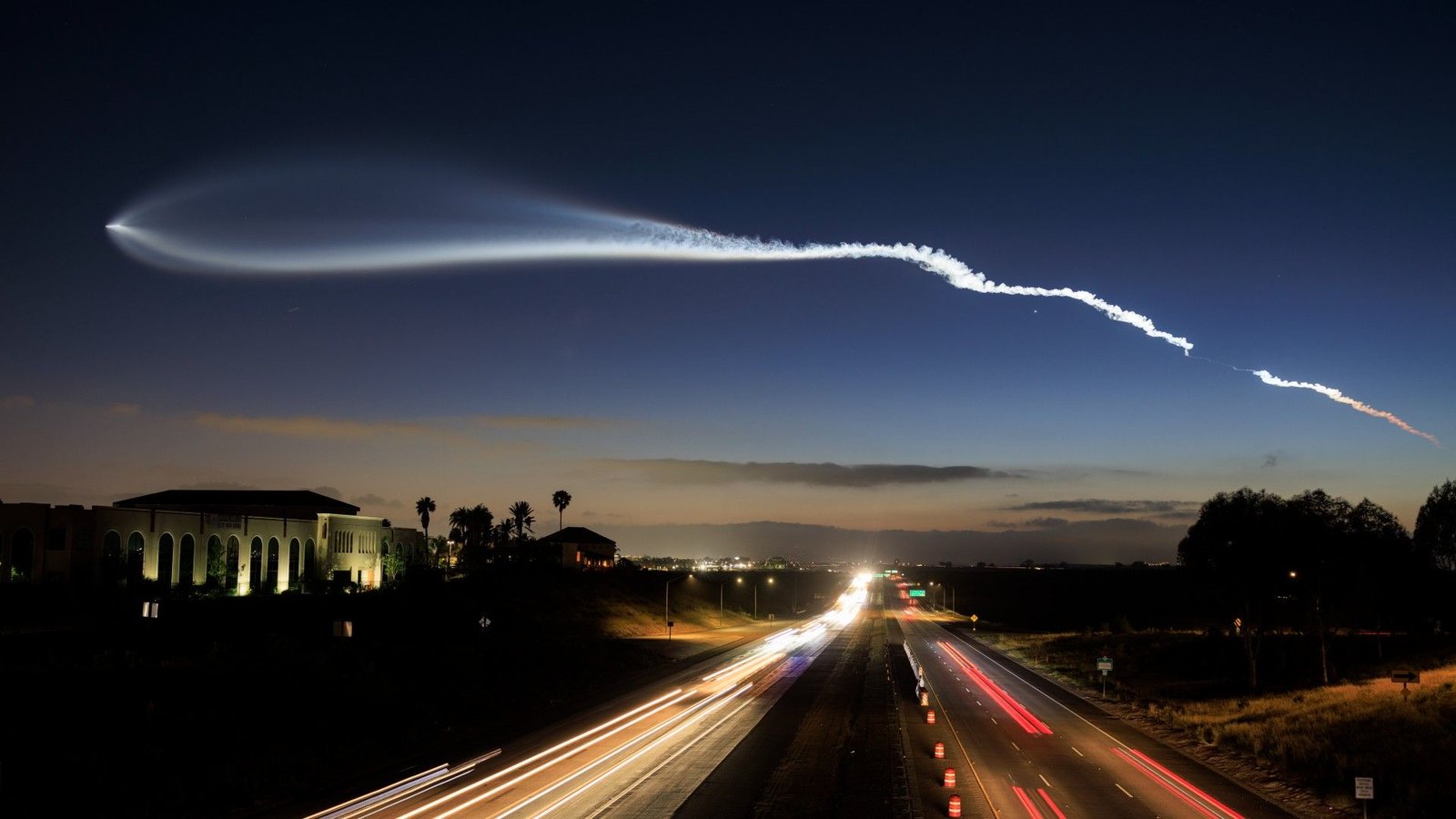
    Space industry aficionados have big plans. They talk about the not so distant future when hundreds of thousands or even millions of satellites orbit planet Earth, beaming the internet to the unconnected, processing data in orbital computer centers, generating solar power and more. But this ambitious vision, which many in the sector think will become reality sooner or later, worries atmospheric researchers.

    Studies show that since the beginning of the mega-constellation era in 2020, concentrations of potentially dangerous high-altitude air pollution stemming from satellite launches and re-entries has significantly increased. Based on estimates described by researchers as “conservative”, the global space sector will have released by 2030 more climate-altering chemicals into the atmosphere than the entire United Kingdom. If the growth envisioned by the space industry leaders comes to pass, this air pollution, mostly concentrated in higher layers of the atmosphere, will at some point begin altering Earth’s climate, Eloise Marais, a professor of atmospheric chemistry and air quality at University College London, told Space.com.

    “The space industry pollution is like a small-scale, unregulated geoengineering experiment that could have many unintended and serious environmental consequences,” she said.


    You may like

    Geoengineering is a term describing a number of possible interventions that could reverse the rise in global temperatures caused by the increasing concentrations of greenhouse gases in the atmosphere. One of the most commonly discussed geoengineering methods is the Stratospheric Aerosol Injection, which entails releasing large amounts of light-reflecting particles into the stratosphere, the second layer of Earth’s atmosphere, to reduce the amount of heat reaching the planet. The idea is being studied by scientists, who warn that impacts may be unpredictable, including changes in rain patterns, draughts and unforeseen weather changes.

    Marais is one of those scientists, leading a team that is studying the effects of satellite-related air pollution. Their latest study found that by 2029, air pollution from megaconstellation satellite launches — such as Starlink, Amazon Leo or Chinese projects Guowang and Quianfan — will account for more than 40 percent of all pollution generated by the space sector.

    Megaconstellations — most commonly used to beam internet to users in remote areas from near Earth space — are a quickly growing trend. They rely on satellites with limited life-spans which get replaced about every five years with more modern and powerful technology. The frequent replacements mean a more frequent launching and a more frequent deorbiting compared to old-school missions designed with longer missions in mind. That in turn, means more air pollution inserted into the otherwise pristine upper layers of Earth’s atmosphere.

    “Most mega-constellation launches today are burning kerosine fuel, because they usually rely on Falcon 9 rockets, which are producing black carbon,” Marais said. “This black carbon is being released into the higher layers of the atmosphere where it stays for 2.5 to 3 years. Because of that, that black carbon has about 540 times bigger climate effect than black carbon that’s released from surface sources like ships, cars and power plants.”

    Space

    The researchers estimate the impact of air pollution from rocket launches by calculating the amounts of pollution likely to arise from expected satellite launches and re-entries in a given period. While satellite launches mostly produce black carbon, which has a potential to warm the upper atmosphere, satellite re-entries generate aluminum oxides, which can damage the ozone layer. The team then runs climate models that show the expected impact of the pollutants on the planet.

    “The model can very nicely tell us how much ozone is going to be destroyed from this pollution and how much the climate is going to be altered from this pollution,” said Marais.

    Marais added the latest modelling was based on “conservative” numbers as the actual growth in satellite numbers has been consistently outstripping the researchers expectations.


    What to read next

    Currently, over 15,000 operational satellites orbit the planet, according to the European Space Agency. That is three times more than circled Earth in 2020. The increase is mostly down to SpaceX’s Starlink megaconstellation, which currently consists of more than 10,000 satellites.

    New contenders, including Amazon LEO and Chinese operators Guawang and Qianfan, are in the process of building up their own fleets. By 2030, some 100,000 satellites may orbit the planet, with further steep growth expected in the coming decades.

    Marais warns about an unregulated growth in satellite launches. The particles released into the upper layers of Earth’s are at some point likely to reach concentrations, which will have an effect on Earth’s climate.

    a rectangular spacecraft with two wing-like solar arrays above Earth

    Screenshot from a video captured by a SpaceX Starlink satellite shortly after its deployment into space on May 1, 2026. (Image credit: SpaceX/Starlink/Michael Nicolls)

    Marais said that although by 2029 concentrations of pollutants from satellite launches and re-entries will amount to only about one hundredth of the quantity required for geoengineering interventions, the continued accumulation of the pollutant resulting from increased satellite deployments raises concerns.

    “We need to be taking it far more seriously in terms of regulating the pollution that’s coming from launches and reentries,” said Marais. “There also needs to be far more funding funneled into research to study this because we can’t keep up with the space industry.”

    The study was published on Thursday, May 13, in the journal Earth’s Future.


    Source link

    Author

    • Admin

      NewsPublicly.com is News & Articles Platform that creating SEO-focused articles on travel, lifestyle, and digital trends.

    Admin
    • Website

    NewsPublicly.com is News & Articles Platform that creating SEO-focused articles on travel, lifestyle, and digital trends.

    Related Posts

    ‘Avatar: Fire and Ash’ finally has a Disney+ release date, but you’ll have to wait a while longer

    May 18, 2026

    Giant radio telescope sees Artemis 2 astronauts on Orion flying around the moon. ‘There are 4 people in those pixels.’

    May 17, 2026

    SpaceX Dragon capsule delivers science and supplies to space station

    May 17, 2026
    Leave A Reply Cancel Reply

    Demo
    Top Posts

    “Inside Gemini Robotics 1.5: How Robots Learn to Reason & Act

    November 22, 202524 Views

    How US Tariffs Are Reshaping the Global Growth Landscape?

    November 21, 202518 Views

    Pakistani Journalist Laughing at Tejas Fighter Jet Crash at Dubai Airshow Sparks Massive Outrage Worldwide

    November 23, 202517 Views

    Vibe-Coding Boom: How Non-Coders Build Apps With AI Agents

    November 22, 202515 Views
    Don't Miss

    DLF-GIC JV firm’s rent income rises 16% to Rs 5,525 cr in FY26 on demand for commercial spaces

    May 18, 20263 Mins Read0 Views

    New Delhi: Realty major DLF and GIC joint venture DCCDL’s rental income from office and…

    Here’s where Treasury yields will peak and open up a rare opportunity to buy stocks and bonds, says Wall Street veteran

    May 18, 2026

    India’s fertiliser subsidy bill for FY27 may rise by Rs 70,000 cr on West Asia crisis, official says

    May 18, 2026

    Shakira in line for €55m payout as Spanish court rules tax fines were wrong | Shakira

    May 18, 2026
    Stay In Touch
    • Facebook
    • Twitter
    • Instagram
    • YouTube
    • LinkedIn
    • WhatsApp

    Subscribe to Updates

    Get the latest creative news from SmartMag about art & design.

    Demo
    NEWSPUBLICLY
    Facebook X (Twitter) Instagram LinkedIn

    Home

    • About Us
    • Leadership
    • Advertise & Partner With Us
    • Pitch Your Story
    • Media Kit & Pricing
    • Career
    • FAQs

    Guidelines

    • Editorial & Submission
    • Partnership
    • Advertising & Sponsor
    • Intellectual Property Policy
    • Community & Comment
    • Security & Data Protection
    • Send Your Opinion

    Quick Links

    • Cookie Policy
    • Payment & Billing Terms
    • Refund & Cancellation
    • Copyright Policy
    • Complaint & Support
    • Sitemap
    • Contact Us

    Subscribe Us

    Get the latest news and updates!

    Copyright © 2026 Newspublicly (DIGITALIX COMMUNICATION). All Rights Reserved.
    • Privacy Policy
    • Terms of Use
    • Disclaimer