

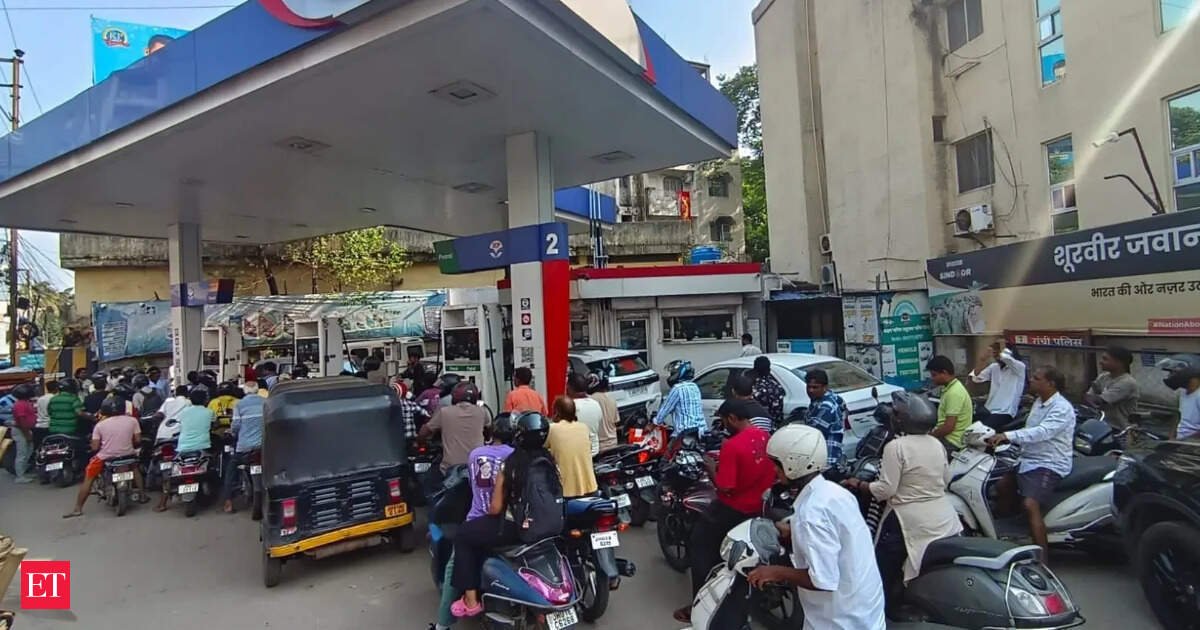
The increase will partly offset mountinglosses at fuel retailers but is also expected to pushup freight costs and add to broader inflationarypressures across the economy.Although firms had demanded a hike of more than 10 per litre, the government cleared a more modesthike, the first hike in pump prices in four years, due to concerns over inflation and a potential political backlash, industry executives said.
Also read: Petrol Price Hike: The crude shock logic that will make Indians pay a higher price
Officials opted for a calibrated increase to assess how higher fuelcosts are transmitted through the supply chain, particularly after wholesale inflation surged to a 48-month high of 8.3% in April, they added.Oil company executives, however, expect further hikes, saying the revision is insufficient to bridge thewide gap between higher input costs and retail prices.
Procurement costs

The under-recovery, or the gap between international fuel prices and domestic pump rates, stoodat Rs 14 per litre for petrol, Rs 42 for diesel and Rs674 per cylinder for LPG on Monday, according to apetroleum ministry official. These figures changedaily and do not reflect actual cash losses for refiners.
They have also become less meaningful overthe past four years as retail prices remained frozen. When global fuel prices declined in recent years, domestic pump prices did not fall correspondingly, resulting in over-recoveries and a profit boost for oil companies.What matters more for oil companies now is thesharp rise in crude procurement costs. The benchmark Indian crude basket has averaged $106.2 perbarrel in May, up from $69 in February. Alongsidehigher crude prices, rupee depreciation has alsoadded to the pressure. The Indian currency hasweakened by Rs 5 against the dollar since the startof the war and by Rs 10 over the past year, breaching the 96-per-dollar mark on Friday.As consumers absorb Friday’s increase, industryexecutives expect additional incremental hikes overthe coming days and weeks.
The last significant revision in fuel prices came in 2022, when companies raised rates in small daily increments between March 21and April 6, increasing petrol and diesel prices by Rs10 per litre within just 16 days.The oil ministry has said oil marketing companies(OMC) — Indian Oil Corp, Hindustan PetroleumCorp and Bharat Petroleum Corp, are incurring acombined loss of Rs 30,000 crore a month. To be sure,OMCs have shown resilience in absorbing losses arising from the Iran war-triggered turmoil in oil markets.
Also read: Govt imposes ₹3/litre windfall tax on petrol exports; cuts diesel, ATF levies
HPCL reported a 46% rise in profit to Rs 4,902crore in the March quarter, largely supported bystrong earnings in January and February. Thestocks of all three companies fell on the BSE despitethe price increase, reflecting the under-recovery gap.IndianOil fell 4.06%, HPCL was down 2.89% andBPCL dropped 3.63% at the close on Friday.
CNG prices
CNG prices in Delhi and Mumbai have also risenby around Rs 2 per kg to partly offset higher natural gas procurement costs for city gas distributors. Prices of piped natural gas supplied to households have not been increased. In several othercities, distributors had already raised CNG pricesby Rs 2-2.5 per kg last month.Senior industry executives said nearly five to sixmore price hikes of a similar magnitude may beneeded to fully cover current under-recoveries.