






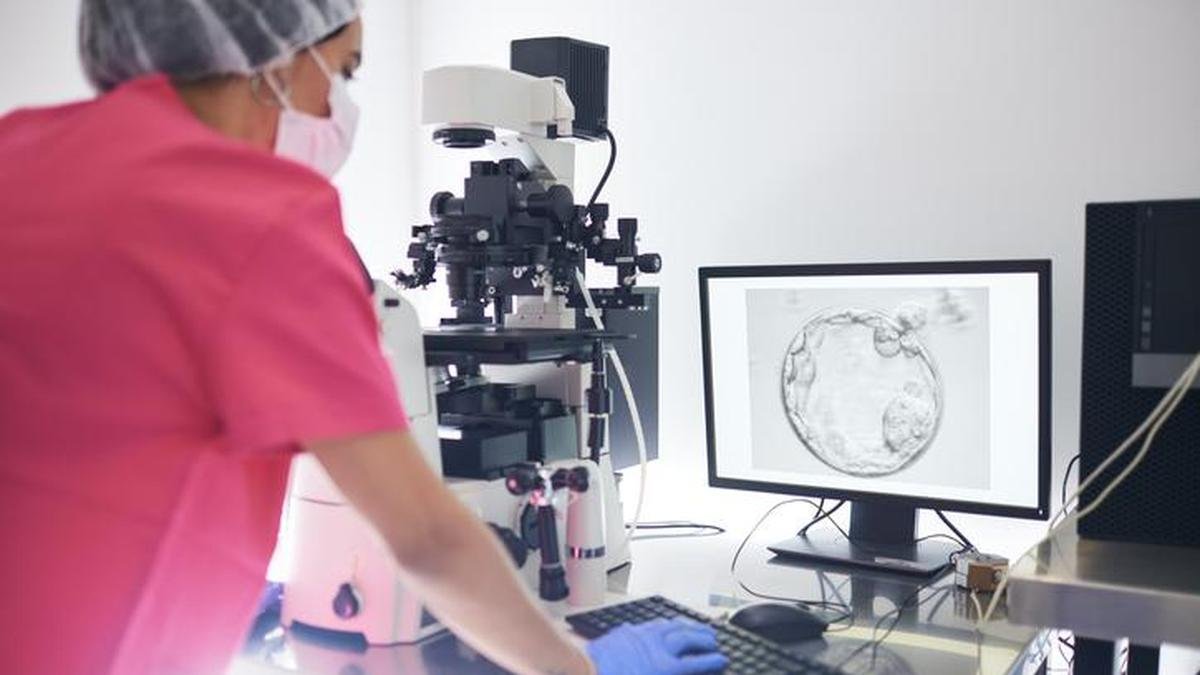


Women are born with a fixed number of eggs, and this reserve naturally declines with age. The speed at which people experience this decline shows great variation. Image used for representational purposes only
| Photo Credit: Getty Images
There is a need for women to understand reproductive health beyond menstrual regularity, contraception and pregnancy planning. While these are important factors, fertility specialists now know that ovarian health requires not just active care, but preventive care as well.
While ovarian reserve — the total supply of eggs in a woman’s ovaries — is being increasingly talked about, it is important to know what it denotes and how it is assessed.
The process of fertility may begin to decline during a woman’s late 20s, but becomes more pronounced after she reaches her 35th birthday. Many women find out about their low ovarian reserve after they postpone pregnancy because of educational, career, financial or personal obligations. Knowing about your fertility health establishes pathways that enable professionals to provide you with counselling, lifestyle changes and fertility preservation options in particular situations.


Assessing ovarian reserve
Women are born with a fixed number of eggs, and this reserve naturally declines with age. The speed at which people experience this decline shows great variation. Women who are in their late 20s or early 30s may notice symptoms of reduced ovarian reserve even though they do not seem to have any indicators of this condition.
The Anti-Müllerian Hormone (AMH) is a clinical marker that can aid a patient in knowing about her ovarian reserve. AMH is a hormone that small ovarian follicles create. This is why it functions as an easy and reliable method to measure ovarian reserve. The test results provide important information about a woman’s reproductive life cycle, although they cannot predict her chances of getting pregnant or determine the condition of her eggs.
AMH can provide better information about ovarian reserve than menstrual cycles, which show only basic hormone patterns. AMH testing is also convenient because this reproductive hormone maintains steady levels during the menstrual cycle.
AMH testing can therefore help identify women who may be at risk of earlier fertility decline, although this is not the only parameter that can indicate your fertility. Women with a family history of early menopause may themselves experience faster depletion of ovarian reserve. Endometriosis and chronic inflammation can affect how ovaries operate and how they impact fertility. Autoimmune disorders may also affect ovarian activity in some patients. Women who have undergone ovarian surgeries, or treatments such as chemotherapy or radiation. may need early counselling and fertility assessments
The test itself is simple and can be performed through a blood sample.

Not a fertility’score’
The common belief about AMH testing is that it allows doctors to forecast a woman’s ability to become pregnant without assistance. However, this is not the case.
AMH should never be interpreted in isolation. The body does not require a specific AMH level to achieve pregnancy because normal and low AMH levels both permit conception. Reproductive health results depend on multiple factors including age, egg quality, ovulation and uterine health alongside life choices and male reproductive ability. Women with PCOS, for instance, who show elevated AMH levels, may face challenges with ovulation despite a high number of eggs seen on their scan.
AMH is a screening and awareness tool for fertility, but does not provide definite results about fertility outcomes. A lack of proper counselling can create a situation where couples misinterpret information which may result in them feeling unnecessary anxiety.

Raising awareness
While understanding around women’s health issues has increased, people still know less about ovarian reserve than they do about anaemia and thyroid disorders. Even doctors rarely address reproductive ageing until a patient experiences fertility problems. When results about reduced ovarian reserve arrive out of the blue, they can cause emotional strain and impact mental health.
Awareness and understanding about reproductive health must be increased among the general public in order to help people make better decisions about their reproductive health through preventive measures instead of waiting until treatment is needed.
Remember, AMH is not a sole marker of your ability to conceive or your fertility. There are multiple parameters which influence this. Always consult a medical professional for guidance on the right way forward for reproductive health.
(Dr Shaweez Faizi is a fertility specialist at Nova IVF Fertility, Mangalore. shaweez.faizi@novaivffertility.com)
Published – May 13, 2026 08:51 pm IST


