





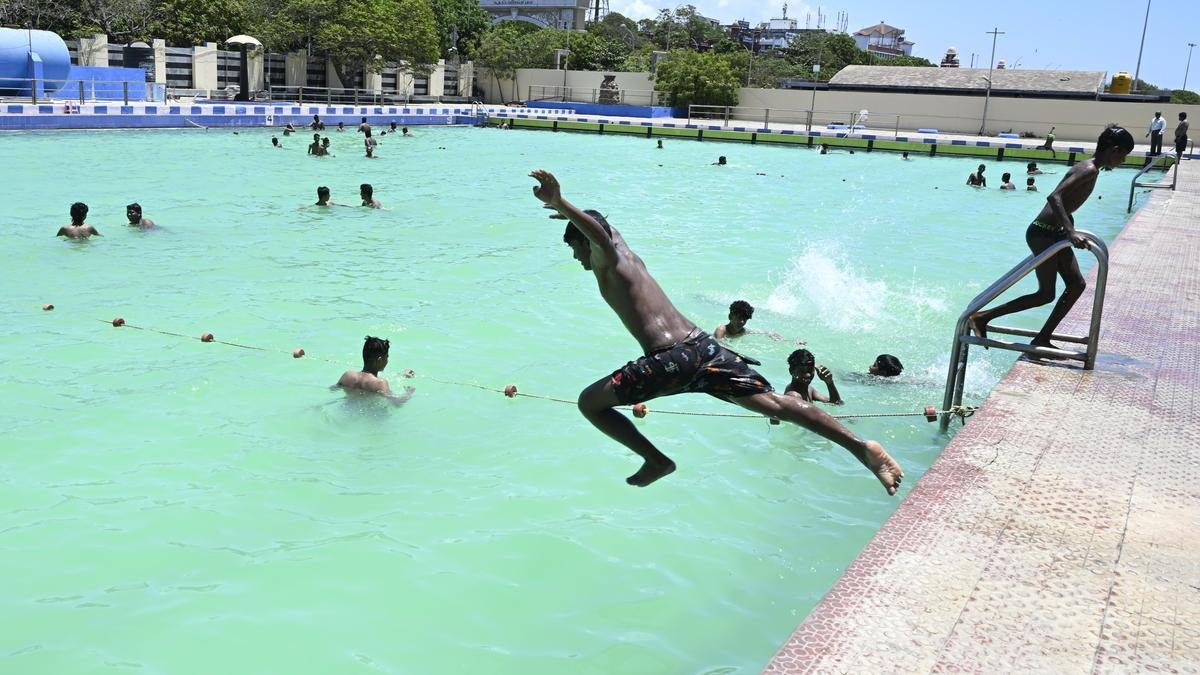


The safety of chlorine use needs to be balanced against its potential to harm eyes through extended or repeated exposure. Image used for representational purposes only
| Photo Credit: RAGU R
Summer is here and taking a dip in a swimming pool has become nearly irresistible. But there are always concerns about the chlorine in the pools and what this can do to your eyes.
Swimming pools use chlorine as a disinfectant to treat the water and eliminate dangerous microorganisms. The chemical functions as a vital component of hygienic practices because it can eliminate bacteria, viruses and parasites from surfaces. This is necessary in pools, as people who swim in them contribute to the pool water composition through their sweat and other fluids which they release into the water.
The safety of chlorine use needs to be balanced against its potential to harm eyes through extended or repeated exposure. Chlorine reacts with water to create compounds which can irritate the sensitive surface of the eye. The tear film serves as the eye’s outermost protective layer, which chlorinated water disrupts, and this causes increased dryness, irritation and redness.


Eye irritation after swimming
Swimmers who spend extended periods of time in pools experience symptoms that include burning, redness excessive tearing and gritty eye sensations. Most people believe that chlorine causes these effects, but this belief represents a widespread misunderstanding. It is not chlorine itself, but chloramines, compounds that form when chlorine interacts with sweat, urine and other organic materials that represent the main sources of irritation.
These chemical substances lead to eye and respiratory system irritation because they operate as stronger irritants than chlorine. A combination of poor pool maintenance and excessive swimmer capacity can lead to increased chloramine production, resulting in greater discomfort.
Pool water becomes unsafe when infected swimmers introduce microorganisms that create a risk of widespread infection. Common pool-borne eye infections include adenovirus infections, Herpes Simplex Keratitis, Chlamydial Conjunctivitis and bacterial infections which result from Staphylococcus aureus and Streptococcus, and Haemophilus influenza infections.

Short-term effects vs long-term risks
People who develop eye irritation from swimming pools usually experience symptom relief after they leave the water for a few hours. People who swim repeatedly without using protective equipment, however, may develop ongoing health problems.
Chlorine exposure causes inflammation and allergy symptoms and eye dryness, commonly referred to as ‘swimmer’s eye.’ Regular swimmers may develop persistent eye dryness and irritation which raises their chances of developing conjunctivitis. Contact lens wearers face special risks because their lenses hold chemicals and germs which can stick to their eyes.

Checking for hygiene
Improper pool maintenance presents a more serious threat than chlorine itself. A combination of poor filtration, imbalanced pH levels and high organic load conditions creates an environment that can result in increased chloramine production that leads to heightened discomfort.
The ideal pool water pH should remain between 7.2 and 7.8, which matches the pH level of natural tears. Eye irritation occurs when pH levels become unregulated.

Who is at risk?
Certain people experience greater eye discomfort from pool water than other individuals do. This includes children, frequent swimmers, individuals with pre-existing dry eye conditions, and those who have recently undergone procedures like LASIK.
People who have allergies or possess sensitive skin may also show greater symptoms because their bodies react more strongly to chemical contact.

Protecting your eyes
There are simple but effective measures to reduce eye irritation. Swimming goggles that fit properly create a protective barrier preventing chlorinated water from reaching swimmers. Eyes can be cleaned of residual chemicals through fresh water rinsing or artificial tear drops after swimming, which also helps to relieve irritation.
People should avoid wearing contact lenses during swimming because the lenses can absorb chemical substances, making them vulnerable to developing infections. People with active conjunctivitis should stay away from swimming to avoid spreading the infection to other people.
When should you be concerned?
Mild redness and irritation after swimming is generally harmless. But persistent pain together with a burning sensation and redness, light sensitivity and eye discharge are symptoms that should not be disregarded
Timely treatment is important. Early treatment of pool water damage that causes inflammatory or allergic or infective conditions results in better vision outcomes. It is important to consult an ophthalmologist if symptoms continue.
(Dr. Bhavya Reddy is a consultant ophthalmologist at Aster Whitefield Hospital, Bengaluru. bhavyareddy00@gmail.com)
Published – May 14, 2026 08:28 pm IST
Author


