





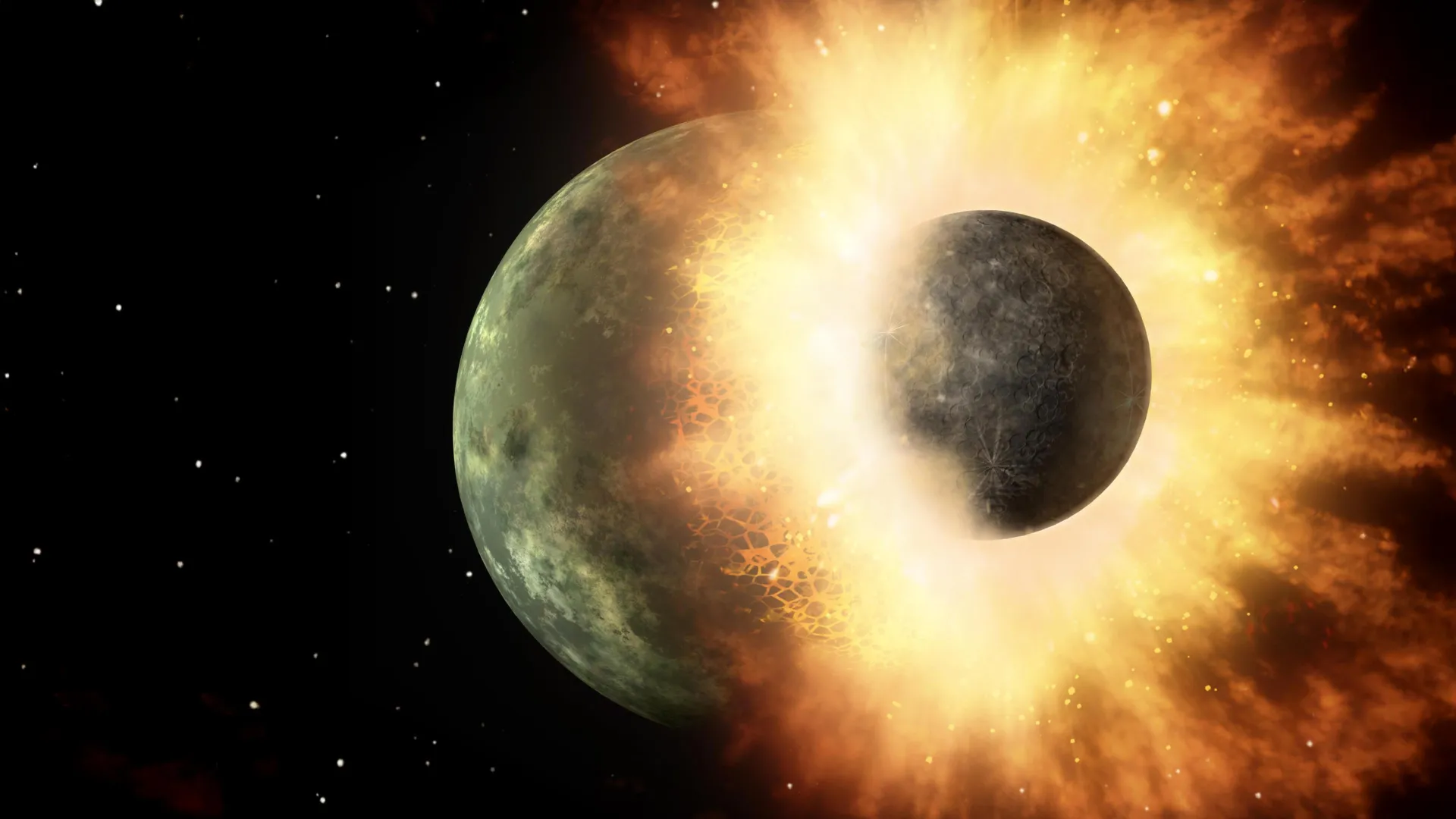
Dante Alighieri’s Inferno may contain more than religious symbolism and poetic imagination. According to new research, the famous work could also represent an early thought experiment in impact physics, describing a catastrophic planetary collision centuries before modern meteor science existed. By comparing Dante’s descriptions to modern theories of asteroid impacts and crater formation, researchers argue that the 14th-century poet envisioned an Earth-altering cosmic event long before scientists understood meteoritics.
For hundreds of years, readers have interpreted Satan’s descent in the Divine Comedy as a spiritual fall from grace. But Timothy Burbery of Marshall University believes Dante may have been imagining something much more physical and destructive.
Using concepts from modern meteoritics, Burbery suggests that Dante portrayed Satan as a massive high-speed impactor striking the Southern Hemisphere and driving straight toward Earth’s core. According to this interpretation, the force of the collision pushed land outward into the Northern Hemisphere, creating Hell as a giant crater reaching upward from below. At the same time, displaced material from the impact formed Mount Purgatory as a towering central peak on the opposite side of the planet.
Comparing Inferno to Dinosaur-Killing Asteroids
Burbery compares the scale of Dante’s imagined catastrophe to the Chicxulub (K-Pg) impact linked to the extinction of the dinosaurs. In this reading, Satan resembles an elongated asteroid-sized object similar to the interstellar body Oumuamua, arriving with enough force to trigger a planetwide geological event.
Like the asteroid associated with the K-Pg extinction, the impact described in Inferno is portrayed as powerful enough to penetrate deep into the Earth and reshape the planet itself. Burbery also compares Satan to the Hoba meteorite, a 60-ton space rock that survived impact largely intact. In this interpretation, Satan is treated not as a symbolic figure alone, but as a physical impactor that remained whole while permanently altering Earth’s structure.
The Circles of Hell and Impact Craters
The study also reexamines the famous nine circles of Hell. Instead of viewing them solely as symbolic layers representing sin, Burbery argues they closely resemble the terraced rings seen in massive impact basins throughout the solar system.
Similar crater formations can be found on the Moon, Venus, and other planetary bodies. The research suggests Dante intuitively described features that resemble multi-ring craters formed by giant impacts. Burbery further argues that Dante anticipated ideas connected to terminal velocity and crustal penetration, concepts tied to how extremely large objects behave when colliding with planets.
The study also connects these ideas to the non-Euclidean geometry explored later in the Paradiso, suggesting Dante’s cosmology may contain surprisingly advanced physical concepts hidden within its literary framework.
Ancient Literature and Modern Planetary Defense
According to the research, this interpretation has implications beyond literature. Burbery argues that stories and myths can preserve observations about natural disasters and cosmic threats long before scientific explanations emerge.
The work suggests Dante recognized meteors as real geological forces at a time when Aristotelian beliefs still portrayed the heavens as perfect and unchanging. By presenting Satan’s fall as a violent physical event instead of a purely spiritual allegory or optical illusion, Dante may have helped move Western thought toward the idea that celestial objects can directly reshape Earth.
Burbery says this connection between literature and science encourages a broader perspective on how ancient narratives may contain insights that modern researchers are only beginning to understand.
Ultimately, the Divine Comedy can now be viewed not only as one of history’s greatest literary achievements, but also as a geophysical gedankenexperiment (thought experiment) that unexpectedly parallels aspects of modern meteoritics while still differing from today’s scientific understanding.


