





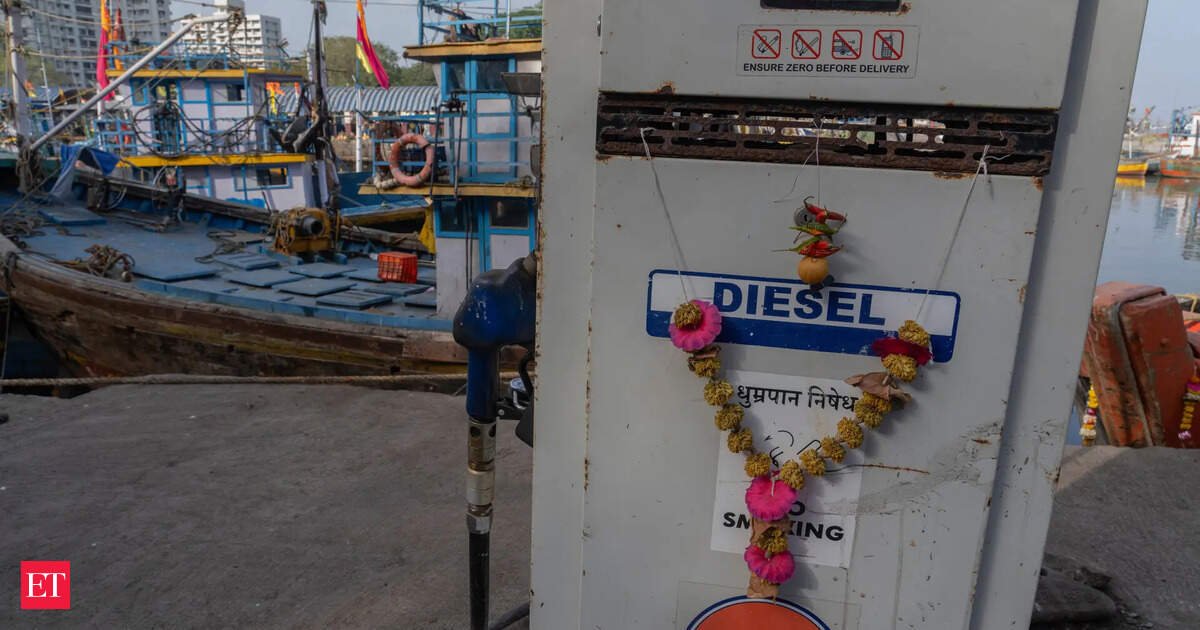
The surge comes even as the government has largely kept retail prices of petrol, diesel and domestic cooking gas unchanged despite a sharp rise in global crude oil prices, cushioning households from an immediate pass-through in fuel costs. Commercial LPG cylinder prices, however, have seen increases, reflecting mounting pressure from higher international energy prices.
This comes against a Reuters projection of 4.4%. India reported a rise in wholesale inflation to 3.88% in March, 2026.The Wholesale Price Index (WPI)-based inflation print rose 3.86% from a month ago (March 2026), driven primarily by soaring prices of mineral oils, crude petroleum and natural gas, metals and manufactured products.
Ministry stated “Positive rate of inflation in April, 2026 is primarily due to increase in prices of mineral oils, crude petroleum & natural gas, basic metals, other manufacturing and non-food articles etc”.
Crude, fuel prices drive the spike
The sharpest pressure came from the fuel basket.


Live Events
Within the fuel and power basket, price pressures intensified sharply across key energy products in April. Inflation in LPG surged to 10.92% from a contraction of 1.54% in March, while petrol inflation jumped to 32.40% from 2.50% a month earlier. Inflation in high-speed diesel also accelerated steeply to 25.19% from 3.26% in March.
Fuel and power inflation jumped to 24.71% in April from 1.05% in March as global oil prices surged amid geopolitical tensions. Inflation in crude petroleum and natural gas shot up 67.18%, while petrol inflation rose 32.4% and high-speed diesel climbed 25.19%.On a month-on-month basis, fuel and power prices surged 18.22%, accounting for much of the overall rise in wholesale prices during the month.
Manufacturing costs gather pace
The rise in energy costs also spilled into factory gate prices.
Manufactured products inflation accelerated to 4.62% in April from 3.39% in March, led by chemicals, textiles, machinery and basic metals. Inflation in basic metals rose to 7%, while chemicals and chemical products inflation climbed to 5.09%.
Food inflation stays relatively soft
Food prices at the wholesale level remained comparatively stable despite some increase in vegetables and fruits.
The WPI food index rose 2.31% year-on-year in April compared with 1.85% in March. Vegetable inflation stood at 0.53%, while onion prices continued to contract sharply, falling 26.45% year-on-year. Pulses inflation remained in negative territory at -4.03%.
However, prices of fruits, eggs, meat and fish continued to rise, indicating patchy food price pressures within the basket.
Input prices widen further
Primary articles inflation rose to 9.17% from 6.36% in March, led by crude petroleum, oilseeds and minerals.
The data points to rapidly rising producer-side costs even as consumer inflation remains relatively moderate, suggesting businesses could face mounting pressure on margins if commodity and energy prices remain elevated. It tells us the growing divergence between retail and wholesale inflation trends, with producer-side costs now rising rapidly as higher global commodity and energy prices feed into domestic supply chains.
What did the RBI say at its April meeting?
At its April Monetary Policy Committee meeting, the Reserve Bank of India noted that while India’s macroeconomic fundamentals remain strong, external shocks could intensify if global tensions persist or expand.
“The fundamentals of the Indian economy are on a stronger footing, providing it with greater resilience to withstand shocks now than in the past. The economy is confronted with a supply shock. It is prudent to wait and watch the changing circumstances and the evolving growth-inflation outlook,” Reserve Bank of India Guv Sanjay Malhotra had said.
The central bank’s rate setting panel has projected CPI inflation at 4.6% for FY27, with quarterly estimates of 4.0% in Q1, 4.4% in Q2, 5.2% in Q3, and easing to 4.7% in Q4.
Core inflation is projected at 4.4%. The central bank also noted this is the first time it has provided such a detailed quarterly breakdown, reflecting increased focus on transparency and stakeholder inputs.
Since the last policy review, the RBI has said global uncertainty has increased. While inflation remains broadly contained, upside risks persist, including potential second-round effects if geopolitical pressures continue to build.


