






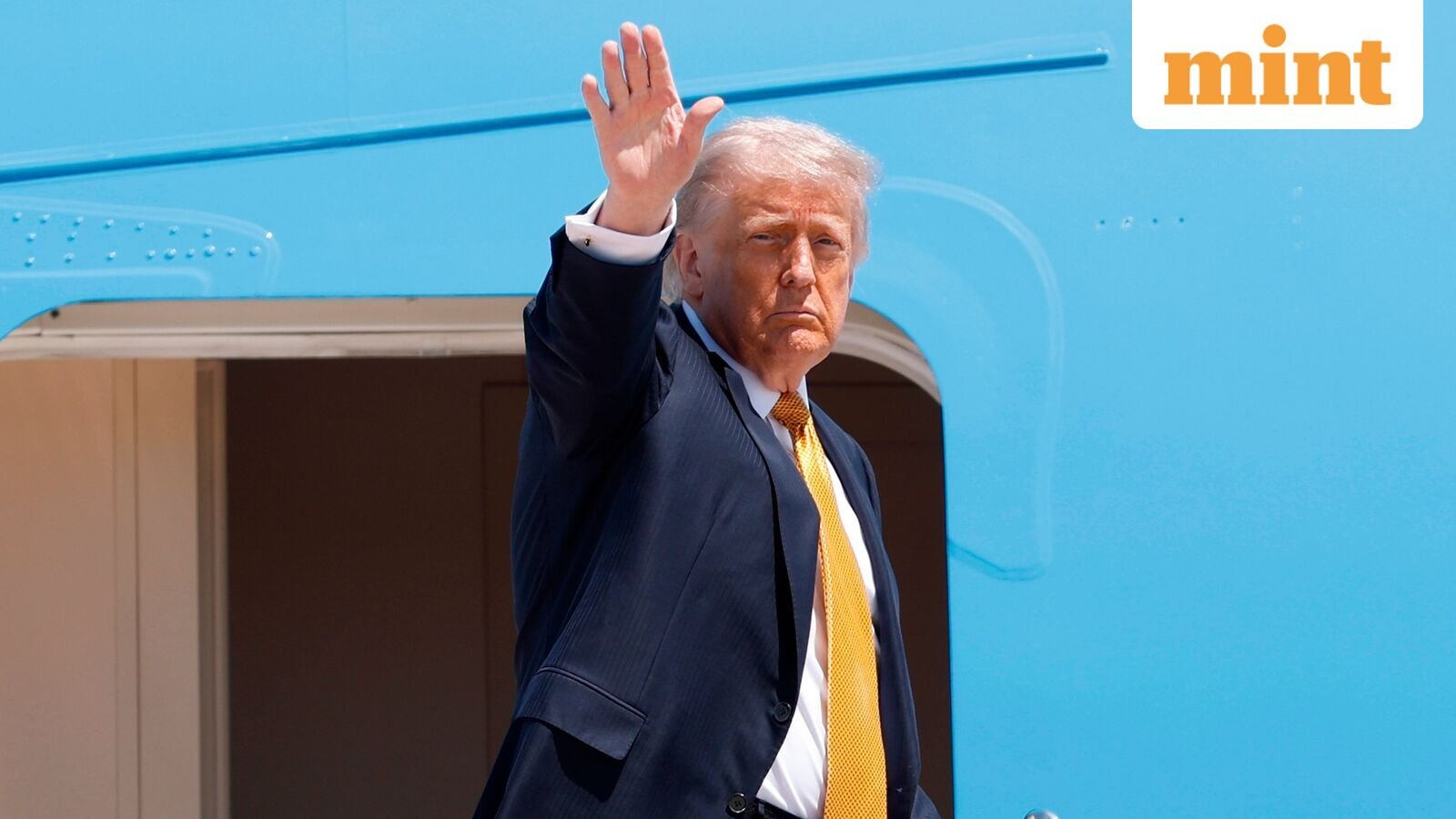
US President Donald Trump on Tuesday (local time) said that he is not weighing the economic burden of the war in Iran on everyday Americans when he negotiates a deal with Tehran’s leadership.
Speaking on the White House South Lawn before departing for a diplomatic trip to China, Trump was asked to what extent “Americans’ financial situations” were motivating him to make a deal with the Islamic Republic. He responded, “Not even a little bit,” and added, “The only thing that matters when I’m talking about Iran — they can’t have a nuclear weapon. I don’t think about the Americans’ financial situation. I don’t think about anybody. I think about one thing — we cannot let Iran have a nuclear weapon. That’s all,” NBC News reported.
When he was asked again if he really wasn’t thinking about the economic impact of the war, the US President reiterated and said, “The most important thing by far — including whether our stock market, which, by the way, is at an all-time high — but including whether our stock market goes up or down a little bit, the most important thing by far is Iran cannot have a nuclear weapon,” and added that this is something that every American understands.
Hegseth faces grilling over Iran war
The US President’s remarks came on the same day as Defense Secretary Pete Hegseth faced tough questions from lawmakers regarding the Trump administration’s endgame for the Iran war, the conflict’s rising $29 billion cost, and its impact on diminishing US weapons stockpiles.
Hegseth, Joint Chiefs Chairman Dan Caine, and Pentagon finance chief Jules Hurst III were asked about the war’s price tag during testimony on the administration’s $1.5 trillion 2027 defense budget request.
Democrats and other critics of the war have questioned the Pentagon’s calculations, suggesting the true cost, including damage inflicted by Iran, could be far higher, AFP reported. While Hegseth declined to give an estimate of the damage, he reiterated, consistent with his past remarks since the conflict began, that the consequences of Iran obtaining a nuclear weapon would be far more severe.
Sen. Patty Murray, a Democrat from Washington, questioned Hegseth over the breakdown of the cost of the war and said, “You’re spending families’ hard-earned tax dollars on a war that many strongly oppose, and you’re forcing people to pay more at the pump,” and added, “And yet you’re not even providing a real breakdown of the cost of this war.”
Hegseth responded by saying, “What is the cost of Iran obtaining a nuclear weapon? And the fact that this president has been willing to make a historic and courageous choice to confront that, it comes with cost — and we recognize that.”
Hegseth and Caine underwent a second round of questioning before a Senate committee following their testimony in the House, with anti-war protesters present at both sessions.
US-Iran war’s impact on America
Since the US and Israel launched a joint strike on Iran in late February, the Islamic Republic has blocked access to the Strait of Hormuz, a key waterway through which roughly a fifth of the world’s oil supply typically transits every day.
With the Strait of Hormuz being shut for months, gas prices have also spiked in Washington. According to a AAA tracker, the national average price of regular unleaded gas stood at $4.50 per gallon on Tuesday, while diesel fuel was $5.64 per gallon.
Additionally, rising fuel costs have rippled across the country’s economy, with April inflation surging to 3.8 per cent, its highest level in nearly three years, according to data released Tuesday by the Bureau of Labor Statistics.
While US jobs data did outpace expectations in April and the US stock indexes have hit record highs during the war, Americans in general have expressed discontent with the economy under Trump. According to a CNN/SSRS survey conducted between April 30 and May 4, it revealed that roughly 70 per cent of Americans disapprove of Trump’s handling of the US economy, making it the highest number the pollster has recorded throughout Trump’s two terms in office.
Key Takeaways
- Trump prioritizes national security over economic concerns in negotiations with Iran.
- Rising fuel prices and inflation have been significant issues for American households.
- Public disapproval of Trump’s economic management is at an all-time high.


