





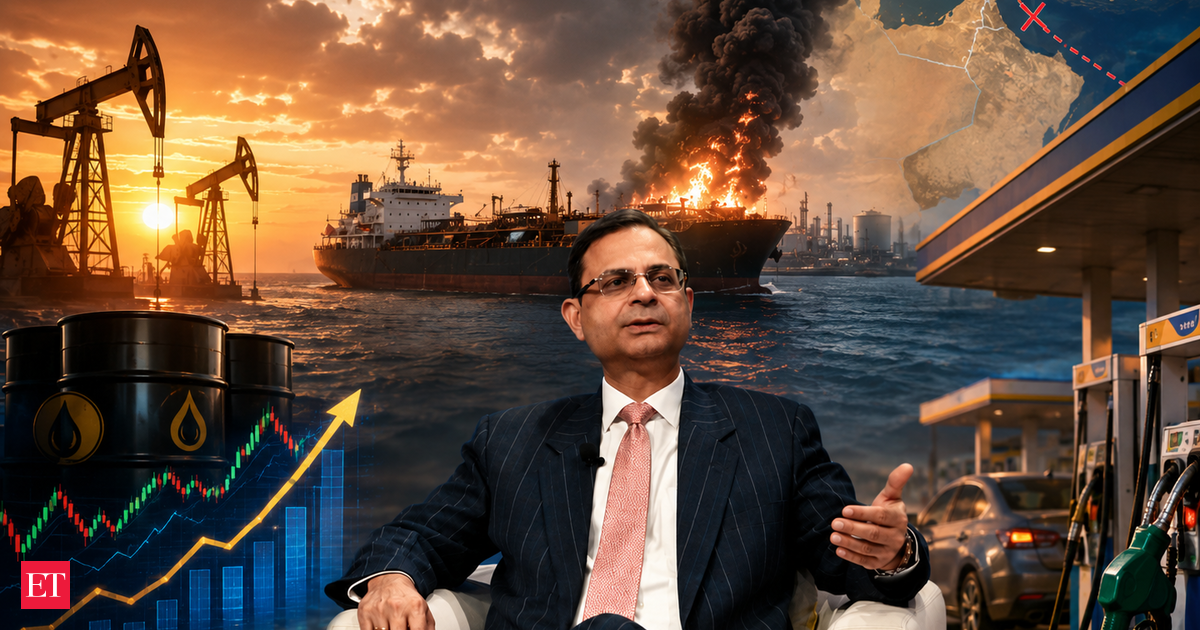
The world’s third-largest oil consumer has been hit hard by the conflict, with the closure of the Strait of Hormuz disrupting the flow of critical energy imports, pushing up crude oil prices and triggering shortages of cooking gas.
Also Read: Indian state oil refiners eye modest fuel price hike as losses mount
“If this is to continue for longer period of time, it is just a matter of time before the government will pass on some of the price increases,” Malhotra said at a conference hosted by the Swiss National Bank and the International Monetary Fund in Switzerland on Tuesday.
Malhotra said excise duties had already been reduced while state-run fuel retailers continued absorbing higher crude prices as the conflict persisted.


Live Events
India’s energy supply chain disruptions deepen amid Strait of Hormuz closure
The closure of the Strait of Hormuz has added to concerns around supply-chain disruptions and inflationary risks for India, which imports a large share of its energy requirements.
“We have this framework of flexible inflation targeting, but in such times it’s not sufficient,” Malhotra said, adding that fiscal coordination becomes critical “if the supply shock is as big as it is.”Prime Minister Narendra Modi at the weekend urged citizens to voluntarily reduce petrol and diesel consumption and defer gold purchases in order to help preserve the country’s foreign exchange reserves.
PTI had reported earlier, citing government sources, that a hike in petrol and diesel prices in the near future could not be ruled out.
State-owned oil companies have already increased prices of commercial LPG, industrial diesel, 5-kg LPG cylinders and jet fuel sold to international airlines in line with rising input costs.
Despite crude oil prices remaining above $100 per barrel, the central government has kept domestic LPG rates unchanged. Commercial LPG cylinder prices for 19-kg cylinders, however, were recently increased by Rs 993.
IMF backs crude price pass-through as oil minister voices concern
Amid growing speculation over higher retail fuel prices, the International Monetary Fund had earlier this month backed a pass-through of higher crude oil prices to consumers while saying India still had room to manage the current energy shock caused by the closure of the Strait of Hormuz.
Also Read: Petrol-diesel price hike coming soon? Why IMF says it must
Oil minister Hardeep Singh Puri on Tuesday sought to calm concerns over a possible fuel price increase after Modi urged citizens to rely more on public transport to cut petrol and diesel use.
At the same time, Puri acknowledged concerns about how long oil marketing companies would be able to continue selling fuel below market rates while absorbing losses.
“How long will the oil companies be able to take it? Frankly, that worries me,” Puri said at an industry conference.
India’s fuel market remains tightly controlled, with state-owned refiners accounting for around 90% of retail fuel outlets. Petrol and diesel prices charged by these firms are approved by the central government, although retail rates vary across states because of different local taxes.
Also Read: ‘How long can oil companies absorb losses?’: Hardeep Singh Puri on fuel prices
Inflation risks rise as RBI signals flexible policy approach
India’s retail inflation rose to 3.48% in April from 3.40% in March, although the figure remained below expectations as the government absorbed part of the increase in crude prices.
However, the outlook remains uncertain as higher energy costs linked to the Middle East conflict continue to build inflationary pressure.
The RBI has projected economic growth of 6.9% for the current financial year while forecasting average inflation of 4.6%. Economists, however, expect slower growth and higher inflation if the conflict continues.
The central bank kept its benchmark repo rate unchanged at 5.25% in April.
“We are being more and more data dependent. We are taking it more meeting by meeting,” Malhotra said.
The RBI governor added that the central bank remained flexible in its policy response and was prepared to look through temporary shocks, “but if it is entrenched, we need to take action.”
The RBI’s next monetary policy meeting is scheduled for June 5.


