





Not everyone looks at the moon and sees the same thing. That’s especially true for the four astronauts who flew NASA’s Artemis 2 mission around the lunar far side in early April. They were witness to a view no human had seen in more than half a century, and what the crew saw surprised them as much as it did the scientists who taught them what to look for.
Jacob Richardson and Amber Turner are both on the Artemis 2 lunar science team at NASA’s Goddard Spaceflight Center in Maryland, and they, too, see the moon very differently than most people do. They were among the first people to analyze the data sent back from the moon during the astronauts’ closest approach, and they have continued studying the crew’s observations since their safe return.
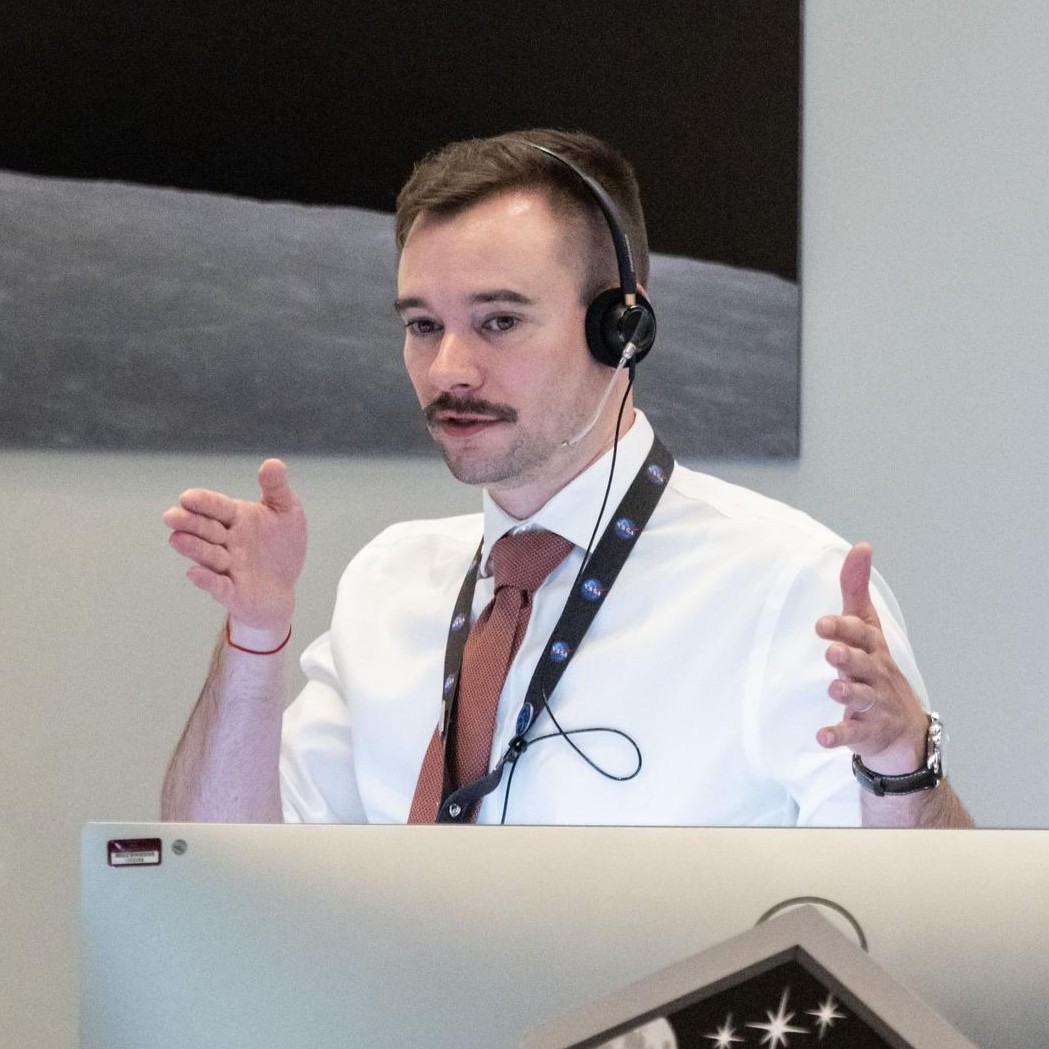
Richardson, a vulcanologist and planetary geologist, said getting those initial datasets was nothing short of phenomenal. “I see a dynamic moon. I see a moon that tells us its history,” he told Space.com in an interview during the Artemis 2 mission. “The story that the crew is telling when they’re observing [the moon] — they’re seeing colors, they’re seeing textures. It’s just a profound experience to listen to them describing places that we know really well in a new light.” Watch Space.com’s full interview with Jacob Richardson:
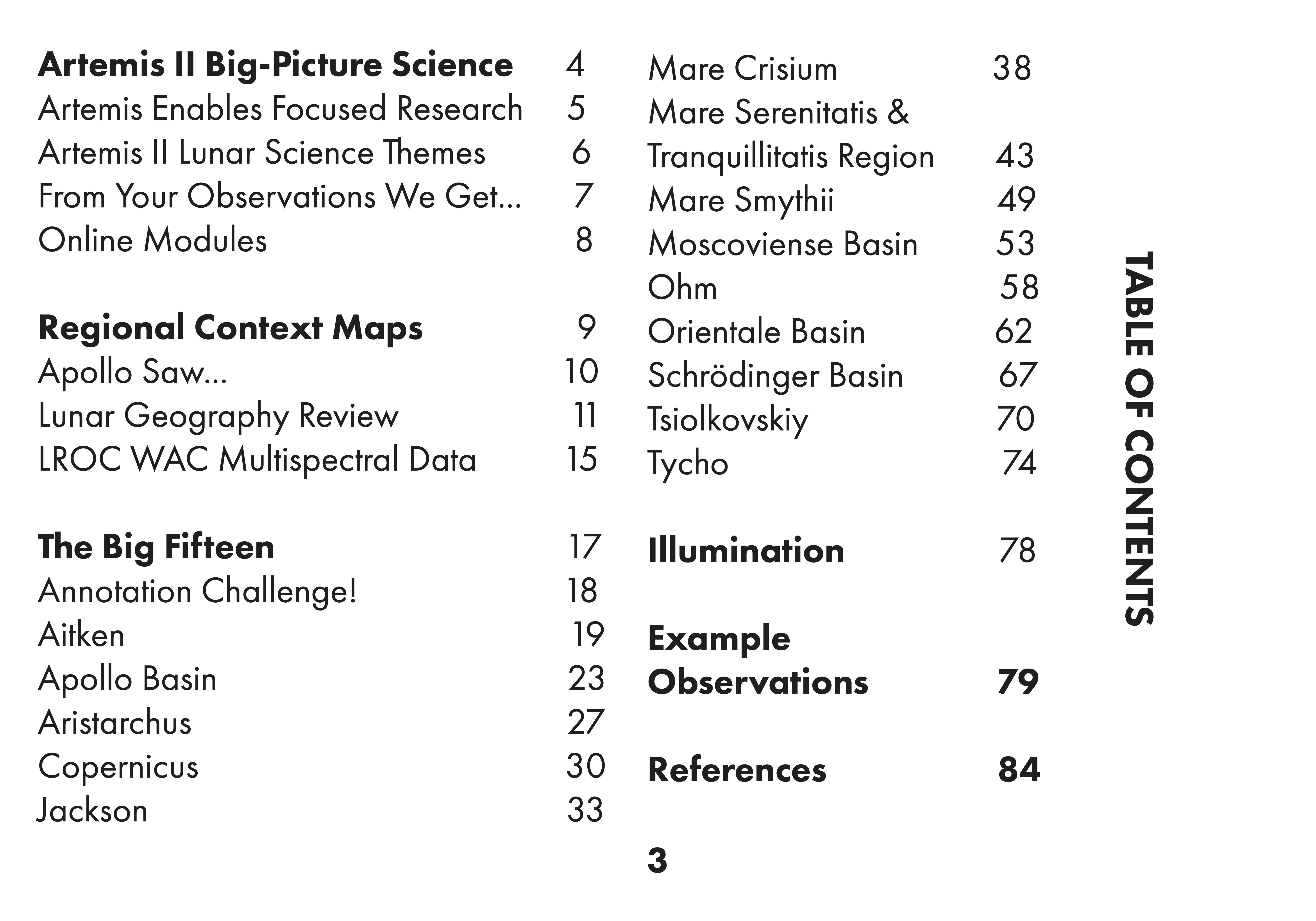
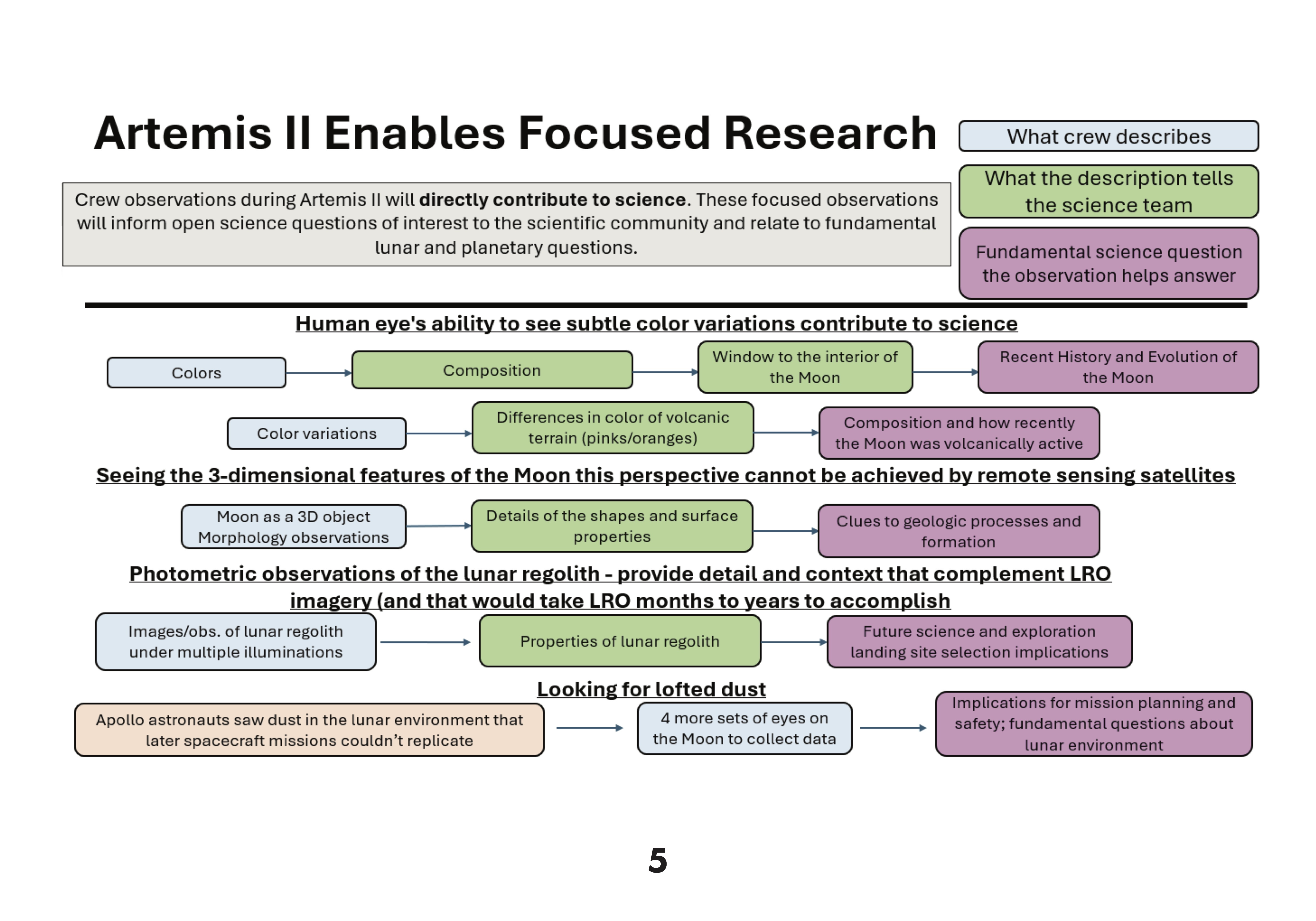
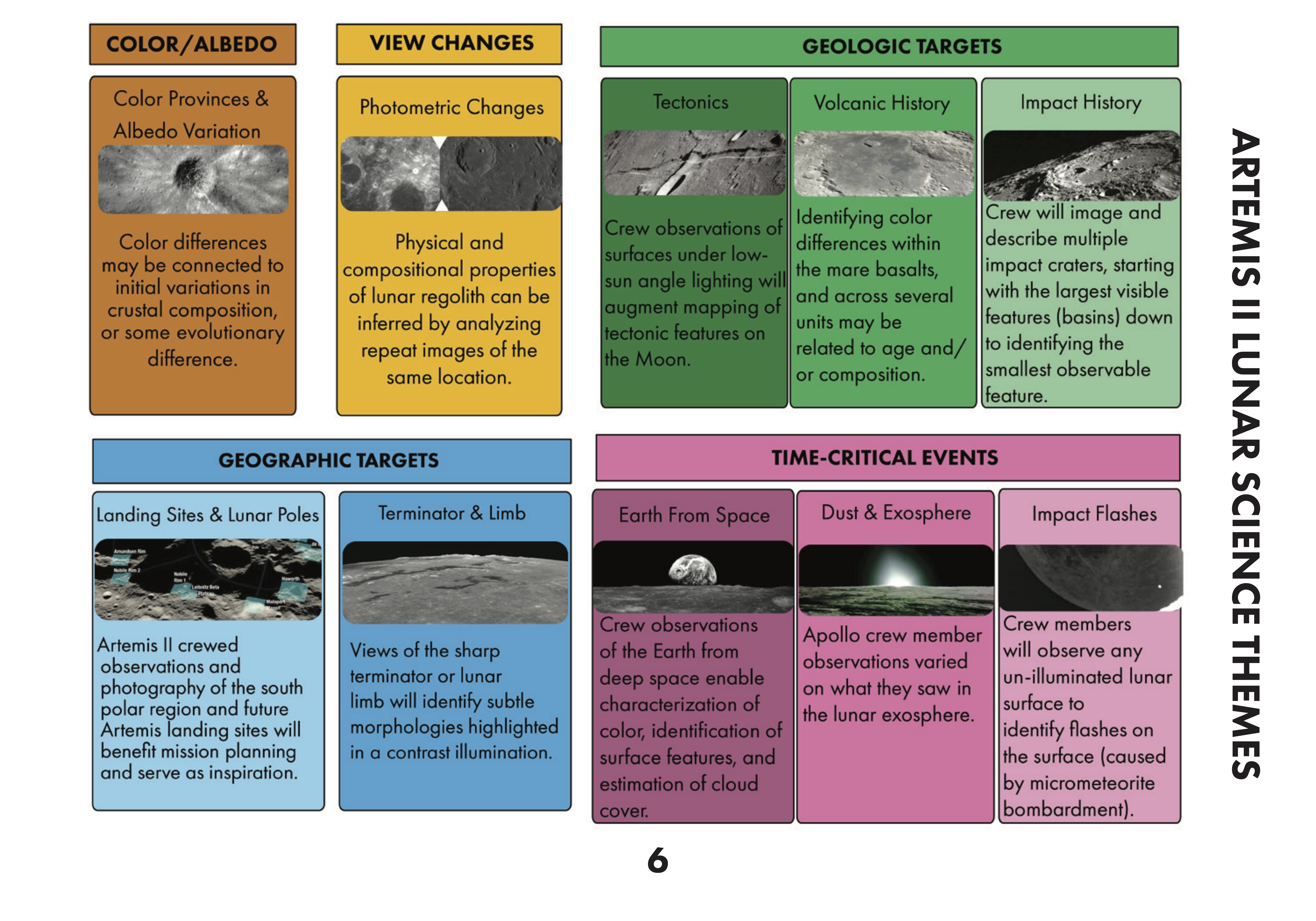
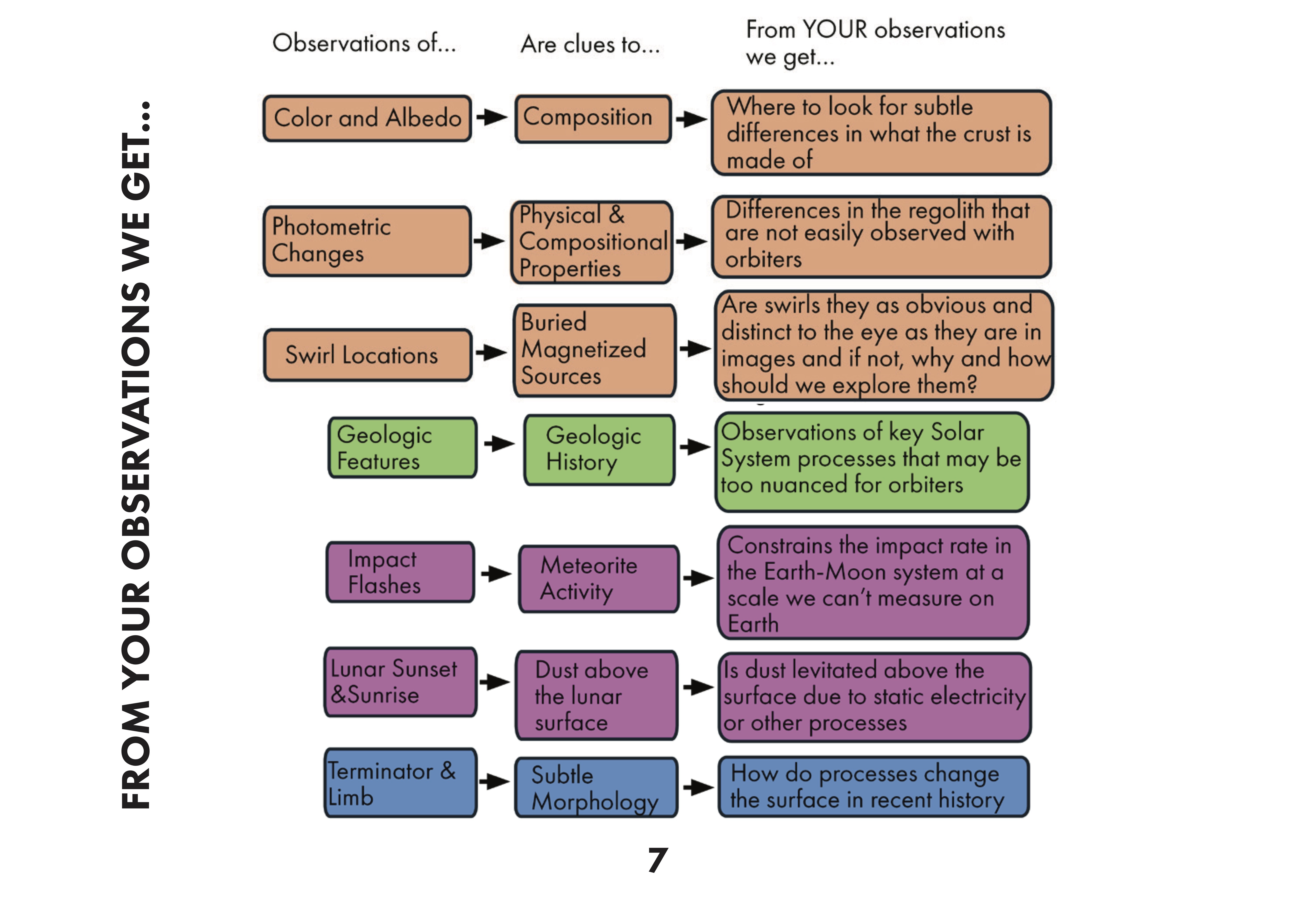
To help the astronauts tell that story, Turner compiled the Artemis 2 Lunar Science Passport (LSP), a 90-page, pocket-size “cheat sheet” that captures the mission’s highest priority science objectives, and guided the astronauts on how to best document their observations.
The LSP outlines the “Big Fifteen,” Turner told Space.com, a group of geological observation targets distributed around the entire moon that also served as navigational waypoints during Artemis 2’s lunar approach and flyby.
They are “diverse and complex in their geologic history,” according to the LSP, “and observations of them could help answer big-picture science questions.”
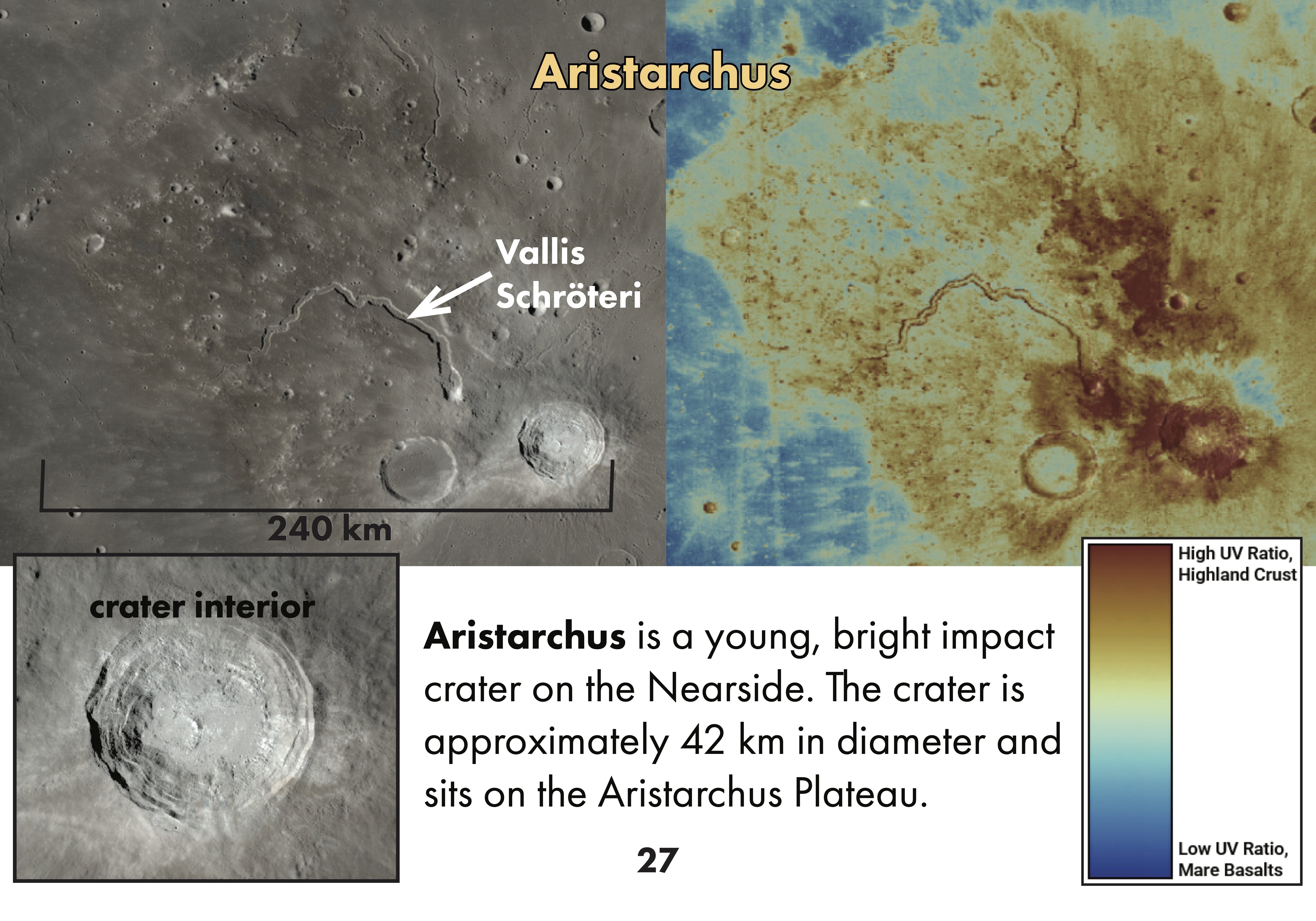
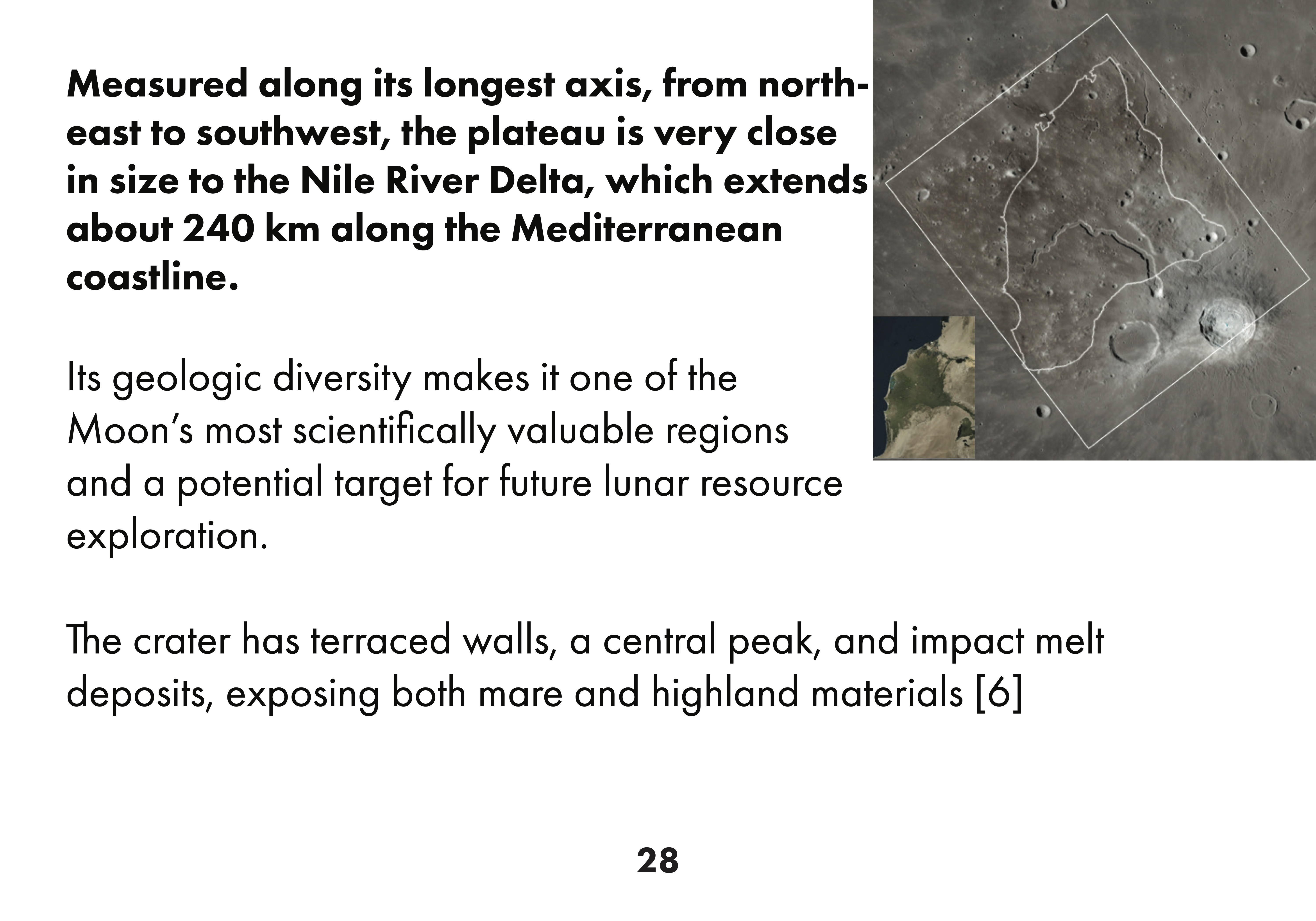
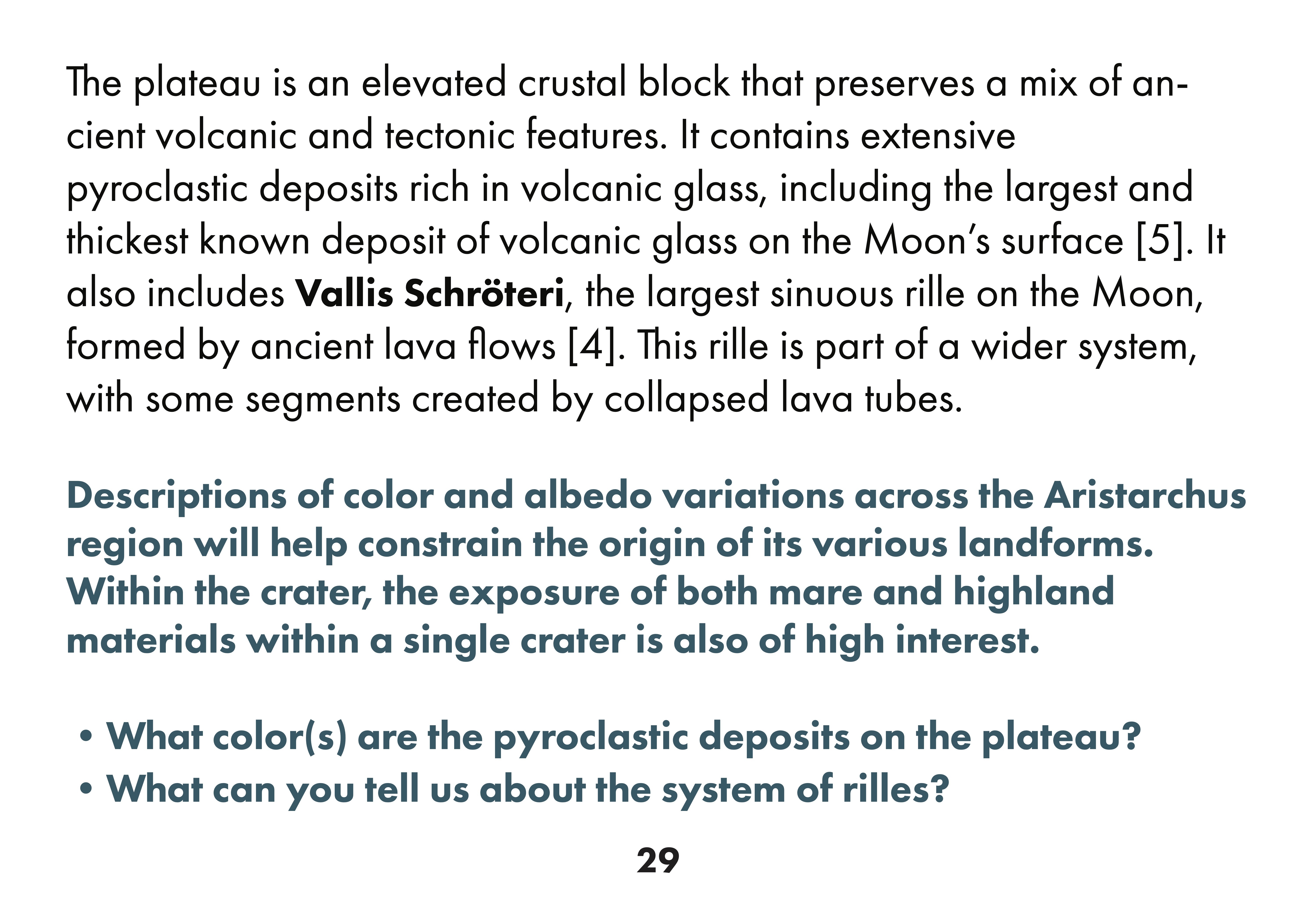
Explore excerpts from the Artemis 2 Lunar Science Passport:
Image 1 of 15

Artemis 2 Lunar Science Passport
Excerpts from NASA’s Artemis 2 Lunar Science Passport.
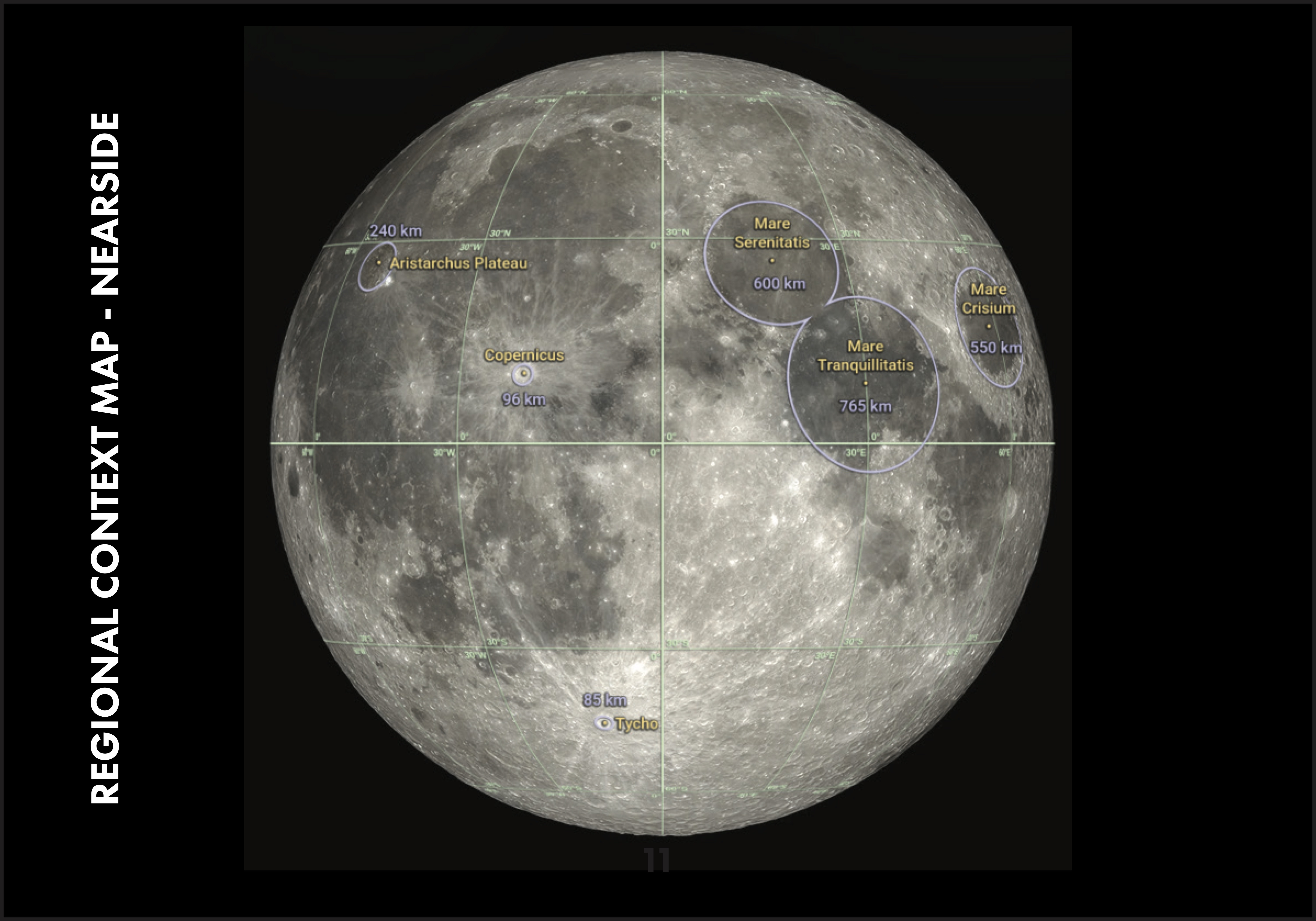
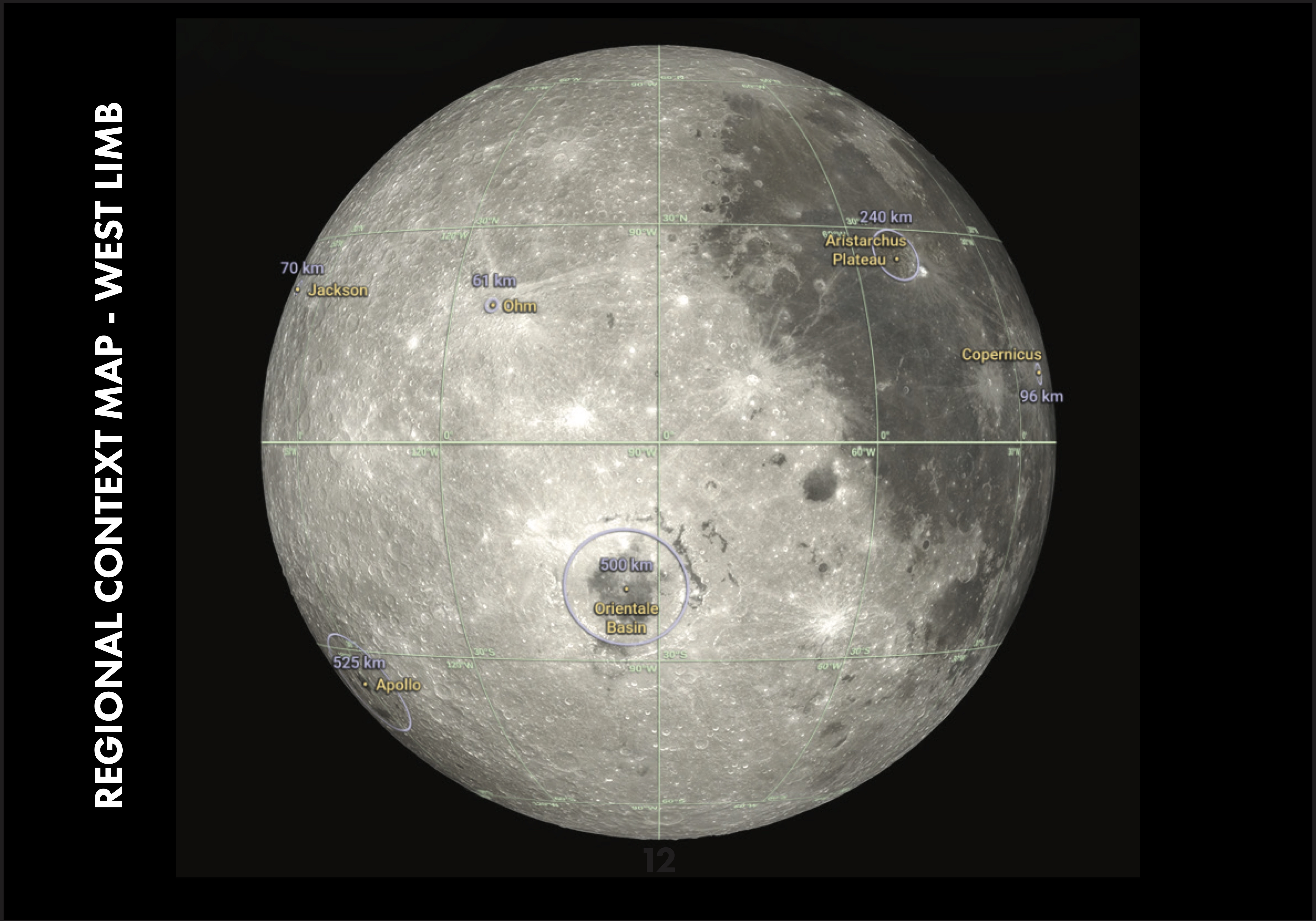
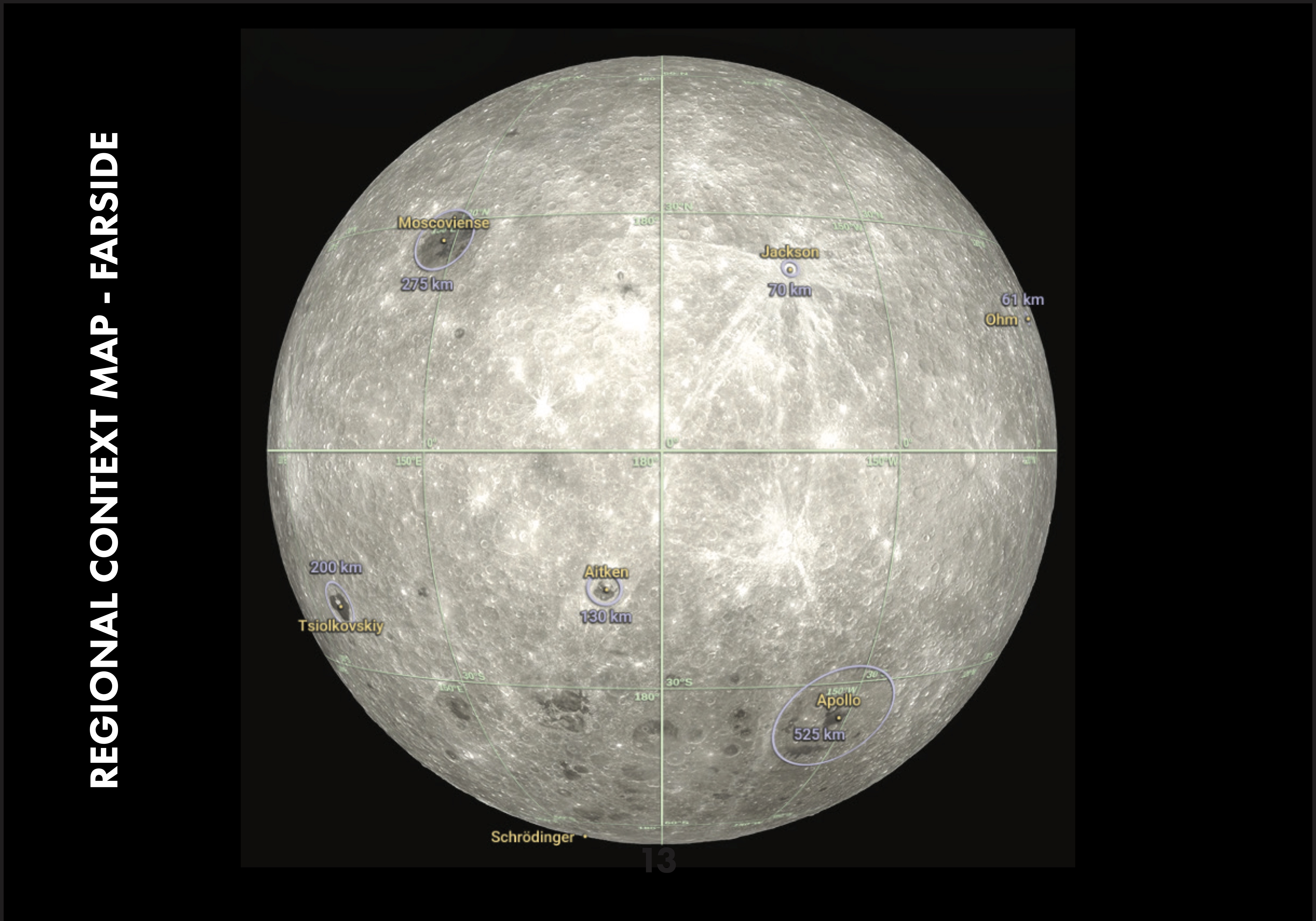
Richardson explained why it was so important the astronauts be well-versed in their science targets ahead of time, and why having actual humans performing the observations was so crucial.
“Our [current] data is based on robotic explorers, robotic orbiters, and it was really hard for us to really know what the far side looks like, because the last time people saw the far side was 53 years ago,” Richardson said. “We have spectrometers that can tell us a lot about the crystals that we expect are in those materials, but this unique vantage point let [the Artemis 2 crew] compare across the moon in a blink of an eye, which is something an orbiter can’t do.”
For the astronauts, the LSP provided a deep dive into the science of different land formations on the moon’s surface, and gave them the language to help describe different features on craters and basins, insight into how they formed, and guidance on what kind of details would be relevant for scientists back on Earth.
Watch Space.com’s full interview with Amber Turner:
It taught them the specific terminology for geologic observations, like “swirls” and “mare basalt contacts” when describing color and albedo variations; “terraced rims” and “hummocky ejecta blankets” for crater morphologies, and “wrinkle ridges” and “scarps” to describe tectonic features.
“The images are a big part of this mission,” Richardson said, “but even bigger are these audio clips, this sort of verbal audio diary that the crew took for us.”
In fact, scientists at NASA prioritized audio from the crew’s observations over the images they captured when proposing the data downlinking plan for while Artemis 2 was still in space. “Before any science images came down, we got all of that audio back so we could immediately start listening,” Richardson said.
The Artemis 2 crew flew their closest approach to the moon on April 6, and, though they had been well prepared, they still didn’t expect quite what they got to observe.
“They were surprised about how colorful the moon was,” Richardson said.

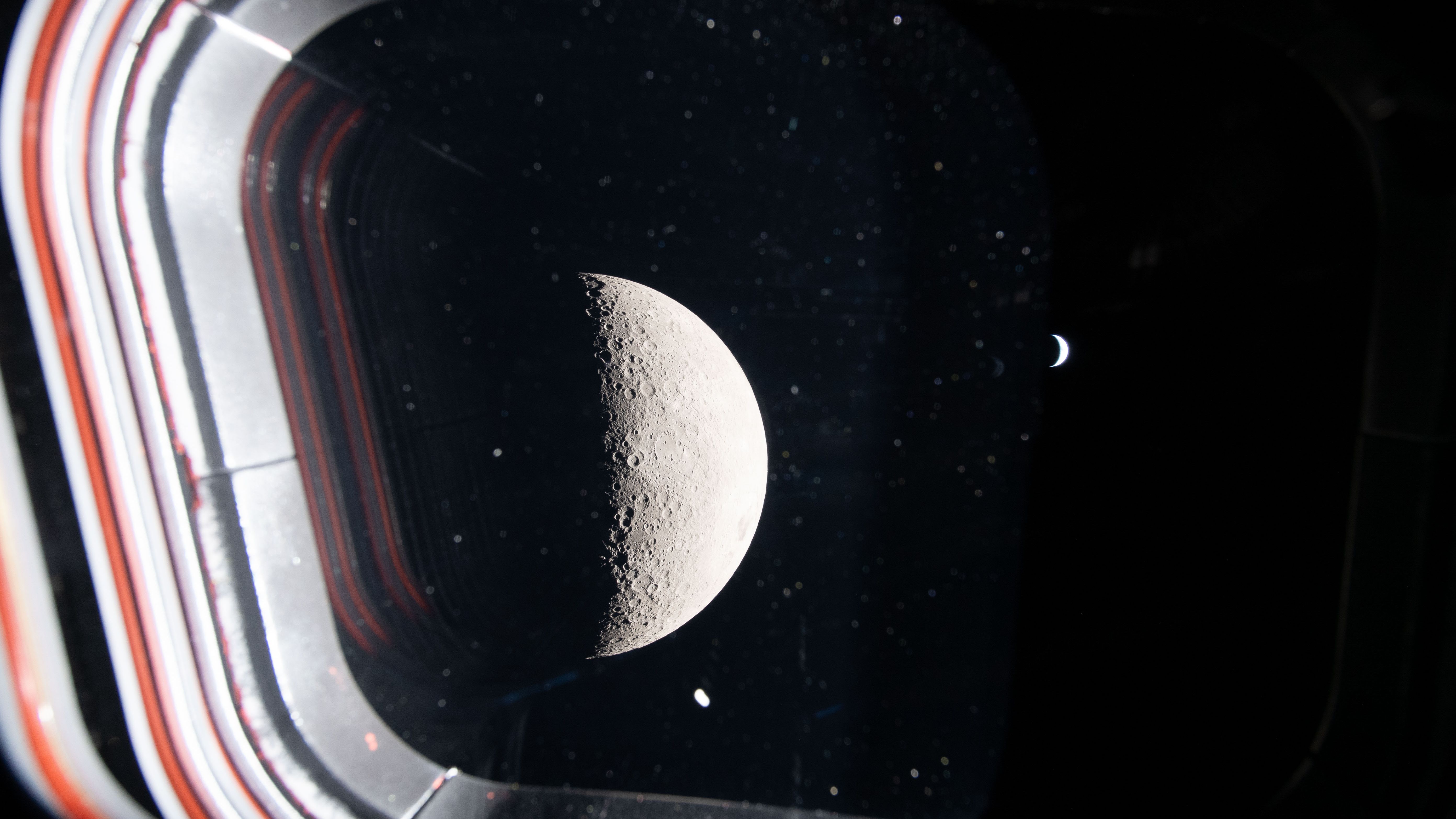
During the astronauts’ training, according to Richardson, the crew often questioned the directions they received to describe the colors they were seeing. “They were always saying, ‘Well, we’re probably not going to see color. Why are you asking us to talk about color?’ And we were imparting upon them, ‘We want you to say color, because if you see color, that tells us something about what the materials on the lunar surface are made out of.'”
“It was just pure moon joy.”
Amber Turner, NASA Artemis 2 Observation Planning Lead
“The crew definitely did justice to the science,” Turner said. “It was just pure moon joy.”
One of the mission’s Big Fifteen was Aristarchus Plateau, which caught the particular attention of the Artemis astronauts during their flyby. “Hearing some great discussion of browns and greens in the Aristarchus Plateau,” Artemis 2 astronaut Victor Glover of NASA relayed down to mission control on April 6. He also described “how those disappeared toward the north pole,” losing the color, “over to the far side.”
Richardson called Aristarchus Plateau “a volcanic wonderland.”

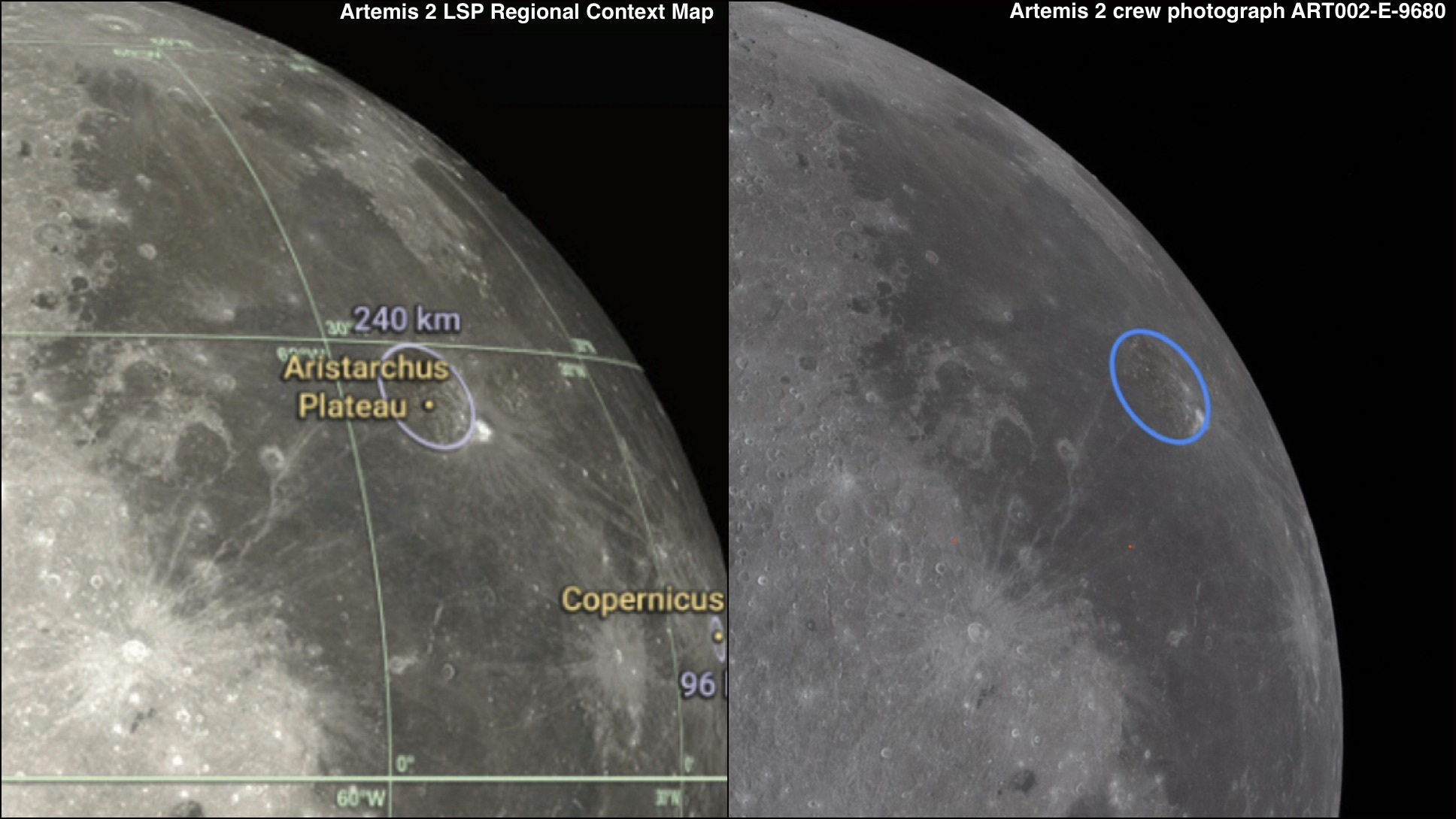
“It has lava flows. It has pyroclastic explosive volcano deposits, and it has this giant bright crater that hits right through the bedrock, underneath all that volcanism,” he said. “Green minerals in volcanoes — those are often olivines or pyroxenes, and that tells us about the chemistry of the magma underneath.” But ultimately, “it’s a mystery about what exact materials are at specific places on the lunar surface.”
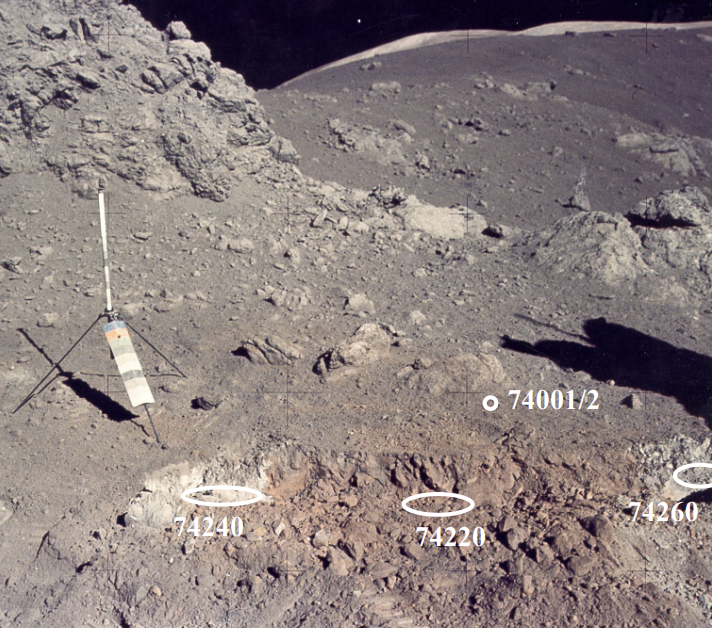
The Artemis 2 astronauts weren’t the first to witness a colorful moon with their own eyes. Observations of the moon’s orange soil hues made during the Apollo missions were “huge for lunar science,” according to Turner, who said she’s looking forward to the science team’s deeper investigation into what the color variations can teach us from the Artemis 2 crew’s orbital observations.

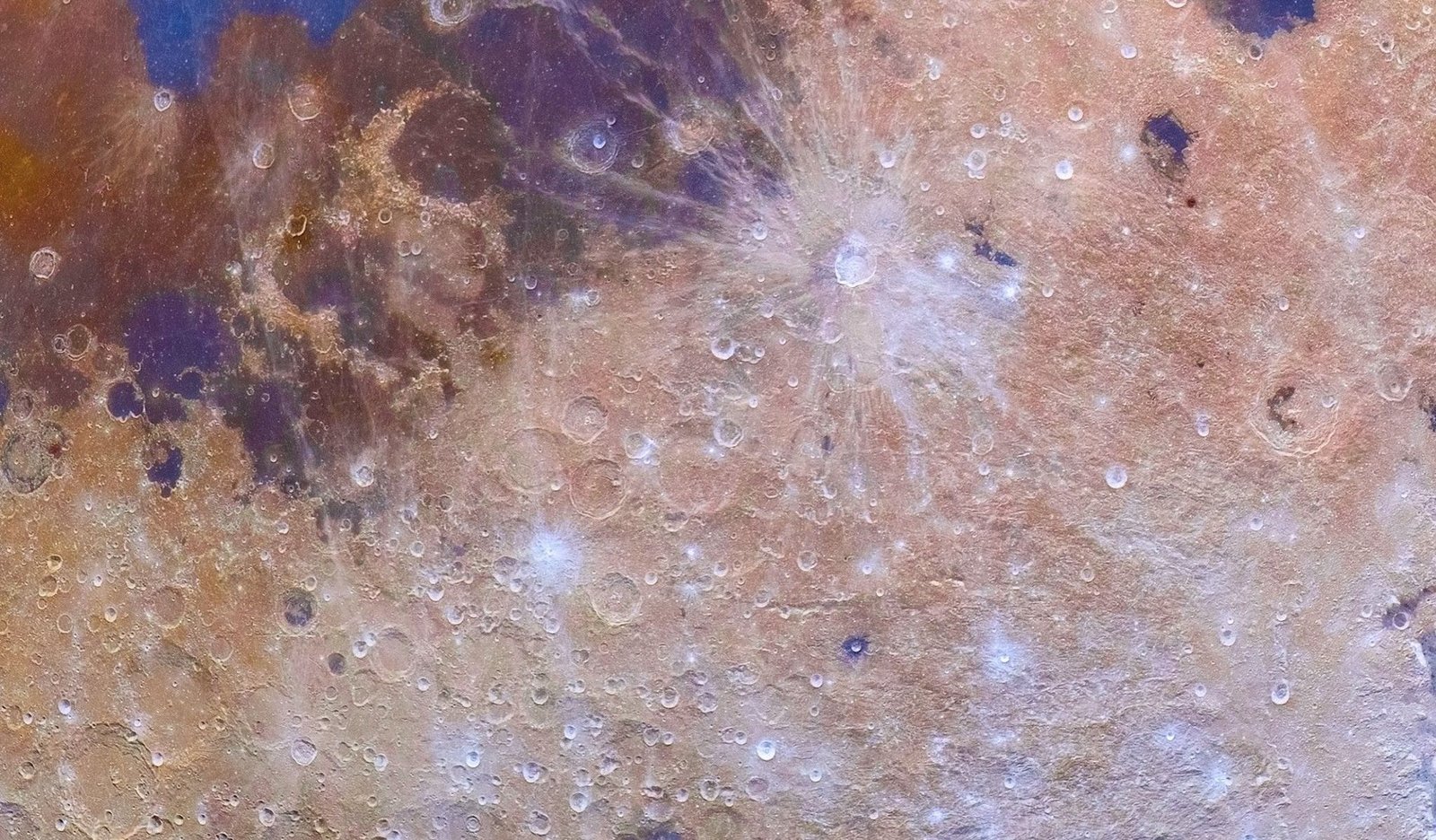
From Earth, too, people have long noticed the subtle colors on the moon’s face, such as astrophotographer Andrew McCarthy, who has a particular talent for bringing out its hidden palette.
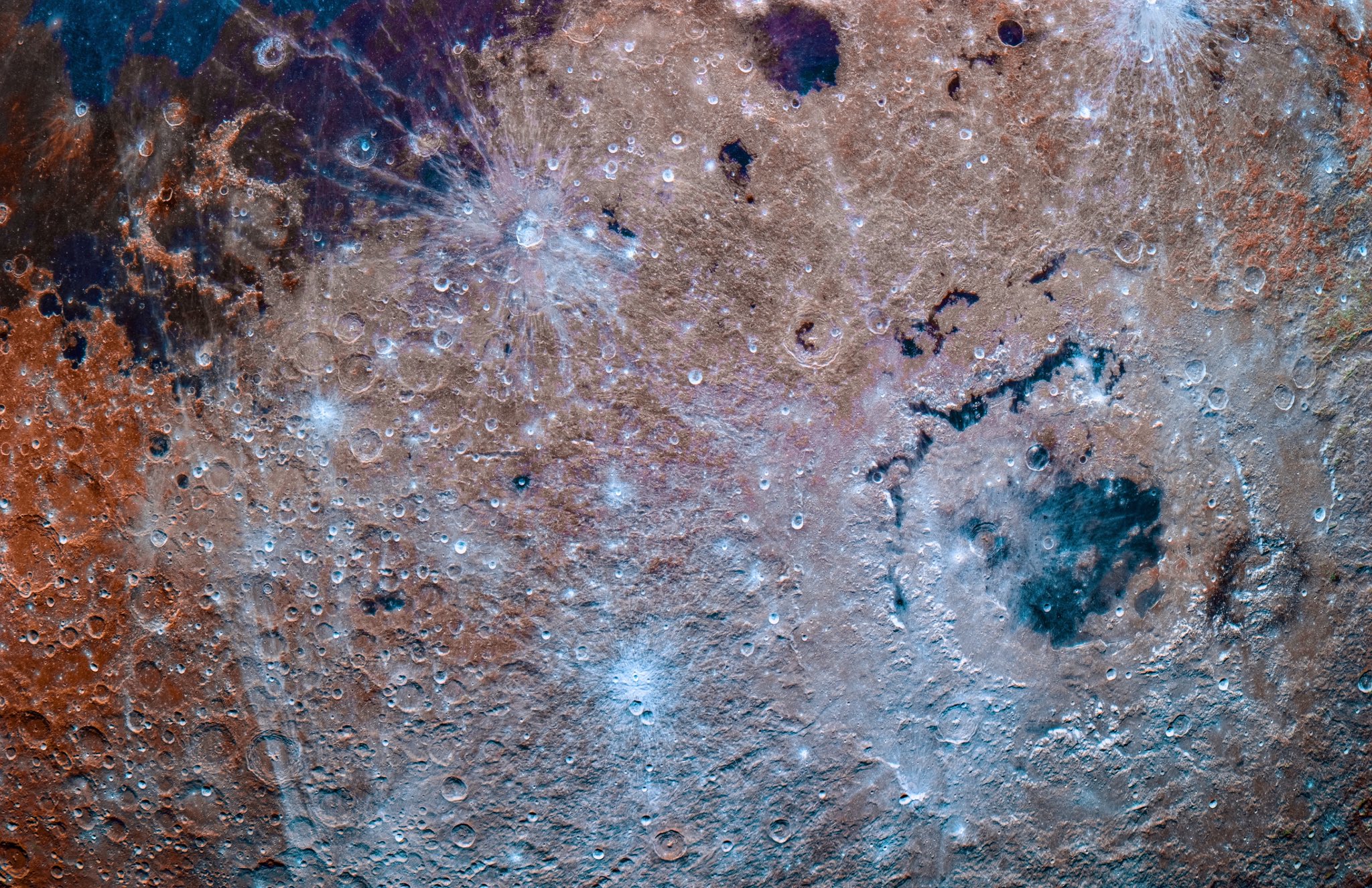
Using stacks of hundreds to thousands of photos taken with his camera or telescope, McCarthy produces true-color images of the moon’s near side, accentuated with saturation boosts that reveal brilliant shades of blue, red, green and brown that your eyes can’t normally detect. He partnered with Artemis 2 commander NASA astronaut Reid Wiseman to shoot something similar on the lunar far side.
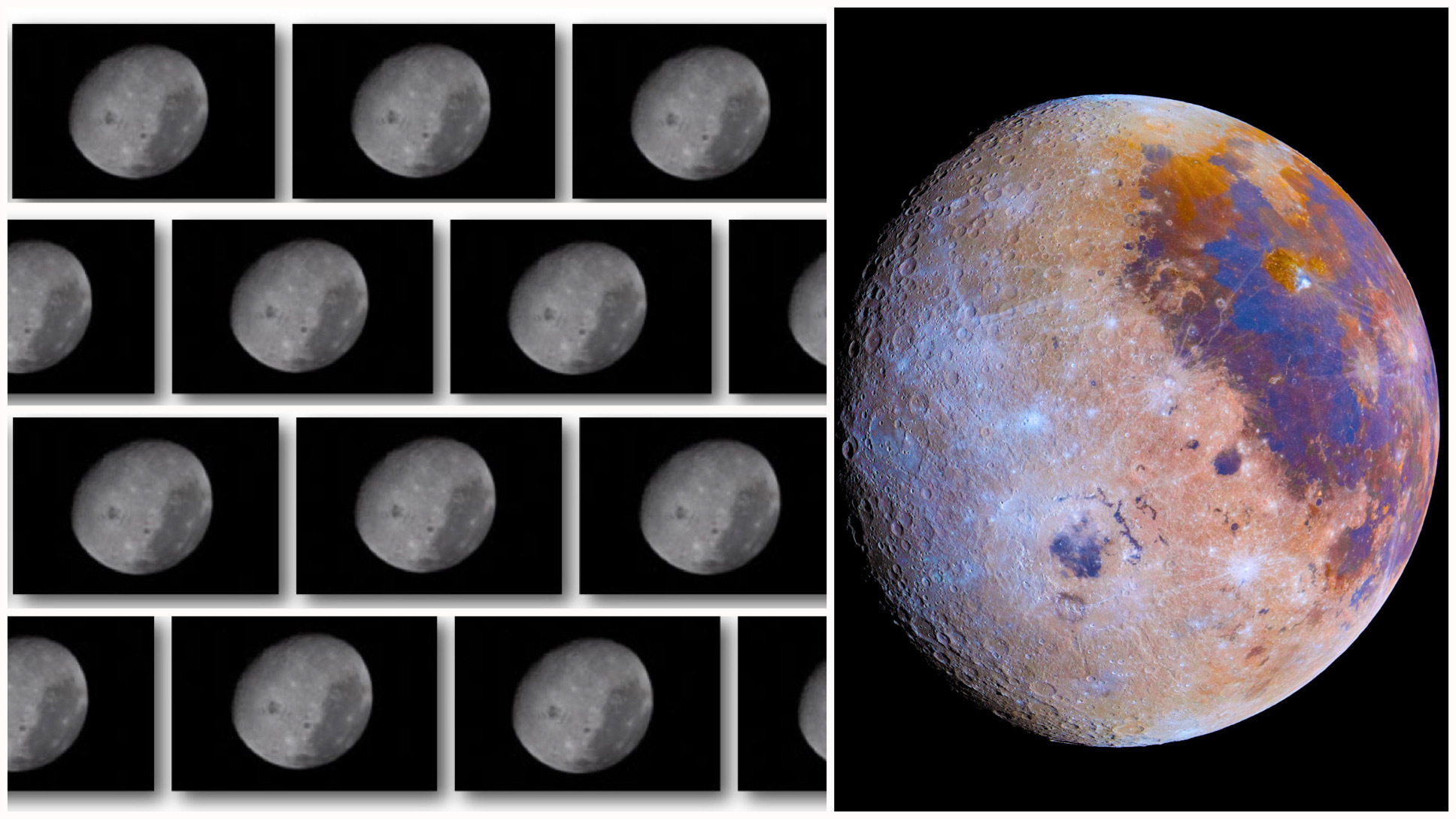
“[NASA] worked it in where [Wiseman] would shoot bursts in different exposures, different times, depending on where they were during the flyby,” McCarthy told Space.com. “The color is naturally there, just much more subtle to your eyes.”
“What’s different about those [stacked] photos [compared to a single image] is the noise,” McCarthy said. “Noise, by definition, is random. So when I’m stacking those photos together, I’m able to average out that noise, and then that noise vanishes.”
Satellite images, it seems, don’t quite compare when it comes to a human with a camera. “We’ve got LRO [NASA’s Lunar Reconnaissance Orbiter], which has some color data, but … it’s too low fidelity to do the kind of saturation pumps that show the really granular geological differences in the regolith,” he said.
Richardson’s experience with satellite imagery from around the moon is similar. “An orbiter can be finely calibrated, but after a long time, there can be noise in that data. And sometimes one spot and another spot don’t necessarily seem to agree with each other. But in this case, the astronauts were able to do that.”
McCarthy stacked images from Artemis 2 after the mission ended, and the result was a first-of-its kind view of the far side of the moon that can stun space enthusiasts and scientists alike. “The camera becomes like cyborg eyes for our vision,” he said. “I want to show you the moon as if you had cyborg eyes, because your cyborg eyes can actually pick out the color differences.”

“Whatever the cause of that green color is,” Richardson said of the crew’s initial observations, “I know a lot of people back at my office, I know a lot of people on this mission, [and] I know a lot of people at the conferences I’ll go to in the next year are really interested in re-poring into some of these data and figuring out exactly what interesting spots the crew called out, and to see if those interesting spots actually tell us a new story about the moon.”
Richardson explained that what we learn about the moon can help us better understand our own planet. “Something that I was struck with during the flyby was just how important it is to study the moon so that we can understand how important it is to know the Earth,” he said.
“If we want to understand early solar system geology, how our planet formed in the first place, what giant impacts hit our planet to change our destinies in a single moment, the moon is a great place for that because of the age of the surface,” Richardson said.

There is still a great deal of mystery behind much of Earth’s early history. “We don’t know a lot of things about Earth before 3 billion years ago,” he explained. Things like the origin of Earth’s water, the formation of tectonic plates, and momentous events that might have shaped the planet’s evolution all remain steeped in hypothesis. So the moon can serve as a sort of time capsule.
“Ninety-nine percent of the lunar volcanoes are older than 99% of Earth’s volcanoes,” Richardson said. “In fact, if you go and pick up any random rock off the surface of the moon, it’s probably going to be about as old … as the oldest discovered mineral on Earth.”
“Going to the moon, seeing those ancient materials … if we find volatiles at the south pole, that can help tell us how water was delivered to an early Earth,” Richardson said.
Turner called the moon the “next frontier,” and said, “If we’re going to land there, it would help us to understand not only how the moon formed, but the Earth-moon system in general.”
“The crew is so excited about their science that it’s been palpable,” she said, and added that she was “genuinely happy they were able to discern color and color variations on the moon.” Her “wow moments,” though, came during the mission’s total solar eclipse, when the Artemis 2 astronauts’ Orion spacecraft spent nearly an hour in the shadow of the moon.

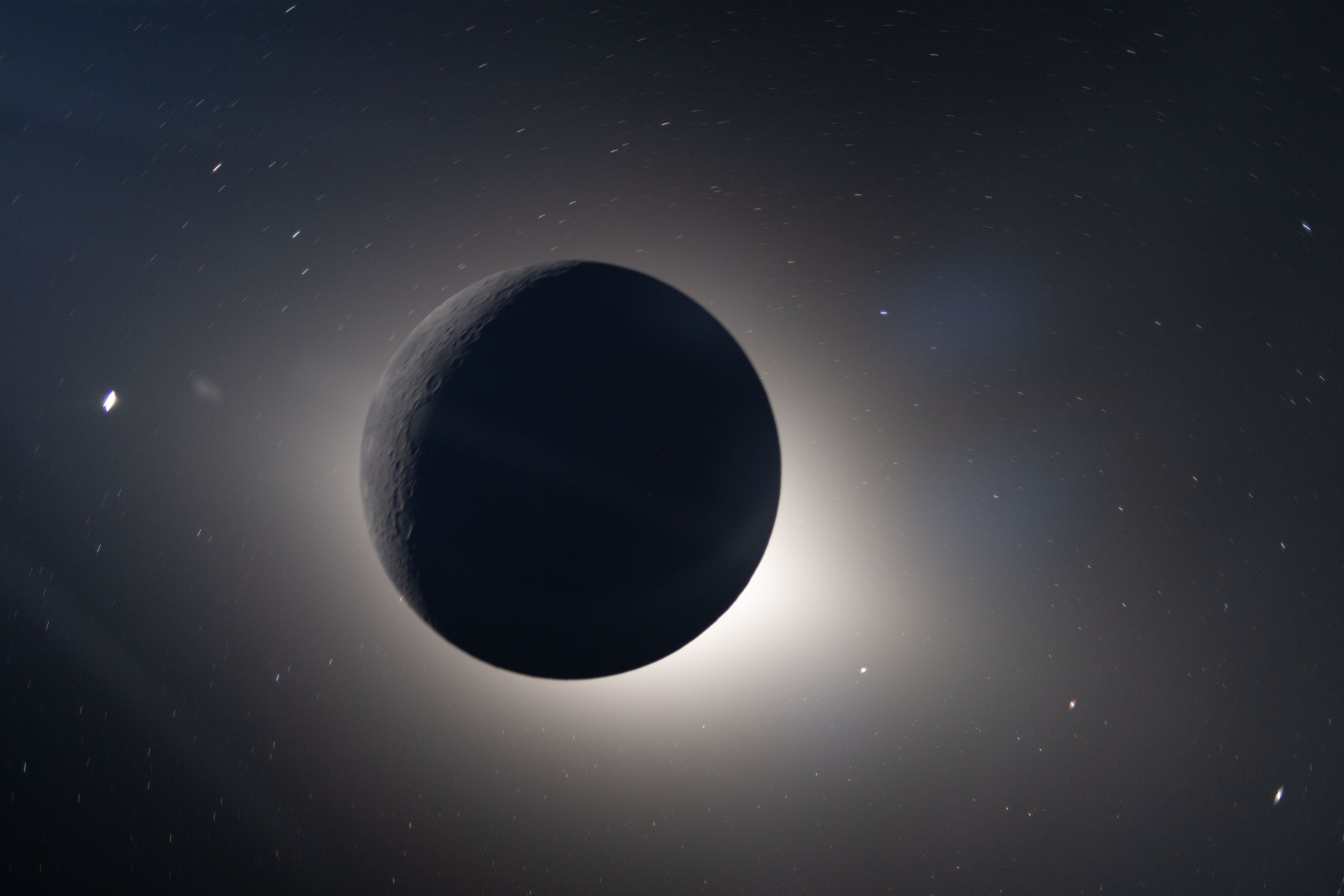
During that time, the crew witnessed at least five micrometeor impacts on the lunar far side, in the faint, horizon-wrapped glow of the sun from behind the moon. “Their impact flash observations have been amazing,” Turner said.
“When we were drafting up their science plan … we wanted them to look into the darker part of the moon to try to see if they could observe impact flashes,” she said. It was a “happy surprise that it was possible” to see them with the naked eye at all, Turner added.
In the weeks since the safe splashdown of Orion and the Artemis 2 crew on April 10, NASA has released more than 12,000 images taken during the mission, and disseminated science and observation collections to agency centers around the country. Turner said the return has been “overwhelming in the best way.”
“We have a lot,” she said. “We have an abundance of data. It’s like a treasure trove of data to sift through as we reconstruct the timeline of the lunar flyby. It has been a massive, very exciting effort for the science team,” she told Space.com in a post-mission interview.


“Some of the most exciting parts of our data set are just looking through the eclipse images,” Turner said. “[The crew] gave us a diversity of science, in terms of geology, but also these amazing eclipse images and observations that we’re trying to dive deeper into to better understand.”
Turner and her team still need time to study the data, but she said the impact flash observations have the potential to help the lunar science community narrow down how often tiny space rocks hit the moon, and how energetic those collisions can be.
“That has spurred up a lot of discussion on trying to help characterize what this glow could be, and whether or not it could be zodiacal light or any other atmospheric phenomenon,” Turner said.
Those discussions, and the lunar science team’s probe into the rest of the Artemis 2 research, will take about six months. After that, they plan to release their preliminary science report, and make the data available on NASA’s Planetary Data System. And, as teams across NASA continue their post-Artemis 2 evaluations, they are also looking ahead to Artemis 3, Artemis 4 and beyond.
“I’m ready for the entire Artemis program,” Richardson said. “[The astronauts’] observations, and how they’re making observations, are giving us so much intel on how we’re going to successfully make this happen when we get to the surface.”


