







(In the weekly Health Matters newsletter, Ramya Kannan writes about getting to good health and staying there. You can subscribe here to get the newsletter in your inbox.)
The world could not get enough of the Hantavirus outbreak. What started as a case on board a cruise ship on the high seas, soon became a global call for help. Atlantic cruise ship MV Hondius was the known location of the index case – soon there were seven cases. The three fatalities were a Dutch couple and a German national, and a British national was evacuated from the ship from Ascension and is being treated in South Africa. There were 150 people on board the ship comprising mostly British, American and Spanish passengers on a trip that set off from Argentina in March, and is now off the coast of West Africa. Clearly it has seldom seen such a stormy passage.
The problem was not just that there was an infectious strain circulating on a captive group of people (on board a ship). It was also because South African health authorities identified the Andes strain of hantavirus, which can be transmitted from person to person, in two passengers. Usually, the virus is spread by rodents and, more rarely, people. It is typically contained because it would spread only through close contact, such as by sharing a bed or sharing food, experts say. The World Health Organization says the Andes virus, a specific species of hantavirus, is found in South America, primarily in Argentina and Chile.
Here, you can read our exhaustive coverage and look out for further developments on the issue, on The Hindu’s health page…
Cruise ship with 150 aboard waits for help, not allowed to dock
No changes to Andes hantavirus on cruise ship that would make it more transmissible, WHO says
Centers for Disease Control and Prevention says monitoring U.S. travellers on cruise ship
For a video: 40 passengers leave cruise ship amid deadly hantavirus outbreak
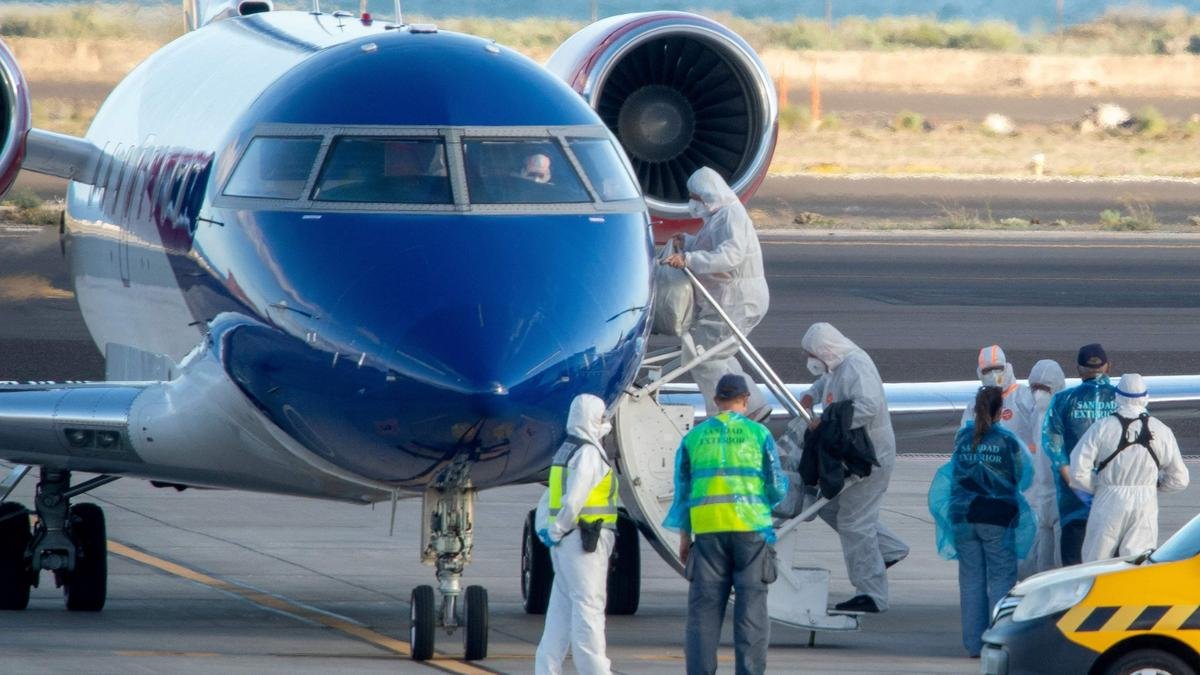
Spain readies for evacuations as hantavirus-hit cruise ship heads for Canary Islands
WHO chief arrives in Spain to coordinate hantavirus ship evacuation
WHO warns of more hantavirus cases in ‘limited’ outbreak
WHO official appeals for calm even as passengers are evacuated
Zubeda Hamid examines in In Focus Podcast, The science behind the scare
Athira Elssa Johnson Why is hantavirus drawing global attention?
India faces no immediate public health threat from hantavirus: NIV chief
Bindu Shajan Perappadan Two Indian nationals onboard hantavirus-hit ship asymptomatic, under observation: Health Ministry
—
This week, we also looked at setting the agenda for health care systems in India. In this article, Dr. Miae Lee, Prof S.S. Vasan looked at the importance of patient participation in the process. Do read: How patient participatory models could help improve healthcare systems in India.
Dr. C. Aravinda calls for a paradigm shift in the way India views its fathers – as part of reproductive health interventions. Do read, here. Clearly some reimagining of the health systems is necessary.
Ishaan Khanna sets the tone for the future of health care in the country from an ageing perspective: India is greying: we need to move urgently from treating diseases to caring for ageing.
Funding health care or finding resources to do so, is another issue that is of national importance. We look at the national data to examine the out-of-pocket expense on treatments: The survey found that the Out-of-pocket expenditure for patients was the lowest in Tamil Nadu’s public health facilities.
On a completely different angle, C. Maya records how the fear of the law has actually stifled brainstem death certification in Kerala, as per a study. This is another sector for the governments to pay attention to, and regulate in order to ensure the right procedure is followed, but also that the procedure itself is not a hindrance for the concept of brain stem certification. And Dr. Rekha Arcot examines the question: Why tomorrow’s doctors need more than medicine.
If summer comes, can heat be far behind? We have our eyes peeled for stories that impact on human health as a result of soaring temperatures. Siddharth Kumar Singh says Telangana’s summers impact women harder in rural and low-income settings; and consequently, nutrition services take a hit.
The Centre, has, meanwhile, called for steps to safeguard and shelter residents from heat. While many States have their own programme for protecting residents from the cruel impact of heat this summer, a national policy for heat mitigation and providing access to cooling mechanisms is essential.
This last Sunday, our episode of Health Wrap brings together a lot of information on rodents (the Hantavirus vectors) and reptiles (snake bites). We also examine how data on health care that is becoming available now will influence the practice of it, and the non-communicable diseases pitch makes its way in too. Watch, here.
In other stories, T.V. Padma puts together an essential One Health story – showing how Physical activity has stalled for 20 years, and in the process it has actually hurt health and the climate. A new set of papers show that physical activity is not just an individual choice. It is shaped by wider social and structural factors such as gender, socioeconomic position, and neighbourhoods.
If you have been wondering of the power of psychedelics and how they operate on the brain, this is a story for you. Anirban Mukhopadhyay shows via the results of a Global study how psychedelics dissolve the brain’s hierarchy.
—
In our explainers section, apart from Hantavirus, we have a bunch of ideas our reporters and experts have explored:
Meghna M. in the All you need to know series, writes on dyspraxia
In the Parley, the question was: Should the abortion law be amended for minor rape victims?
As part of our continuing Nobel Prize for Medicine series, this week, we look at Charles Richet and his Nobel-winning work on severe allergic reactions
Dr. Rohit Raghunath Ranade tells us Why ovarian cancer needs a louder voice
Dr. Moosa Kunhi M.K. tells us exactly What it takes to save a person experiencing a cardiac arrest outside the hospital
The advice from Dr. Karthik Subramaniam is to Stop ignoring those persistent little symptoms and see a doctor: why early care makes all the difference
Have you heard of the Neonatal Resuscitation Programme? It’s all about the first breath and how to keep it going, says Dr. Umamaheswari Balakrishnan
If you have a few moments do spend them on reading the following stories:
Krishnadas Rajagopal SC flags ‘risk’ of misuse in transgender self-identification debate
Serena Josephine M. In just four months of 2026, Tamil Nadu records 2.63 lakh dog bites, 17 deaths
Our editorial On health check-up for workers
Moderna’s mRNA flu vaccine outperforms standard shot in late-stage trial
Child deaths mount from Bangladesh measles outbreak
For many more health stories, head to our health page and subscribe to the health newsletter here.
Published – May 12, 2026 04:15 pm IST


