






China’s top auto industry group is calling for the creation of a standardized budget electric vehicle category — modeled on Japan’s wildly popular K-car ecosystem — to revive sluggish domestic car sales and bring millions of new buyers into the EV market.
The proposal, from the head of the China Passenger Car Association (CPCA), would target elderly consumers and rural markets where cheap, unregulated electric vehicles have flourished dangerously for years.
China’s low-end EV problem
Cui Dongshu, secretary-general of the CPCA, published the proposal in a WeChat post earlier this month. He argued that the shrinking of China’s low-end vehicle segment has become a “key bottleneck” restricting the recovery of the country’s auto industry.
The problem is real. Despite electric vehicles now commanding over 60% market share in China — a historic milestone — overall domestic auto consumption remains weak. CPCA estimates show China’s retail NEV sales hit around 860,000 units in April, a slight uptick from 850,000 in March but still below the 905,000 units recorded a year earlier.
The existing EV market is essentially bifurcated. On one end, Chinese automakers are pushing aggressively into the premium segment with increasingly sophisticated models. On the other, millions of elderly and rural consumers rely on cheap, unregulated electric microcars known as “laotoule” — literally “old man’s joy” — that cost a fraction of a real car but lack basic safety features like airbags or reinforced frames.
These laotoule vehicles have been a deadly problem. China’s Ministry of Industry and Information Technology reported 830,000 traffic accidents involving low-speed electric vehicles between 2012 and 2016, resulting in roughly 18,000 deaths. Beijing banned them entirely starting in 2024, but the mobility needs they served haven’t gone away.
Cui’s argument is that China needs a regulated middle ground: affordable, standardized electric vehicles that are safe and compliant but cheap enough to replace laotoule in county-level markets and among elderly buyers.
Japan and the EU as blueprints
For that middle ground, Cui pointed to two overseas models: Japan’s K-car ecosystem and the EU’s emerging E-Car standards.
Japan’s K-car market is the clearest precedent. Kei cars — miniature vehicles capped at 3.4 meters long with engines under 660cc — accounted for roughly 33% of all passenger car sales in Japan in the first half of 2025. The segment moved 1.67 million units for the full year. It’s a mature, decades-old ecosystem that has fostered dedicated brands like Suzuki and produced iconic models like the Honda N-Box.
The CPCA official argued that China should formalize similar core metrics for budget EVs: body size limits, motor power caps, and minimum range requirements. He also proposed a dedicated C7 driver’s license with a simplified testing process to lower the barrier for elderly and first-time drivers — a move directly targeting the laotoule demographic.
On the European side, Cui referenced the EU’s recent push to incentivize small electric vehicles. The European Commission introduced a 1.3 coefficient for EVs under 4.2 meters in length, meaning automakers get extra emissions credits for selling qualifying small EVs built in Europe. That policy framework is already attracting models like the Renault 5 and the upcoming Volkswagen ID.Polo, both priced under €25,000.
Cui proposed supporting China’s version with targeted purchase subsidies and tax exemptions for county-level and elderly consumers, plus accelerated charging infrastructure deployment in rural areas.
BYD is already moving
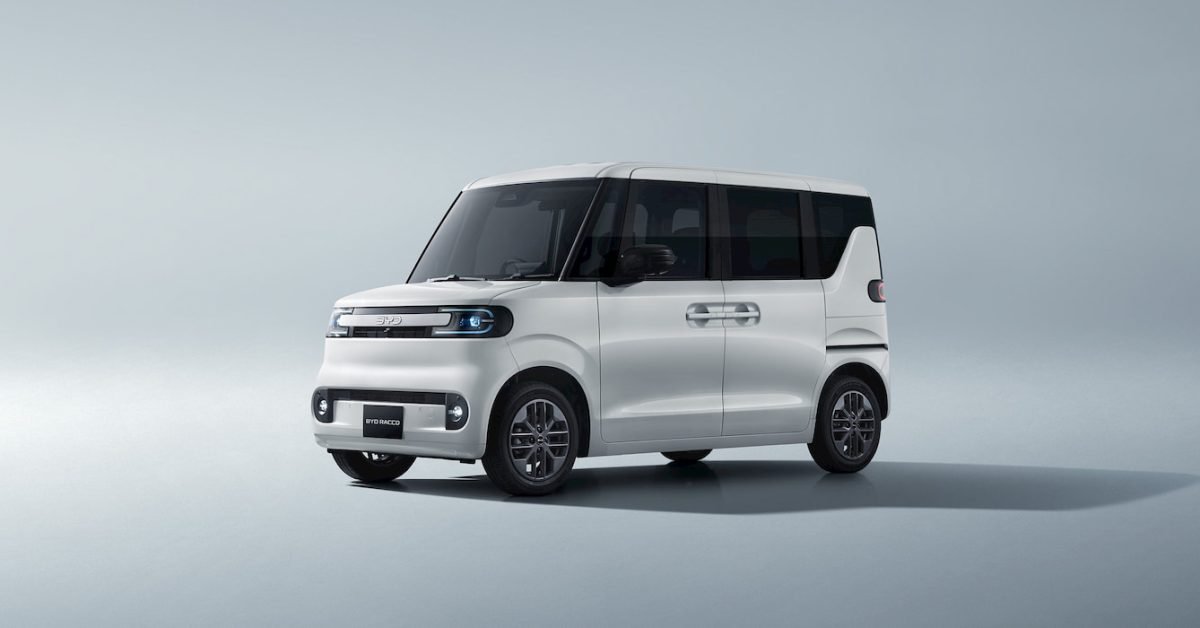
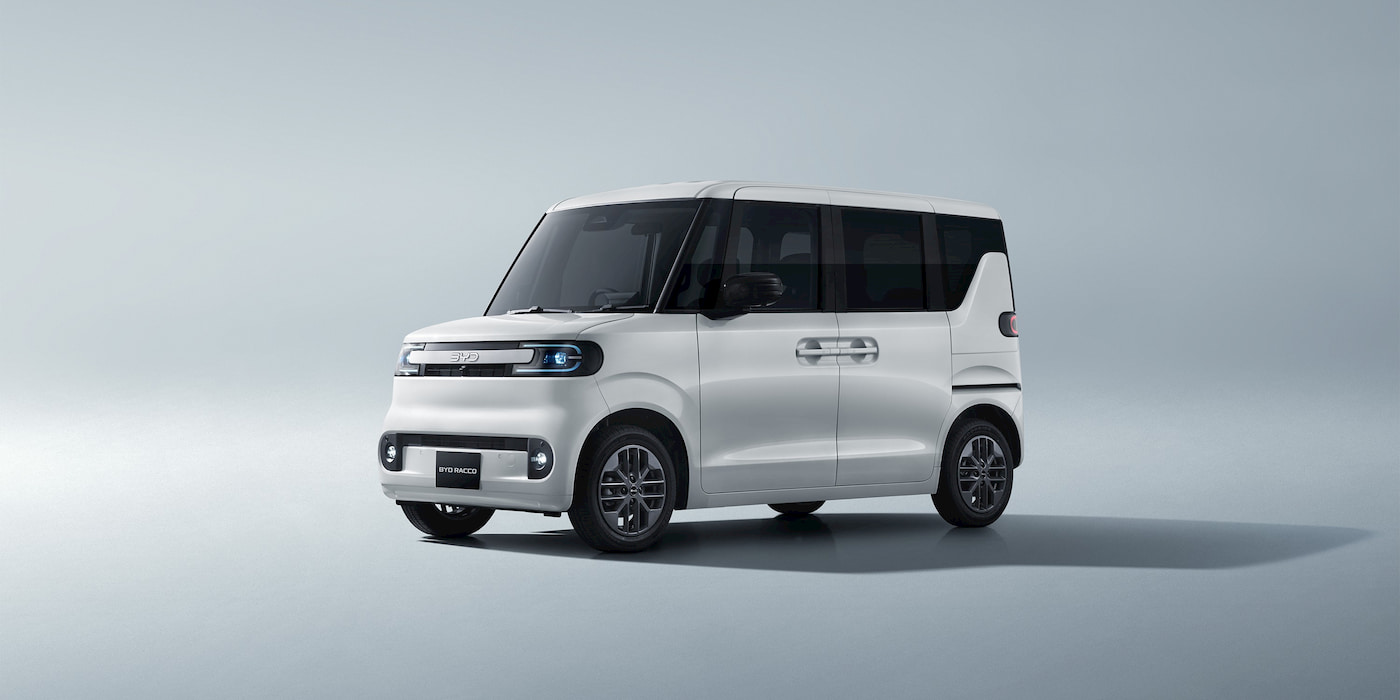
Chinese automakers aren’t waiting for standards to be formalized. BYD already debuted an electric K-car called the Racco in Japan last year, designed specifically to compete with the Nissan Sakura and Mitsubishi eK X EV. The Racco is just 3,395 mm long, packs a 20 kWh BYD Blade battery for 180 km of WLTC range, supports 100 kW DC fast charging, and starts at about ¥2.5 million ($16,340). It’s scheduled to launch in Japan this summer.
Meanwhile, the domestic market is already producing ultra-cheap EVs that hint at what a formalized budget segment could look like. The Bestune Pony launched for under $5,000 with a kei car-like footprint of just 3,000 mm. Chery’s QQ3 racked up nearly 57,000 orders at $8,500. Toyota’s bZ3C, priced at $15,000, has been China’s top-selling joint venture EV for seven consecutive months.
The demand clearly exists. What’s missing, according to Cui, is the regulatory framework to channel it safely.
Export ambitions built in
Cui made another argument that’s worth noting: standardized budget EVs would also help Chinese automakers overcome technical barriers in overseas markets. A unified set of specs for affordable electric microcars could be tailored to meet safety and emissions standards in Southeast Asia and India — two massive emerging markets where cheap, compact vehicles dominate.
China already exported over 400,000 EVs in April alone, more than doubling the pace from 2025. A formalized budget EV category could accelerate that expansion into markets where $5,000-$15,000 electric vehicles would be transformative.
Electrek’s Take
This is one of the most interesting EV policy proposals I’ve seen in a while. China essentially wants to take Japan’s K-car playbook — a category that represents a third of Japan’s entire car market — and electrify it from day one.
The logic is sound. China has millions of consumers who need cheap, basic transportation and are currently served by dangerous, unregulated vehicles. Rather than just banning laotoule and leaving a mobility gap, the CPCA is proposing to formalize what those consumers actually need into a real vehicle category with real safety standards.
What makes this particularly compelling is that China’s EV supply chain is uniquely positioned to deliver. When BYD can build a legitimate kei car with a Blade battery and DC fast charging for $16,000 in Japan, imagine what Chinese automakers could produce at scale for their domestic market. We’re talking about safe (relatively), standardized electric microcars potentially in the $5,000-$10,000 range.
If China pulls this off, it could unlock a massive new segment of EV demand domestically while simultaneously creating an export category perfectly suited for Southeast Asia, India, and other emerging markets. The EU is already moving in this direction with incentives for small EVs. Japan proved decades ago that a formalized mini-car category can sustain an entire market ecosystem. China doing it electric-first would be the most China move possible.



FTC: We use income earning auto affiliate links. More.


Author


